 Birch Bay
 Roof Repair Built for California Creek's Weather
California Creek sits close enough to the water that roofs here take a different kind of beating than roofs twenty miles inland. Salt-laden air off the Strait works on exposed metal and fasteners year-round. Driving rain off Whatcom County's winter storms finds every gap in flashing and underlayment that a calmer climate would never expose. And the long, wet moss season packs in growth on north-facing slopes and shaded valleys that hold moisture against shingles for months at a time. None of this means a roof needs to be replaced every few years — it means repairs have to be done with this specific combination of stressors in mind, not with a generic patch-and-go approach.
We work on roofs in this neighborhood regularly, which matters more than it sounds like. A roofer who shows up once and never comes back doesn't build a feel for which slopes in California Creek hold moss longest, which older homes have flashing details that don't match what's on the shelf at the supply house today, or how the wind off the water tends to drive rain up under shingle tabs on certain roof orientations. That local pattern recognition is a big part of getting a repair right the first time.
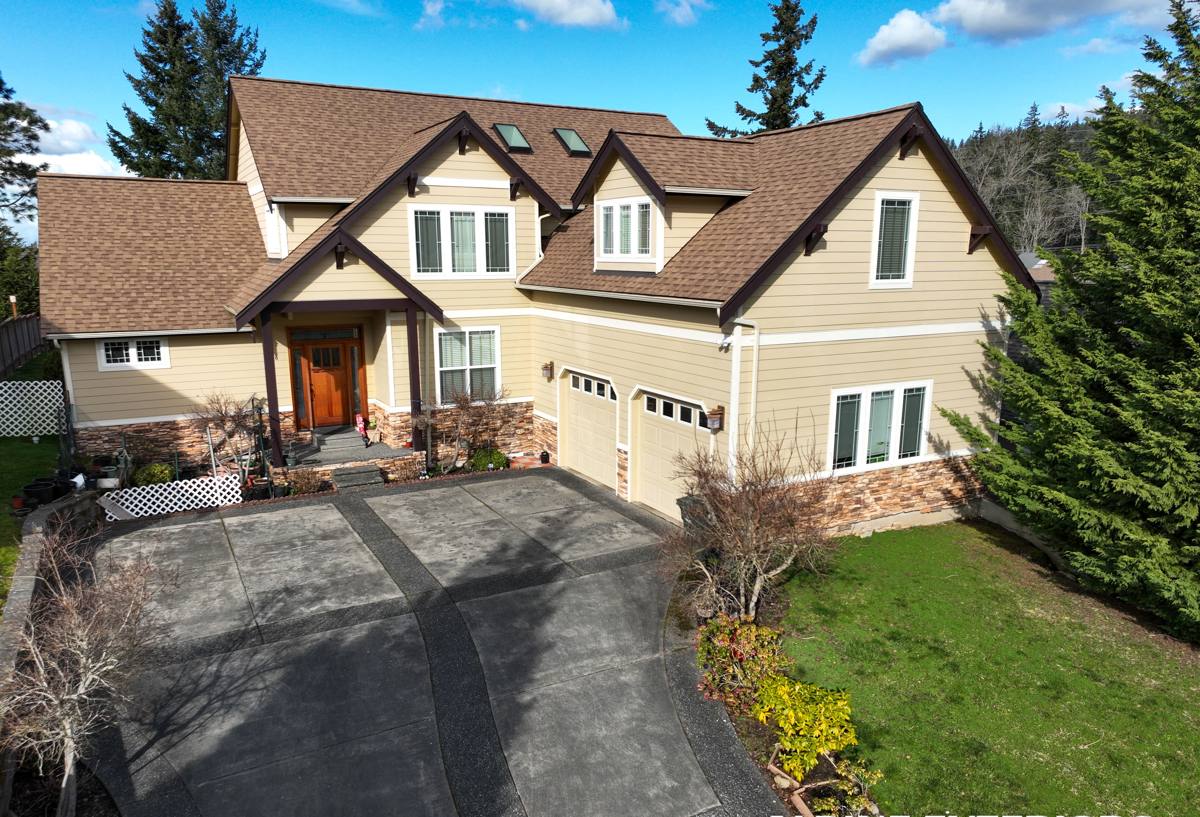
Signs a California Creek Roof Needs Repair, Not Just a Look
Most roof problems don't announce themselves with a leak in the living room. By the time water is visibly coming through a ceiling, it's often been finding its way into the attic or wall cavity for a while. Homeowners in this area should take these signs seriously:
- Dark streaking or thick moss growth on shaded or north-facing roof sections
- Granules collecting in gutters or at the base of downspouts — a sign shingles are wearing thin
- Curling, cupping, or lifted shingle tabs, especially on sections exposed to wind off the water
- Rust staining or visible corrosion around metal flashing, vent boots, or valleys
- Soft spots underfoot when walking a low-slope section, or sagging visible from the ground
- Water stains on interior ceilings, especially near chimneys, skylights, or where two roof planes meet
- Daylight visible through the roof deck from inside the attic
Any one of these is worth a proper inspection. Catching a flashing failure or a cluster of damaged shingles early is a repair. Ignoring it through another wet Whatcom County winter can turn into deck rot, insulation damage, or interior repairs that cost far more than the roof work itself.
What a Correct Roof Repair Actually Involves
A roof repair that holds up in this climate is more than swapping out a few visibly damaged shingles. The details underneath and around the surface layer are what determine whether the fix lasts one season or many.
Diagnosis Before Any Work Starts
We start by finding the actual source of a leak or failure, not just the spot where water showed up inside the house. Water can travel along rafters or sheathing for several feet before it drips somewhere visible, so tracing it back to the real entry point — often a flashing seam, a nail pop, or a worn valley — is the difference between a repair that fixes the problem and one that just moves it.
Flashing and Underlayment
Flashing around chimneys, skylights, vent pipes, and roof valleys is where the majority of leaks originate, especially on older homes where flashing details may not match current materials or techniques. Corroded or improperly lapped flashing gets replaced, not just caulked over. Underlayment in the repaired area gets checked and replaced where it's compromised — a shingle repair over failed underlayment is a short-term fix at best.
Matching Materials and Fastening for the Coastal Environment
We use fasteners and flashing materials suited to salt-air exposure rather than the cheapest option available, since standard-grade metal corrodes faster this close to the water. Shingle or material matching is handled as closely as possible so a repair doesn't stand out as an obvious patch, though on older roofs some color variation is unavoidable given sun fading and product changes over time.
Ventilation Check
A repair is a good time to check that attic ventilation is doing its job. Poor ventilation traps moisture, which accelerates moss growth, shortens shingle life, and can cause condensation issues that look like a roof leak but actually originate inside the attic.
Common Repair Issues We See on California Creek Homes
Every coastal neighborhood has its own repair patterns based on age of housing stock, tree cover, and exposure. In this area, the recurring issues tend to fall into a few categories:
| Issue | Typical Cause | Why It Matters Here |
|---|---|---|
| Moss buildup on north-facing slopes | Shade, moisture retention, long wet season | Moss holds water against shingles and lifts tabs, accelerating wear |
| Corroded flashing and fasteners | Salt air exposure near the water | Standard-grade metal degrades faster this close to the Strait |
| Wind-driven rain intrusion | Storms pushing rain up under shingle edges | Requires proper sealing and lap direction, not just surface patching |
| Valley and flashing leaks on older homes | Original details not updated to current standards | Common on homes built before modern flashing practices were standard |
| Gutter and downspout backups | Debris, moss shed, and needle buildup from surrounding trees | Overflow drives water behind fascia and into the roof edge |
Our Roof Repair Process
The process is straightforward, and we keep homeowners informed at each step rather than disappearing until the invoice.
1. Inspection and Documentation
We inspect the full roof, not just the area where a leak or damage was reported. A localized problem is often a symptom of a broader issue — worn shingles in one section usually mean the rest of that slope isn't far behind.
2. Honest Assessment
We explain what we found, what needs to be repaired now, and what can reasonably wait. If a roof is closer to the end of its life than a repair budget makes sense for, we'll say so directly rather than stacking patches on a roof that needs full replacement.
3. The Repair Work
Repairs are done with materials appropriate to this climate and matched to the existing roof as closely as practical. We protect landscaping and gutters during the work and clean up debris, including any moss or old material removed from the roof.
4. Final Check
Before we consider the job done, we check the repaired area and surrounding sections for anything that could compromise the fix — loose fasteners nearby, deteriorating sealant, or drainage issues that could undercut the work later.
Repair or Replace? How We Help You Decide
Not every roof problem calls for a full replacement, and not every repair is worth doing if the roof underneath it is failing broadly. A few factors weigh into that decision:
| Factor | Leans Toward Repair | Leans Toward Replacement |
|---|---|---|
| Roof age | Within the expected lifespan of the material | At or past the material's typical service life |
| Extent of damage | Isolated to one section or a specific detail (flashing, a valley, a vent boot) | Widespread wear, multiple failure points, or deck damage |
| Underlying deck condition | Solid, no rot or soft spots | Soft, spongy, or visibly damaged decking |
| History of repairs | First or infrequent repair needed | Repeated repairs to the same or nearby areas |
| Moss and moisture pattern | Manageable with cleaning and targeted fixes | Persistent moss returning despite treatment, with shingle degradation underneath |
We'll walk through where your roof falls on these points before recommending anything, and we won't push a full replacement when a targeted repair will genuinely hold up.
Why Hiring a Crew That Already Works California Creek Matters
Roofing crews that don't work this specific area regularly tend to treat every job the same way, regardless of exposure, tree cover, or how close a property sits to the water. That approach misses details that matter here — like knowing which roof orientations in this neighborhood take the worst of the wind-driven rain, or recognizing flashing patterns common on the area's older homes that need updating rather than just resealing. A crew already familiar with California Creek and the broader Birch Bay area also tends to have a more realistic sense of how long a repair should hold given the local moss season and salt exposure, which shapes both the materials we choose and the honesty of the timeline we give you.
Roof Repair Checklist for California Creek Homeowners
- Check gutters and downspouts each fall for moss debris and needle buildup before the wet season sets in
- Look at north-facing roof slopes periodically for moss growth and address it before it spreads
- After major windstorms, do a visual check from the ground for lifted or missing shingles
- Note any interior ceiling stains immediately, even small ones, and have them traced to the source
- Have flashing around chimneys, skylights, and vents inspected every few years, not just when a leak appears
- Keep overhanging branches trimmed back to reduce shade, debris, and moss-friendly conditions
- Don't ignore small granule loss in gutters — it's an early warning, not a cosmetic issue
Maintenance That Extends the Life of a Repair
A well-done repair still needs a bit of upkeep to get its full lifespan out of it, especially in a climate as wet as this one. Keeping gutters clear so water isn't backing up under roof edges, addressing moss before it spreads rather than after it's established, and having the roof looked at periodically rather than only when something goes wrong all go a long way. Whatcom County's weather doesn't give roofs much of a break between wet seasons, so staying ahead of small issues is genuinely cheaper than catching up on neglected ones.
If you're dealing with a leak, visible moss buildup, or just want an honest read on where your roof stands, we're glad to take a look. Reach out for a free, no-pressure estimate using the form below.