 Birch Bay
 Cherry Point's Exposure Is Different From an Inland Whatcom County Lot
Cherry Point sits right up against the water, and that changes what siding has to survive. Homes a few miles inland in Whatcom County deal with rain and cold, but they aren't getting salt-laden air pushed onto their walls day after day. Out here, that salt air settles on every exterior surface, works into fastener heads, and accelerates the breakdown of anything not built to shrug it off. Add driving rain that comes in sideways during winter storms, and a moss season that can run most of the year in the shade pockets between homes and tree lines, and you've got a siding environment that punishes shortcuts fast.
We install James Hardie fiber cement siding exclusively, and Cherry Point is exactly the kind of site where that decision pays off. This page covers what the local climate actually does to siding, what correct Hardie installation looks like out here, and how our process is built around homes in this specific stretch of coastline.
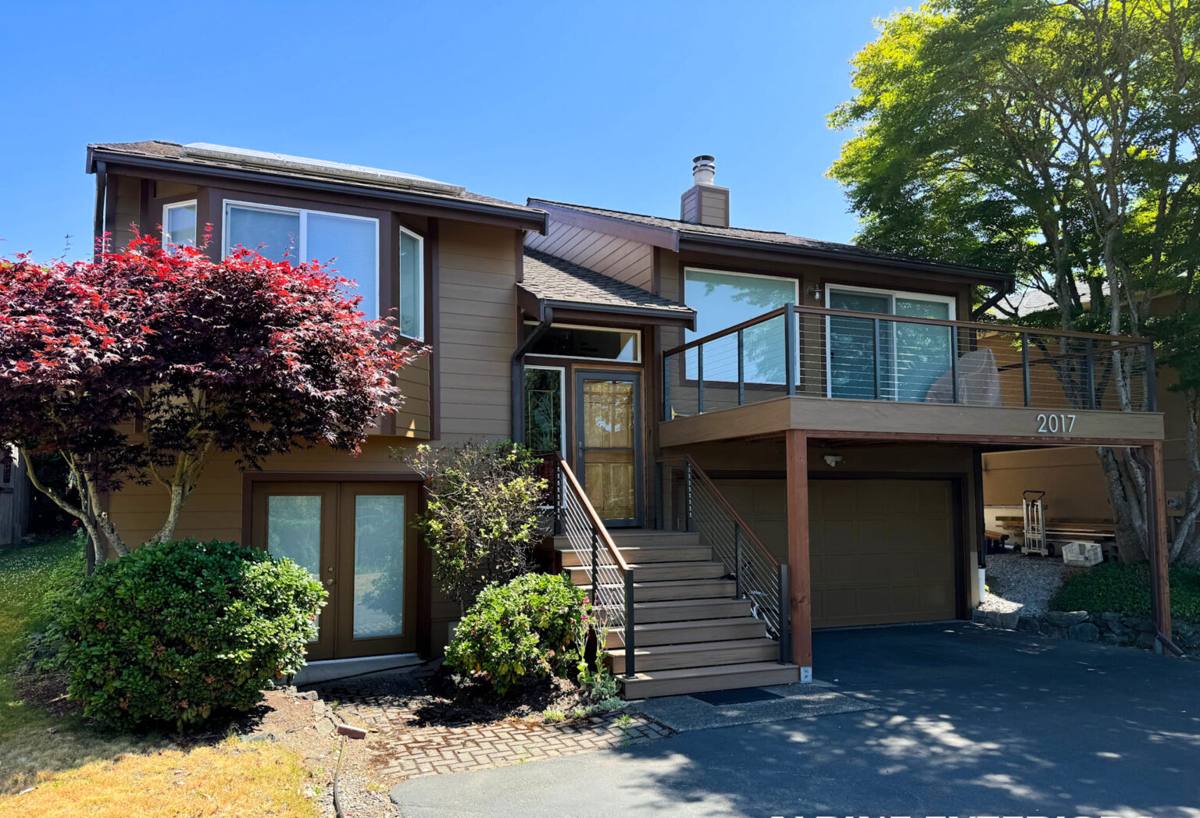
What Salt Air, Driving Rain, and Moss Actually Do to a Wall
Salt Air
Airborne salt is corrosive to metal and abrasive to finishes. Fasteners, flashing, and trim that aren't rated for coastal exposure corrode faster here than they would twenty miles inland. Paint films that aren't formulated to resist salt deposition chalk and fade sooner, and any siding product with a factory finish that isn't engineered for this kind of exposure will show it within a few years.
Driving Rain
Wind-driven rain doesn't just wet a wall — it pushes water sideways and upward, finding every gap, unsealed joint, and poorly lapped seam. A siding system depends on correct water management (drainage plane, flashing, laps) to keep that water moving down and out instead of behind the cladding.
Moss
Shaded, damp conditions near the water and under tree cover keep moss and algae growth active for much of the year. Moss holds moisture against a surface longer than open air would, which is hard on any material that isn't dimensionally stable or that swells when it stays wet.
None of these three problems is unique to Cherry Point, but the combination — and how constant it is here — is what separates coastal Whatcom County siding decisions from a typical inland job.
Why We Standardized on James Hardie for This Kind of Climate
James Hardie fiber cement is engineered specifically to handle moisture cycling, and the ColorPlus factory finish is baked on and cured for UV and weather resistance rather than field-applied. That matters in a salt-air environment where field-applied paint is under more stress. Hardie's HZ5 product line is engineered for climates with more moisture exposure, which fits Cherry Point's conditions better than a generic siding spec.
Fiber cement is also non-combustible, which is a real advantage regionally given wildfire smoke and ember exposure concerns that have become more relevant across Western Washington in recent years. And because it's dimensionally stable, it doesn't swell, cup, or warp the way wood-based products can when they stay damp for extended periods — which is exactly what happens under a heavy moss season.
We don't install LP SmartSide, vinyl, Cemplank, Allura, primed spruce, or cedar. Each of those products has legitimate strengths, but none of them combine non-combustibility, a factory-cured finish, and long-term dimensional stability the way James Hardie does — and in a climate like Cherry Point's, that combination is the whole point.
Choosing the Right Hardie Line and Profile for This Location
Not every Hardie product is the right fit for every wall on a coastal home. Part of a correct installation is matching the product to the exposure:
| Consideration | Why It Matters at Cherry Point |
|---|---|
| HZ5 climate zone rating | Engineered for higher-moisture regions; appropriate baseline for this coastline |
| Lap siding vs. panel systems | Lap profiles shed driving rain well when installed with correct overlap; panel seams need extra attention to sealant and flashing detail |
| ColorPlus vs. field-painted | Factory-cured finish holds up better against salt deposition than a field coat applied on site |
| Trim and fastener selection | Corrosion-resistant fasteners and compatible trim reduce streaking and premature wear near the water |
We walk through these choices with the homeowner before anything goes on the wall — there's no single "right" Hardie spec, only the right one for that home's orientation, tree cover, and exposure to weather off the water.
What Correct Installation Involves Here
James Hardie siding performs the way it's supposed to only when it's installed to spec — and in a coastal climate, the margin for error is smaller. A correct job on a Cherry Point home includes:
- A properly lapped weather-resistive barrier behind the siding, with all seams and penetrations sealed before cladding goes up
- Correct flashing at windows, doors, and any horizontal trim to direct water out and away from the wall assembly
- Manufacturer-specified fastener spacing and clearance gaps at the ground, roofline, and any deck or porch intersections so siding never sits in standing water or trapped moisture
- Caulking and sealant used only where Hardie's install guide calls for it — over-caulking can trap moisture instead of releasing it
- Proper overlap on lap siding to shed wind-driven rain rather than let it wick upward
Skipping any one of these doesn't show up as a problem on day one. It shows up two or three winters later, after enough driving rain and salt exposure have found the gap. That's the risk with any siding job, but it's higher here because the climate is actively working against a bad detail every day, not just during storms.
Our Process for Cherry Point Homes
Every project follows the same core steps, but each one is informed by what's actually happening on the specific wall we're looking at:
- On-site assessment. We look at existing siding condition, moss and moisture staining patterns, tree cover, and which walls take the worst of the weather off the water.
- Product and line selection. We recommend the Hardie line, profile, and finish that fit that home's exposure — not a one-size answer.
- Water management plan. Before any siding goes up, we confirm the drainage plane and flashing details are correct, replacing or upgrading anything that isn't.
- Installation to manufacturer spec. Fastener pattern, clearances, and laps are installed per James Hardie's guidelines for this climate zone.
- Final walkthrough. We review the finished work with the homeowner and explain what routine maintenance (if any) the specific product and finish will need.
Comparing Siding Options in a Coastal, Moss-Heavy Climate
| Material | Salt Air Behavior | Moisture/Moss Season Behavior |
|---|---|---|
| James Hardie fiber cement | Factory-cured ColorPlus finish resists salt-related fading and chalking | Dimensionally stable; doesn't swell or cup when repeatedly wetted |
| Vinyl | Can become brittle and fade unevenly with prolonged UV and salt exposure | Doesn't rot, but seams and J-channels can trap moisture behind the panel |
| Primed spruce / cedar | Field-applied finishes need more frequent recoating in salt air | Wood-based products are more prone to moisture absorption, swelling, and rot risk if moss holds water against the surface |
| LP SmartSide | Engineered wood strand product; finish maintenance requirements over time | Edge sealing and joint maintenance become more important in sustained damp conditions |
This isn't a claim that other products fail — it's why, given everything Cherry Point's climate throws at a wall, we standardized on the one system that handles salt exposure, driving rain, and constant dampness with the least ongoing maintenance burden.
What Homeowners Can Do Between Service Visits
Correctly installed Hardie siding is low-maintenance, not zero-maintenance. In a moss-heavy coastal environment, a short seasonal checklist goes a long way:
- Rinse siding periodically to clear salt residue and organic buildup, especially on shaded, north-facing walls
- Trim back tree branches and shrubs that keep siding in constant shade, since that's where moss establishes fastest
- Check caulking at windows, doors, and trim joints annually for cracking or separation
- Watch gutters and downspouts for overflow that repeatedly wets one section of wall
- Address any moss growth early with a gentle rinse rather than pressure-washing, which can force water behind laps
Why Local Experience With This Coastline Matters
A crew that mostly works inland jobs doesn't necessarily think about salt-rated fasteners, HZ5 product selection, or extra attention to flashing on a west-facing wall — because they don't need to most of the time. Working Cherry Point and the rest of the Birch Bay area regularly means we've already made those decisions on homes with the same exposure, the same moss patterns, and the same driving-rain direction. That's not a marketing point — it's the difference between a siding job that looks right on installation day and one that's still performing correctly five winters in.
If you're planning a siding project on a Cherry Point home, we're glad to walk the property, look at what your walls are actually dealing with, and put together a straightforward, no-pressure estimate using the form below.