 Birch Bay
 Storm Damage Roof Repair for Cherry Point Homes
Cherry Point sits on an exposed stretch of shoreline just north of Birch Bay, and roofs out here take a different kind of beating than roofs ten miles inland. Wind off the Strait of Georgia carries salt spray onto shingles and flashing. Winter storms bring driving rain at angles that find every weak seam. And because this part of Whatcom County stays cool and damp for most of the year, moss and moisture problems have months to develop before a homeowner ever notices a stain on the ceiling. We repair storm-damaged roofs for homeowners in this specific area, and the work we do here is not the same as a generic patch job pulled from a national franchise playbook.
This page is about one service, done right, for this one stretch of coastline: storm damage roof repair for Cherry Point and the surrounding Birch Bay area.
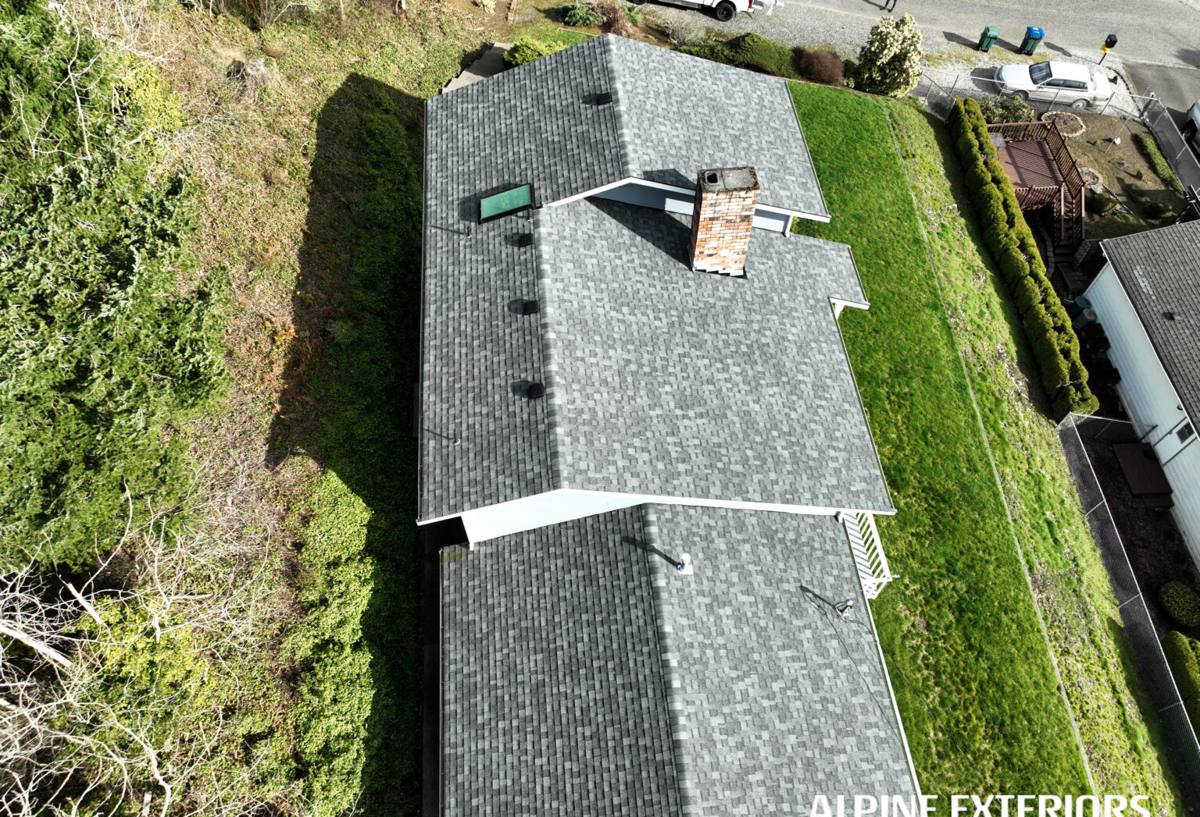
What Cherry Point's Climate Actually Does to a Roof
Three things drive most of the storm damage calls we get from this area, and they compound each other.
Salt Air
Salt-laden air corrodes exposed metal fast — nails, flashing, gutter hardware, and the fasteners holding shingles down. A fastener that's lost holding power doesn't announce itself; it just lets a shingle lift a little more each time the wind gusts, until a storm finally tears it loose.
Driving Rain
Wind-driven rain doesn't fall straight down — it gets pushed sideways and upward under shingle edges, around chimney flashing, and into any gap that would never leak in a calm rain. Roofs built or repaired without that in mind often look fine for years, then fail all at once during the first real windstorm.
A Long Moss Season
Cool, damp, and shaded conditions for much of the year mean moss and algae get a long runway to establish themselves on north-facing slopes and anywhere debris collects. Moss holds moisture against the roofing material, works its way under shingle tabs, and lifts edges — which is exactly where wind and rain exploit the damage during the next storm.
None of these three problems is dramatic on its own. Together, over a few storm seasons, they're what turns a small maintenance item into an active leak.
Signs Your Roof Has Storm Damage
Storm damage is often visible from the ground if you know what to look for, and it's worth checking after any significant wind or rain event. Look for:
- Shingles that are curled, cracked, creased, or missing entirely
- Granules collecting in gutters or at the base of downspouts
- Bent, lifted, or missing flashing around chimneys, vents, and skylights
- Dark streaks or thick moss growth, especially on shaded or north-facing slopes
- Sagging or uneven rooflines when viewed from across the street
- Water stains on interior ceilings or upper walls after a storm
- Debris — branches, needles, moss clumps — built up in valleys or gutters
- Soft spots underfoot if you're able to safely inspect the attic decking
Any one of these on its own doesn't necessarily mean a full roof failure is coming, but it does mean the roof needs a professional look before the next storm rolls through.
What a Correct Storm Damage Repair Actually Involves
A repair that actually holds up in Cherry Point conditions goes further than swapping out the shingles that are obviously torn. Wind and rain damage rarely stops exactly where it's visible.
A proper repair includes:
- Full-slope inspection, not just a look at the damaged section — adjacent shingles are often loosened even if they haven't lifted yet
- Underlayment check wherever shingles were removed, since driving rain often gets underneath before the surface damage is visible
- Flashing repair or replacement at chimneys, vents, and valleys — this is where salt-air corrosion and wind damage most often combine
- Decking inspection for soft or rotted plywood underneath the damaged area, especially if the leak has been going on for a while
- Matching materials as closely as possible so the repair doesn't stand out or create a new weak seam at the edges
- Gutter and moss cleanup in the area of the repair, since debris and moss will undo a repair from the outside if left in place
Skipping any of these steps is how a homeowner ends up paying for the same repair twice — once now, and again in a year or two when the underlying problem resurfaces.
Repair vs. Replacement: How We Help You Decide
Not every storm-damaged roof needs to be replaced, and not every roof can be reasonably patched. The right call depends on a few honest factors.
| Factor | Favors Repair | Favors Replacement |
|---|---|---|
| Age of roof | Under 10-12 years, or recently replaced | Near or past expected material lifespan |
| Extent of damage | Isolated to one slope or section | Widespread across multiple slopes |
| Underlying decking | Solid, no rot found | Soft or rotted decking in multiple areas |
| History of repairs | First or second repair on this roof | Repeated repairs to the same areas |
| Moss/moisture history | Recently cleaned, well ventilated | Long-term moss buildup, poor attic ventilation |
We'll walk you through where your roof lands on each of these before recommending anything. A repair that's built to last is often the right, honest answer — but we won't sell a patch onto a roof that's genuinely at the end of its life either.
Our Process, From Call to Finished Repair
Storm damage repair works best when it moves quickly but doesn't skip steps.
- Initial call and scheduling — we talk through what you're seeing and get a visit scheduled, prioritizing active leaks
- On-site inspection — we get on the roof (weather permitting) and check the full slope, not just the obvious damage, plus attic access if there's an active leak
- Written scope and estimate — you get a clear explanation of what's damaged, what needs to be done, and why
- Repair work — matched materials, proper flashing detail, and cleanup of moss or debris contributing to the problem
- Final walk-through — we show you what was done and flag anything worth keeping an eye on going forward
If there's an active leak, we prioritize a temporary weatherproof fix to stop water intrusion while the full repair is scheduled — a damp attic for two extra weeks does more harm than the original storm damage.
Materials We Use and Why They Matter Here
In a salt-air, high-moss environment, material choice affects how long a repair actually lasts.
We favor corrosion-resistant flashing and fasteners over standard-grade hardware, since standard galvanized metal degrades noticeably faster this close to the water. For shingle repairs, we match existing material where it's still in good condition, and we'll discuss algae-resistant shingle options when a homeowner is dealing with recurring moss problems rather than just patching the same spot repeatedly. We're upfront when a cheaper material would save money up front but cost more in callbacks — our standard is to spec what holds up in this specific climate, not what's fastest to install.
Storm Damage and Insurance Claims
Many storm damage repairs are covered under homeowners insurance, particularly wind and impact damage from a specific storm event. We can document the damage with photos and a written scope that your adjuster can use, and we're glad to walk through what we're seeing in plain terms. We don't handle the claim itself — that's between you and your insurer — but a clear, honest scope of work from a contractor who actually inspected the roof makes that process go smoother.
Why a Crew That Already Works Cherry Point Matters
A roofer who mostly works inland can still do competent work, but they're often solving for conditions that don't apply here — less concern about salt-air corrosion, less experience with how moss builds up on shaded coastal slopes, less familiarity with how driving rain off the water behaves differently than a straight-down rainstorm. Working this area regularly means we've already seen how local roofs age, which flashing details hold up and which don't, and which repairs need to account for the next moss season rather than just the current leak.
That familiarity shows up in small decisions during a repair — where to add an extra course of flashing, which fastener to use, whether a slope needs better ventilation instead of just new shingles — the kind of judgment that only comes from doing this work in this specific climate, repeatedly.
If you're seeing signs of storm damage on your Cherry Point home, we're happy to take a look and give you a straight answer about what it needs. Reach out for a free, no-pressure estimate using the form below.