 Birch Bay
 Windows in Custer Take a Different Kind of Beating
Custer sits close enough to the water that homes here deal with a version of "normal" weather that inland Washington towns never see. Salt-laden air off the Strait works into window frames and hardware year-round. Wind-driven rain doesn't just hit the glass — it gets pushed sideways into seams and gaps that a calmer climate would never test. And then there's moss season, which in this part of Whatcom County isn't really a season at all — it's most of the year. All of that adds up to windows that fail faster here than they would fifty miles inland, unless they were chosen and installed with this specific coastal exposure in mind.
We install custom windows for homes throughout the Birch Bay and Custer area, and the failures we get called out for are consistent: frames that swelled and warped from trapped moisture, hardware that corroded and seized, and seals that let go early because wind pressure kept finding a weak point. None of that is a mystery once you've worked this coastline for a while — it's just what happens when a window built for a drier, calmer climate gets installed in a wetter, windier one.
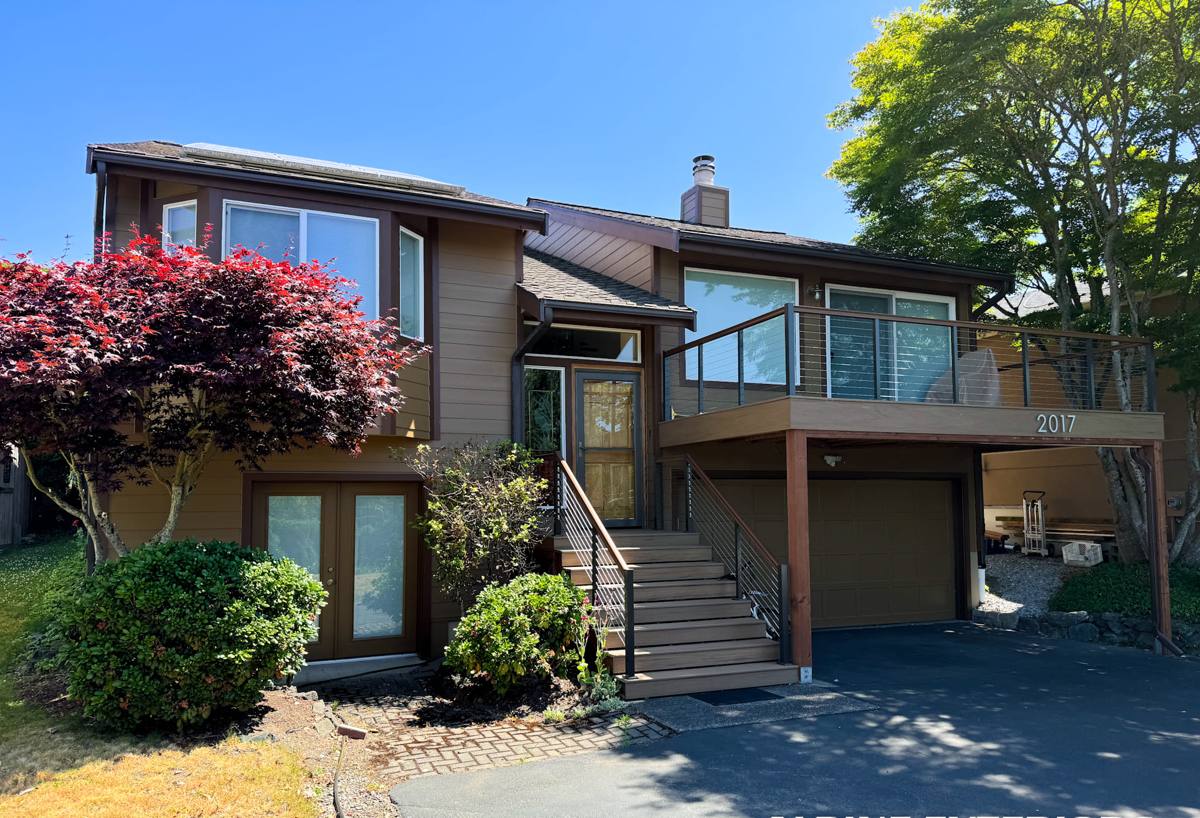
What "Custom" Should Actually Mean for This Job
"Custom" gets used loosely in this trade. For a Custer home, it should mean the window is sized, engineered, and detailed for the specific opening and the specific exposure — not just picked from a catalog because it's close enough. That includes:
- Exact measurements for the opening, including any settling or slight out-of-square condition in older framing
- Frame material matched to the wall's exposure — a window on the weather side of the house facing prevailing wind and rain may warrant a different spec than one tucked under an eave
- Glass package chosen for both energy performance and condensation control, since coastal humidity swings matter as much as winter cold
- Hardware rated for corrosion resistance, not just standard-grade fasteners and locks that were never tested against salt air
- Flashing and drainage details designed around how water actually moves on a Custer-area exterior, not a generic installation diagram
Skipping any one of these doesn't usually show up as a problem on day one. It shows up two or three winters later, as a soft spot in the sill, a locking mechanism that won't turn smoothly, or a window that whistles every time the wind picks up off the bay.
Material and Glass: What Holds Up on This Coast
There's no single "best" window material — there's a best match for the exposure, the home's style, and the budget. Here's how the common options actually perform in a salt-air, high-rain environment like Custer's:
| Material | Coastal performance | Trade-offs |
|---|---|---|
| Vinyl | Resists salt corrosion well; won't rot; good moisture tolerance | Limited color/finish life in direct sun; frame flex on larger units |
| Fiberglass | Very stable in temperature and humidity swings; strong against wind load | Higher upfront cost; fewer budget-tier options |
| Wood-clad | Warm interior look; clad exterior sheds most weather if detailed correctly | Any breach in the cladding lets moisture reach wood — needs precise installation and upkeep |
| Aluminum | Strong and slim sightlines | Conducts cold, prone to condensation, and needs a marine-grade finish to resist salt pitting here |
For most Custer homes we lean toward vinyl or fiberglass on the exposed sides of a house, because both shrug off salt air without ongoing maintenance. Wood-clad windows can absolutely work here, but only when the cladding and flashing details are done right — we're honest with homeowners about that added installation sensitivity before they commit.
On glass, a dual-pane, low-E package with a warm-edge spacer is the practical baseline for this climate. It cuts heat loss, resists interior condensation better than older aluminum-spacer units, and handles the humidity swings between a wet Whatcom County winter and a warm, muggy August better than a bargain single-glazed unit ever will.
The Installation Details That Actually Prevent Failures
Flashing and Water Management
Most window failures we see in this area aren't glass failures — they're water management failures. Rain pushed sideways by coastal wind will find any gap in the flashing, house wrap, or sill pan and work its way behind the window into the wall cavity. Correct flashing sequencing — sill pan first, then side flashing lapped over it, then head flashing lapped over the sides — sounds basic, but it's the single biggest factor in whether a window stays dry for twenty years or starts rotting the framing around it in five.
Sealant and Weatherstripping Choice
Standard caulk and weatherstripping degrade faster under UV and salt exposure than most homeowners expect. We use sealants and gasket materials rated for sustained coastal exposure, not just whatever ships standard with a budget window package.
Fastener and Hardware Corrosion Resistance
Cheap screws and standard hardware will show surface corrosion within a couple seasons this close to the water. Stainless or coated fasteners and marine-rated hardware cost a little more up front and save a callback down the road.
Signs Your Current Windows Are Already Losing the Fight
If you're not sure whether it's time to replace or just repair, walk your home's exterior and check for these:
- Frames that feel soft, spongy, or discolored at the bottom corners or sill
- Locks or cranks that have gotten stiff, gritty, or hard to turn
- Visible moss or dark streaking building up on or around the frame
- Fogging or moisture between panes — a sign the seal has already failed
- Noticeable draft or whistling during wind events off the water
- Paint or finish that's peeling or bubbling near the frame edges, often a sign of trapped moisture underneath
Any one of these on its own might just need attention. Several at once, especially on the weather-facing side of the house, usually means the windows are past the point where repair makes financial sense.
Our Process: Estimate Through Final Walkthrough
- On-site assessment. We look at each opening individually — exposure, current condition, framing health — rather than quoting a flat per-window number sight unseen.
- Product and glass selection. We walk through material and glass options against your budget and each window's actual exposure, not a one-size answer for the whole house.
- Written estimate. Clear scope, clear pricing, no surprise add-ons buried in fine print.
- Removal and prep. Old frames come out carefully, and we inspect the framing and sheathing underneath for hidden moisture damage before anything new goes in.
- Installation with proper flashing and sealing sequence. This is where most of the long-term performance is won or lost, and it's not a step we shortcut to save time.
- Final walkthrough. We check operation, seals, and finish work with you before calling the job done.
Cost Factors Worth Understanding Upfront
Custom window pricing varies by size, material, glass package, and how much flashing and structural repair a given opening needs. Rather than quote a number that won't hold up once we see your home, here's what actually moves the price:
| Factor | Why it matters |
|---|---|
| Frame material | Vinyl is typically the most budget-friendly; fiberglass and wood-clad cost more upfront but offer different longevity and appearance trade-offs |
| Glass package | Upgraded low-E coatings and gas fills add cost but pay back in comfort and energy performance |
| Opening condition | Rot or moisture damage found during removal adds repair scope before the new window can go in correctly |
| Number and size of openings | Larger or custom-shaped windows require more precise fabrication and installation time |
| Exposure | Weather-side openings may warrant upgraded hardware and sealing details that add modest cost but reduce future maintenance |
We'd rather walk a homeowner through these trade-offs honestly than sell a bargain package that looks good on paper and fails early in this climate.
Why It Matters That We Already Work in Custer
A crew that only occasionally works this stretch of coastline doesn't always know how differently it behaves compared to more sheltered parts of Whatcom County. We've seen how wind loads off the bay, moss buildup, and salt exposure play out on real homes here — which openings tend to take the worst weather, what flashing details actually hold up, and where a standard installation approach falls short. That local familiarity shows up in fewer callbacks and windows that perform the way they're supposed to for the long haul, not just for the first dry summer after install.
Let's Look at Your Windows
If you're weighing repair versus replacement, or just want an honest read on how your current windows are holding up against Custer's weather, we're glad to take a look. Reach out for a free, no-pressure estimate using the form below.