 Birch Bay
 Deck Building in Blaine: Designed for Where You Live
Blaine sits right on the water at the northern edge of Whatcom County, and that location shapes everything about how a deck should be built here. A deck that would hold up fine forty miles inland can start showing problems within a few years in Blaine if it wasn't built with this specific stretch of coastline in mind. Salt-laden air off the water accelerates corrosion on fasteners and hardware, driving rain off the Strait finds its way into every gap and seam that isn't properly flashed, and a long, damp moss season keeps surfaces wet for months at a time. None of that means you can't have a great deck in Blaine — it just means the details matter more than they would somewhere drier.
This page covers what we look at specifically for deck building projects in Blaine: material choices that make sense for this climate, the structural details that actually determine how long a deck lasts, and how our process works from first call to final walkthrough.
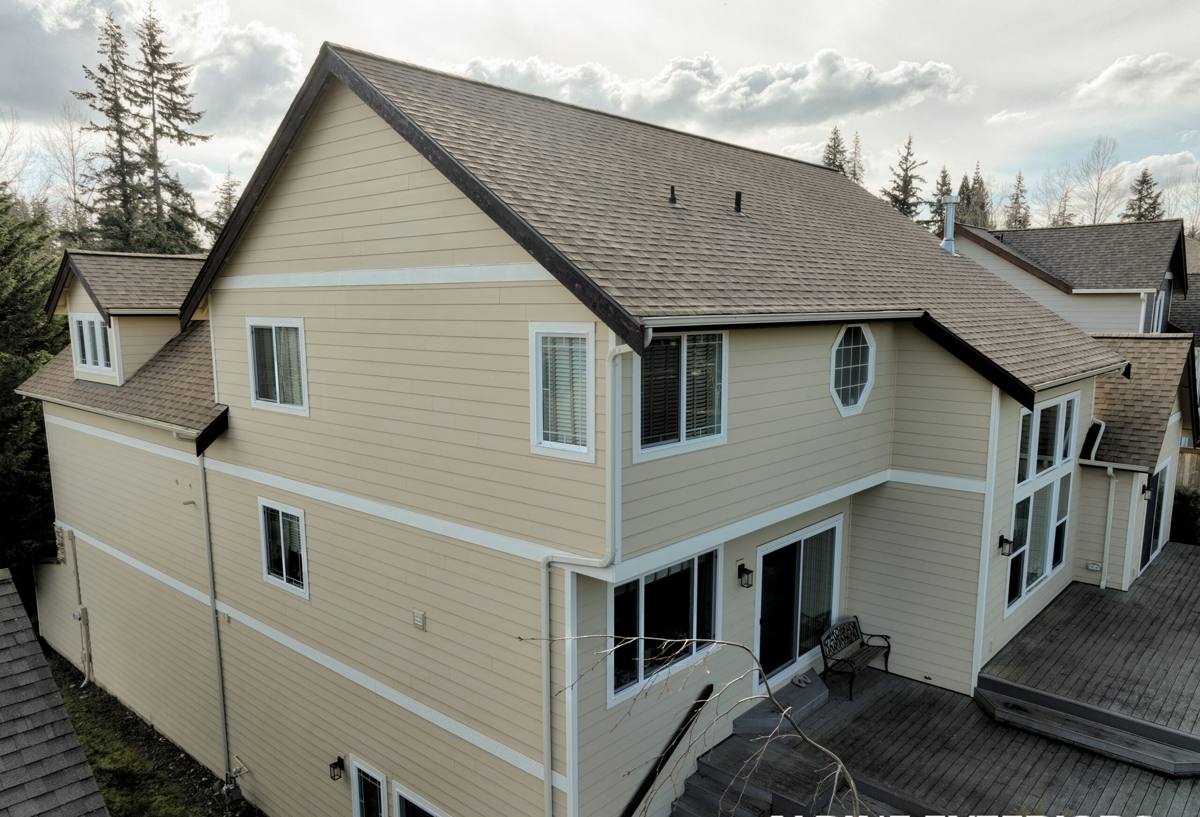
What the Local Climate Actually Does to a Deck
Salt Air and Corrosion
Homes close to the water in Blaine deal with airborne salt that settles on every exposed surface, including deck hardware. Standard galvanized fasteners and connectors can start corroding faster near the shoreline than the same products would inland. Over time, corroded fasteners loosen, stain the surrounding wood or decking, and in the worst cases fail structurally at connection points — which is exactly where you don't want a surprise.
Driving Rain
Rain in this part of Washington doesn't always fall straight down. Wind off the water pushes it sideways, which means it gets under railings, behind ledger boards, and into any seam that isn't sealed or flashed correctly. A deck built to a "good enough" standard for a calm, dry climate often isn't good enough here.
Moss and Sustained Moisture
Whatcom County's wet season runs long, and shaded or north-facing decks in Blaine can stay damp for weeks at a stretch. That sustained moisture is what feeds moss and algae growth on decking surfaces, and it's also what rots untreated wood from the inside out when water gets trapped instead of draining and drying.
What a Deck Built Correctly for Blaine Involves
A deck that's going to hold up in this environment isn't a different product — it's the same deck built with more attention to the details that matter for coastal, wet-climate conditions. The core pieces we focus on:
- Footings sized and set below frost depth and clear of standing water, per current building code
- Proper ledger board flashing where the deck attaches to the house, so water is directed away from the wall framing, not into it
- Joist tape or equivalent moisture barrier on top of framing members to keep water from sitting on end grain
- Corrosion-resistant fasteners and structural hardware rated for the exposure the deck will actually see
- Adequate airflow underneath the deck so the substructure can dry out between rain events instead of staying damp
- Decking gaps and drainage details that shed water instead of trapping it against fasteners and framing
Skip any one of these and the deck may look fine for a season or two before the climate catches up with it.
Choosing Decking Material for a Blaine Property
There's no single "right" decking material for every home — it depends on your budget, how much upkeep you want to take on, and how exposed the deck is to sun, rain, and salt air. Here's how the common options compare for this specific climate:
| Material | How It Handles This Climate | Maintenance | General Cost Position |
|---|---|---|---|
| Pressure-treated wood | Holds up well if sealed and re-sealed on schedule; end grain and fastener points are the weak spots | Annual cleaning, periodic re-staining/sealing | Lowest upfront cost |
| Cedar | Naturally rot- and insect-resistant, but still needs sealing against driving rain and salt exposure | Regular cleaning and sealing to keep its look and protection intact | Mid-range |
| Composite decking | Resists rot and moss staining better than wood; quality varies a lot by product line | Occasional washing; no staining or sealing | Mid to upper range |
| Capped composite / PVC | Best moisture and staining resistance of the common options; handles sustained dampness well | Lowest — mostly rinsing off pollen, debris, and moss growth | Highest upfront cost |
We'll walk you through these trade-offs honestly during your estimate rather than steering you toward whatever is easiest for us to install. A wood deck that's properly sealed and maintained can serve a Blaine home just as well as a composite deck that's neglected — it comes down to how much maintenance you actually want to keep up with.
Framing and Substructure: Where Deck Problems Actually Start
Most deck failures we get called out to inspect don't start with the decking boards people see — they start underneath, where nobody's looking. In a climate like Blaine's, the substructure is doing the real work of standing up to moisture over years of exposure.
The ledger board connection — where the deck attaches to your house — deserves particular attention here. It's the single most common source of hidden water damage on a deck, because a poorly flashed ledger lets rain track directly into the house's rim joist and wall framing behind the siding. We flash this connection to direct water away from the structure, not just seal it and hope. Footings get set to current code depth and positioned to avoid low spots where water pools. And every joist gets protected on top with a moisture barrier before decking goes down, since exposed end grain and fastener holes are where rot typically starts.
Railings, Fasteners, and Hardware for a Coastal Environment
Hardware is easy to overlook because it's small and mostly hidden, but it's often the first thing to fail on a deck near the water. For Blaine projects we use structural connectors and fasteners rated for the corrosion exposure the site actually has — stainless steel or heavier coated hardware where conditions call for it, rather than defaulting to whatever's cheapest. The same logic applies to railing systems: metal railing components and their mounting hardware take the brunt of salt air exposure since they're fully exposed and often at the deck's edge, closest to the weather. We spec railing hardware the same way — for the exposure it will actually face, not the exposure a generic spec sheet assumes.
Our Deck Building Process
Every deck we build in Blaine follows the same basic sequence, adjusted for your site and design:
- Site visit and design conversation. We look at your home's exposure — how close to the water, how much sun and shade, drainage on the property — and talk through what you want the deck to do.
- Material and layout selection. We go over decking, railing, and hardware options with the trade-offs specific to your site, and finalize a design and footprint.
- Permitting. Deck projects generally require a building permit in Whatcom County jurisdictions; we handle the application and inspections as part of the job.
- Foundation and framing. Footings, posts, beams, and joists get built to code with the moisture-management details covered above.
- Decking, railing, and finish work. Surface material and railings go on, fasteners are set correctly, and edges and seams are checked for proper drainage.
- Final walkthrough. We go over the finished deck with you, including any maintenance recommendations specific to the material you chose.
Keeping a Deck in Good Shape Through a Long Wet Season
However well a deck is built, it still needs some seasonal attention in a climate like this one. A short annual routine keeps small issues from turning into structural ones:
- Sweep debris and standing leaves off the deck surface regularly through fall and winter, when moss growth is most active
- Rinse or lightly scrub decking in spring to remove moss and algae before it stains or gets slick
- Check railing posts and stair connections once a year for movement or corrosion at fastener points
- Re-seal or re-stain wood decking on the schedule appropriate to the product — don't wait until it's visibly graying
- Confirm gutters and downspouts near the deck are directing water away, not onto or under it
- Clear vegetation and debris from underneath the deck so airflow can keep the substructure dry
None of this is complicated, but skipping it for a few years in a wet climate is how a well-built deck starts to look — and eventually behave — like a poorly built one.
Why It Matters to Hire a Crew That Already Works in Blaine
A lot of the details covered on this page — flashing choices, hardware selection, footing placement, drainage — come from having actually built and repaired decks in this specific area, not from a generic checklist. A crew that regularly works Blaine and the surrounding Birch Bay and Whatcom County coastline knows which corners get hit hardest by driving rain, which fastener specs actually hold up near the water, and what the local permitting process expects. That local familiarity is what separates a deck that's built to look right on day one from one that's built to still be sound in fifteen years.
If you're planning a new deck or replacing one that's showing its age, we're happy to come take a look and give you a straightforward, no-pressure estimate — just fill out the form below.