 Birch Bay
 Why Bellingham Decks Wear Out Faster Than You'd Expect
A deck in Bellingham lives a harder life than the same deck would in a dry inland climate. Between the salt air drifting in off the water near Birch Bay, the long stretch of driving rain that defines a Whatcom County winter, and a moss season that can run from October through May, exterior wood and hardware are under near-constant attack. Homeowners are often surprised that a deck built only ten or twelve years ago already has soft joists, rusted fasteners, or a slick green film that never fully goes away.
None of that means your deck is a lost cause. It means deck repair here has to account for moisture and corrosion in a way that repair work in a drier climate simply doesn't. That's the lens we bring to every Bellingham deck repair job.
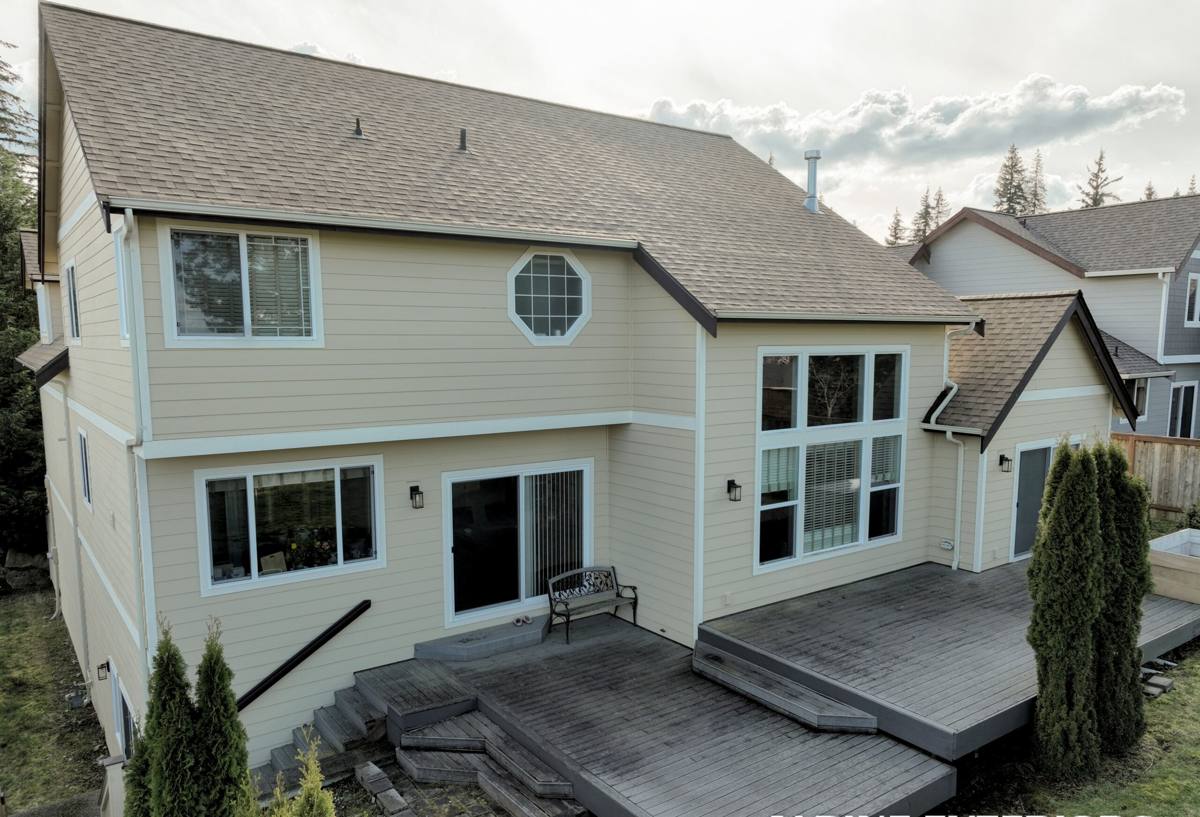
The Local Climate Factors That Damage Decks
Salt Air and Metal Corrosion
Homes closer to the water in and around Birch Bay deal with airborne salt that speeds up corrosion on any exposed metal — nails, screws, joist hangers, railing brackets. Once a fastener starts to rust, it loses grip strength long before the wood around it looks obviously damaged. That's how a deck can look fine from a few feet away while its structural connections are quietly failing underneath.
Driving Rain and Wind-Driven Moisture
Western Washington rain doesn't just fall straight down — wind pushes it sideways into ledger boards, under railing caps, and into any gap where flashing is missing or worn out. Over years, that wind-driven moisture finds its way into end grain and fastener holes, which is where rot almost always starts.
The Long Moss Season
Shaded decks, north-facing decks, and anything under tree cover stay damp for months at a stretch. Moss and algae aren't just cosmetic — they hold moisture against the wood surface, make boards dangerously slick, and, left unchecked, break down the wood fibers underneath.
Signs Your Deck Needs Repair, Not Just a Cleaning
Some deck problems are obvious. Others hide in plain sight until they become expensive. Here's what we look for, and what you should check for yourself between visits from a contractor:
- Boards that feel spongy, bounce, or flex more than they used to
- Any soft or discolored wood where the deck ledger meets the house
- Rust streaks running down from screw heads or metal connectors
- Railings or posts that wiggle when you lean on them
- Persistent moss or dark staining that comes back within weeks of cleaning
- Gaps opening up between decking boards, or boards cupping and warping
- Stairs that feel less solid underfoot than the rest of the deck
- Visible daylight or gaps in the flashing where the deck attaches to the house
If you're seeing more than one or two of these, it's worth having someone look underneath the deck, not just at the surface.
What a Correct Deck Repair Actually Involves
A repair that only replaces what's visible from above often misses the real problem. A repair done right starts underneath.
Structural Inspection First
Before any boards come off, we check the ledger board attachment (the single most common failure point on older decks), the condition of joists and beams, post bases where they meet grade or concrete, and the railing posts and their connections. Rot and corrosion both tend to concentrate in a handful of predictable spots, and those are where we look first.
Fixing the Cause, Not Just the Symptom
Replacing a rotted board without addressing why it rotted — missing flashing, poor drainage, a failed fastener — just buys you a few more years before the same spot fails again. Proper repair means correcting the water path: adding or replacing ledger flashing, improving drainage between boards, and re-securing structural connections with hardware rated for the exposure.
Matching Materials to the Repair
Not every repair needs to match the original material exactly, but it does need to be compatible. Mixing incompatible metals or fastening dissimilar materials without the right barriers can accelerate corrosion rather than solve it — something we account for whether we're patching a section of an old cedar deck or repairing a composite one.
Guardrail and Baluster Code Compliance
Older decks were often built to standards that have since changed, and guardrail spacing is one of the most common gaps we find during a repair. Current code generally calls for guardrails on any deck surface well above grade, with baluster spacing tight enough that a small child can't pass through. When we're already repairing a railing section for rot or a loose post, we bring it up to current spacing and height requirements rather than just patching it back to its original, sometimes noncompliant, condition.
Repair or Replace? How We Help You Decide
Not every deck problem calls for a full rebuild, and not every deck is worth repairing piece by piece. The right call usually comes down to how much of the structure is still sound.
| Factor | Leans Toward Repair | Leans Toward Replacement |
|---|---|---|
| Ledger board and framing | Solid, no rot at connections | Soft wood, failed flashing, or rot at multiple joists |
| Extent of damage | Isolated to a few boards or one railing section | Spread across most of the deck surface or structure |
| Age of the deck | Under 15–20 years, built to a reasonable standard | Original construction is outdated or undersized for current loads |
| Fastener condition | Localized rust, hardware still holding | Widespread corrosion on structural connectors |
| Cost comparison | Repair cost is a fraction of replacement | Repair cost approaches what a rebuild would run |
We'll walk you through where your deck falls on that list before recommending either path — there's no reason to rebuild a deck that just needs its ledger flashing corrected and a handful of boards replaced.
Materials and Hardware We Use in a Marine-Influenced Climate
Given the salt air and moisture this area sees, we lean toward hardware and materials that are built for exposure, not just budget:
- Stainless steel or hot-dip galvanized fasteners for anything structural, since standard coated screws corrode faster this close to the water
- Properly flashed ledger connections using flashing designed to shed water away from the house rather than trap it
- Pressure-treated framing lumber rated for ground contact where posts and beams sit close to grade
- Composite or capped composite decking as an option where a homeowner wants to reduce moss buildup and ongoing maintenance, understood as a trade-off against the natural look and lower upfront cost of wood
- Real wood decking — cedar or treated lumber — for homeowners who prefer it, paired with a realistic maintenance and refinishing schedule so it holds up in our climate
One detail that trips up crews unfamiliar with this climate: most modern pressure-treated lumber uses a copper-based preservative that speeds up corrosion on the wrong type of hardware. Pairing that lumber with mismatched fasteners or flashing creates a corrosion problem that has nothing to do with the weather — it's built into the connection from day one. We match fastener and flashing coatings to the lumber treatment for exactly that reason.
There's no single "best" decking material for every home. Composite reduces moss and staining problems but costs more upfront and can't be sanded or refinished the way wood can. Wood is more affordable and repairable in sections but needs more attention here than it would in a drier state. We'll lay out the honest trade-offs for your specific deck rather than push one product.
Our Deck Repair Process
- On-site inspection. We check the deck from underneath as well as on the surface — ledger, joists, posts, railings, and fasteners — and explain what we find in plain terms.
- A clear scope and estimate. You'll know what's being repaired, why, and roughly what it costs before any work starts.
- Permit check when needed. Structural repairs like ledger reattachment or railing rebuilds can fall under local building code requirements in Bellingham and Whatcom County; we'll flag it if your project needs a permit.
- The repair itself. Structural fixes first, then decking, railings, and stairs, using fasteners and flashing suited to this climate.
- Final check and cleanup. We confirm everything is solid and secure, and leave the work area clean.
Moss, Algae, and Keeping a Repaired Deck That Way
A repair holds up longer when the moisture problem that caused it in the first place is managed going forward. A few habits make a real difference in this climate:
- Sweep debris and standing water off the deck surface regularly, especially under trees
- Clean moss and algae before it builds up thick — a light annual cleaning beats a deep, aggressive one every few years
- Keep gutters and downspouts clear so runoff isn't landing directly on or under the deck
- Reseal or restain wood decking on the schedule the product actually calls for, not just when it looks faded
- Trim back vegetation that's shading the deck and keeping it damp longer than necessary
- Have fastener and framing condition checked every few years, even if the surface looks fine
Why Local Bellingham and Birch Bay Experience Matters
A deck contractor who mostly works drier inland areas can still do competent framing work, but they may not default to the corrosion-resistant hardware, flashing details, and drainage planning that this coastline actually requires. Working decks throughout Bellingham and Birch Bay day in and day out means we know which failure points show up first in this climate, what the local building department expects for permitted structural repairs, and how to time exterior work around our wet season instead of fighting it.
Whatcom County and the City of Bellingham each have their own permitting thresholds for deck work — a straightforward board swap usually doesn't trigger one, but reframing, ledger reattachment, or raising a structure's height often does. Knowing which is which before we start avoids a stop-work surprise partway through the job.
That local pattern recognition is often the difference between a repair that lasts a few years and one that lasts closer to the deck's full remaining lifespan.
If your deck has soft spots, rust streaks, stubborn moss, or just doesn't feel as solid as it used to, we're happy to take a look. Fill out the form below for a free, no-pressure estimate on deck repair for your Bellingham-area home.