 Birch Bay
 Deck Replacement in Sumas: Built for This Corner of Whatcom County
A deck in the Sumas area doesn't fail the same way a deck in a dry inland climate fails. Around here, the damage is slower and sneakier. Salt-laden air moves in off the water and settles into fasteners and hardware. Driving rain gets pushed sideways by wind and finds every gap in old flashing. And for a good stretch of the year, moss and algae take hold on anything that doesn't get direct sun, turning boards slick and holding moisture against the wood long after the rain has stopped. None of that is dramatic on its own. It just adds up, year after year, until a deck that looked fine from the yard turns out to be soft, spongy, or structurally questionable underneath.
That's the backdrop for every deck replacement we do in this part of Whatcom County. We're not just swapping old boards for new ones — we're building something meant to hold up against the specific conditions Sumas and the greater Birch Bay area throw at it.
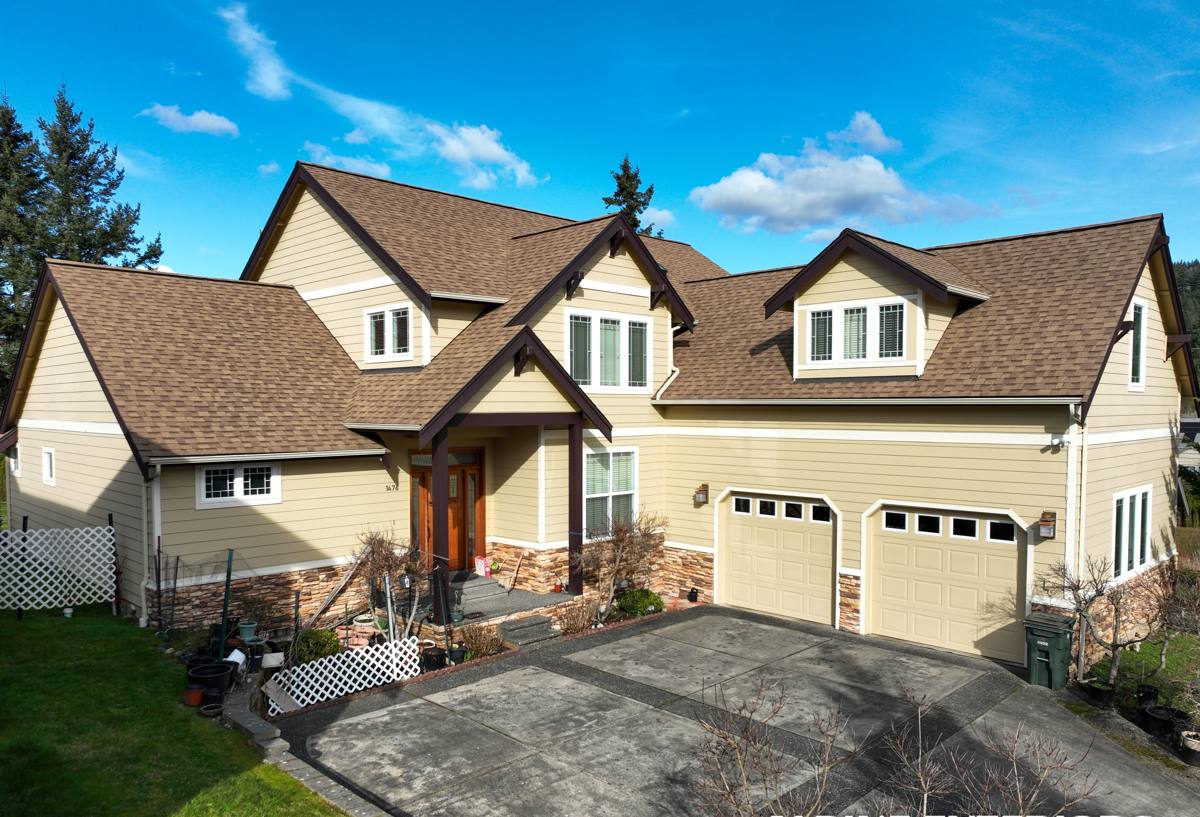
Signs a Sumas Deck Needs Replacing, Not Just Repairing
Not every tired-looking deck needs a full teardown. But there's a point where patching individual boards stops being a real fix and starts being a way to delay a bigger problem. Here's how we tell the difference on a walkthrough.
Repair is usually enough when:
- A handful of boards are cupped, cracked, or splintering but the frame underneath is solid
- Railings are loose at a few connection points rather than throughout
- Surface graying or mild moss growth is the main complaint and the wood underneath still probes firm
Replacement is the honest recommendation when:
- A screwdriver or awl sinks easily into the ledger board, joists, or posts — a sign of rot, not just weathering
- The deck feels bouncy or springy underfoot in more than one spot
- Flashing at the house connection is missing, rusted through, or was never installed correctly to begin with
- Fasteners are heavily corroded, streaking rust down the boards
- The structure predates current ledger attachment and flashing standards, which is common on older homes in this area
We'll always tell a homeowner straight if repair is the more sensible option. A full replacement only makes sense when the underlying structure — not just the surface — has given out.
What a Correct Deck Replacement Actually Involves
A deck replacement done right is mostly about what you don't see once it's finished. The decking boards get the attention because they're visible, but the parts that determine whether the deck lasts fifteen years or four are underneath.
The structural work that matters most
Ledger attachment and flashing: Where the deck meets the house is the single most common failure point we find on older decks in wet coastal climates. Proper flashing — installed in the correct order relative to the house's siding and building wrap — keeps water from tracking behind the ledger board and into the rim joist. This is the detail that gets skipped most often on budget rebuilds, and it's the one that causes the most expensive hidden damage.
Joist and beam sizing: Spans and spacing need to match the load and the material going on top. Composite decking, for example, generally needs tighter joist spacing than solid wood to avoid flexing over time.
Fasteners and hardware: In a salt-air environment, the grade of screws, joist hangers, and structural connectors matters more than it would fifty miles inland. Standard galvanized hardware corrodes faster here than most homeowners expect. We use fasteners and connectors rated for the exposure the deck will actually see.
Footings and post bases: Post bases that hold wood up off the concrete, rather than embedding it directly, keep moisture from wicking into the post end grain — a small detail that has an outsized effect on how long the structure lasts.
Above the frame
Once the structure is right, decking board choice, gapping for drainage and expansion, stair geometry, and railing code compliance round out the job. Board gapping in particular needs to account for our wet season — too tight, and boards can't shed water or dry between rains; too loose, and the deck feels unfinished and collects debris.
Choosing Decking Material for Salt Air and a Long Moss Season
There's no single "best" decking material — there's a best material for this climate and this homeowner's maintenance appetite. Here's how the common options actually perform under salt air, sustained rain, and moss pressure.
| Material | Moisture & Moss Behavior | Maintenance | Typical Lifespan Here |
|---|---|---|---|
| Pressure-treated wood | Absorbs water; needs sealing to resist moss and graying | Annual cleaning, periodic sealing/staining | 10–15 years with upkeep |
| Cedar | Naturally rot-resistant but still needs sealing in wet climates; can stay damp under moss | Regular cleaning, refinishing every few years | 15–20 years with upkeep |
| Composite (capped) | Doesn't absorb water like wood; still needs cleaning where moss and algae settle on the surface | Periodic washing, no sealing or staining | 25+ years, manufacturer-dependent warranty |
| PVC decking | Fully moisture-resistant; least hospitable surface for moss and algae buildup | Occasional washing | 25+ years, manufacturer-dependent warranty |
We'll talk through the real trade-offs rather than pushing whichever product has the best margin. Wood costs less up front but asks for real upkeep in a climate that's wet more months than it's dry — skip a year of sealing here and moss gets a head start. Composite and PVC cost more initially but hand back a lot of that maintenance burden, which matters if the deck doesn't get regular attention. The right call depends on budget, how the deck will be used, and how much time the homeowner actually wants to spend on upkeep.
Permits, Setbacks, and Site Realities in This Area
Deck replacements in Whatcom County typically require a permit once you're rebuilding structure rather than just replacing surface boards, and requirements can shift depending on deck height, footprint, and proximity to property lines. Because we work in this area regularly, we're familiar with what local building departments expect to see on a deck permit application and what typically triggers extra scrutiny — height above grade, guardrail height, and stair geometry are common ones.
Site conditions matter too. Homes in this part of the county often sit on lots with grade changes, established landscaping close to the foundation, or existing hardscape that affects how footings get placed. We account for that during the estimate walkthrough rather than discovering it mid-project.
Our Deck Replacement Process
- On-site assessment. We check the ledger, framing, posts, and footings — not just the decking surface — and probe for rot rather than guessing from a visual look.
- Honest scope and estimate. We tell you what needs full replacement versus what could reasonably be repaired, with a written estimate that reflects the actual condition we found.
- Permit handling. Where a permit is required, we prepare the paperwork and coordinate inspections so it doesn't fall on the homeowner to navigate.
- Demolition and disposal. Old decking, framing, and hardware come out and off the property — we don't leave debris for the homeowner to deal with.
- Rebuild. Ledger flashing, framing, footings, then decking, stairs, and railings, in that order, with corrosion-resistant hardware throughout.
- Final walkthrough. We go over the finished deck together, including basic care guidance for whatever material was installed.
Why a Crew That Already Works Sumas and Birch Bay Matters
A deck contractor who works this part of Whatcom County regularly isn't learning the local conditions on your project. We already know what a ledger board looks like after a decade of salt air and driving rain, which fastener grades hold up and which ones don't, and how aggressively moss takes over a north-facing deck that doesn't get much sun. That familiarity shows up in fewer surprises during the job and a structure that's built for the conditions it'll actually face, not generic conditions from a manufacturer's spec sheet written for a drier climate.
It also matters for the practical, unglamorous stuff — being reachable if a question comes up after the job, being familiar with the local permitting process, and being around next season if something needs a look. A crew that's only passing through doesn't have the same stake in how the deck holds up five years out.
Maintaining a New Deck Through the Wet Season
Even the best-built deck needs some seasonal attention in this climate. A little consistency goes a long way toward avoiding the slow damage that led to the last replacement.
- Sweep leaves and debris off the deck surface regularly, especially in fall — trapped organic matter holds moisture and feeds moss
- Rinse or lightly scrub surfaces where moss and algae tend to settle, particularly shaded or north-facing sections
- Check that gaps between boards stay clear so water can drain rather than pool
- Inspect the ledger flashing and railing connections once a year for early signs of rust or movement
- For wood decking, plan on resealing or restaining on the schedule the product calls for — skipping a cycle in this climate shows up fast
- Keep gutters and downspouts near the deck clear so runoff isn't dumping extra water onto or under the structure
Get an Honest Look at Your Deck
If you're not sure whether your Sumas-area deck needs a full replacement or just some targeted repair, the only real way to know is an in-person look at the framing, not just the surface boards. We offer free, no-pressure estimates — we'll tell you what we actually find, walk through material options that make sense for this climate, and give you a straight answer before any work begins. Fill out the form below to get started.