 Birch Bay
 Windows Built for Cottonwood Beach's Salt Air and Weather
Cottonwood Beach sits close enough to the water that its homes take a different kind of beating than houses a few miles inland. Salt air works its way into hardware and seals, driving rain pushes moisture at windows sideways instead of straight down, and the long stretch of gray, wet months lets moss and mildew get a foothold on anything that stays damp too long. Windows here don't just need to look good — they need to hold up to conditions that are genuinely harder on a house than what most of Whatcom County deals with even a short distance from the shoreline.
When we talk about "energy-efficient windows" for a Cottonwood Beach home, we're not just talking about lower heating bills, though that's part of it. We're talking about a window system — frame, glass, seals, and flashing — that's specified and installed to handle salt exposure, wind-driven rain, and constant humidity without failing early. Get that wrong and you end up replacing windows again in half the time you should. Get it right and the energy savings are a bonus on top of a window that actually lasts.
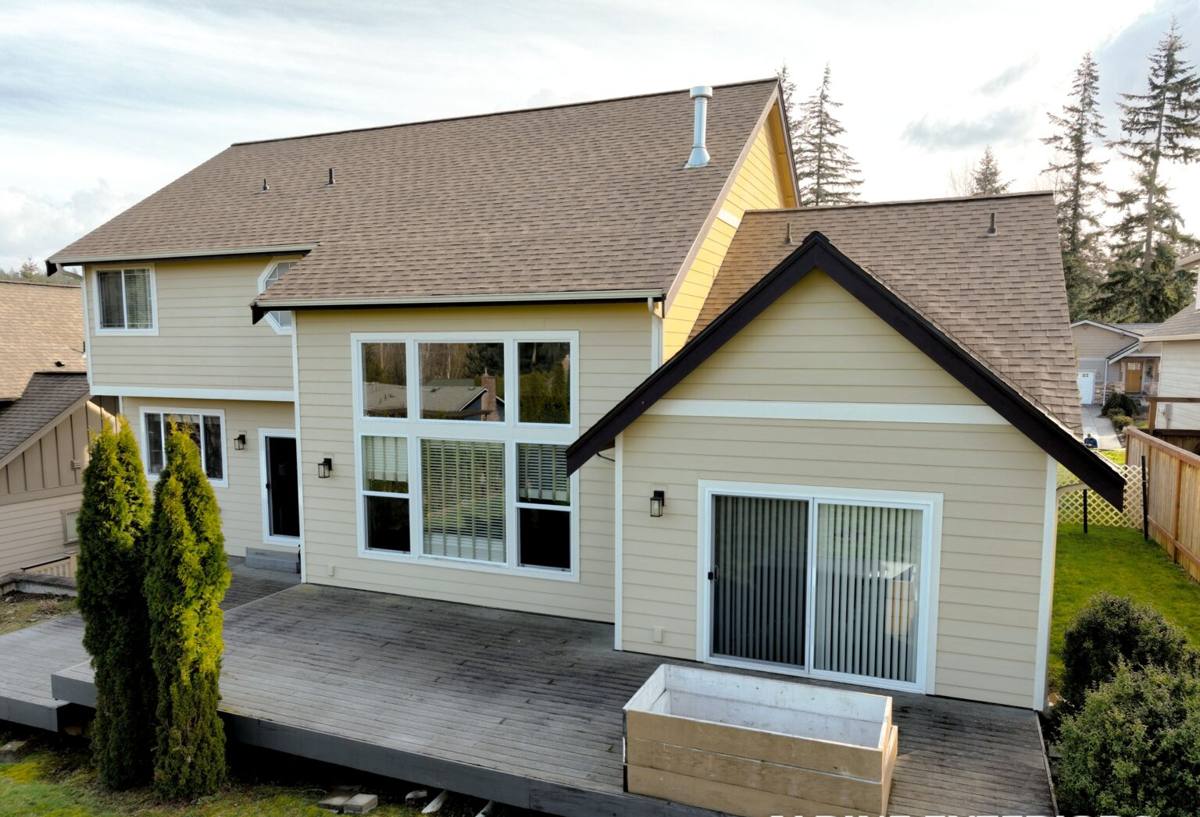
What Birch Bay's Climate Does to Ordinary Windows
Salt Air and Corrosion
Homes near the water deal with airborne salt settling on every exterior surface, including window frames and hardware. Over time it accelerates corrosion on lower-grade fasteners, hinges, and cranks, and it can degrade certain finishes faster than a manufacturer's standard warranty testing assumes. This is one of the biggest reasons a window that performs fine in a typical suburban install can underperform on a home closer to Birch Bay's shoreline — it simply wasn't tested or specified with that exposure in mind.
Driving Rain and Wind-Driven Moisture
Rain in this area doesn't always fall straight down. Wind off the water can drive it sideways into wall assemblies, which puts real pressure on window flashing, sill pans, and the seal between the window unit and the rough opening. A window can have excellent glass and still leak if the flashing detail underneath it was done poorly — this is a case where installation quality matters as much as the product itself.
Moss Season and Shaded Exposure
Whatcom County's long moss season isn't just a roofing problem. Window sills, trim, and the bottom corners of frames that stay shaded or damp for extended periods are prone to the same buildup, and that moisture retention can accelerate wood rot on trim or find its way into gaps in older sealant. Windows and trim details that shed water quickly and dry out fast hold up noticeably better through a Birch Bay winter than ones that trap moisture against the frame.
What "Energy-Efficient" Actually Means for a Coastal Home
Energy efficiency in a window comes down to a handful of measurable factors, and for a Cottonwood Beach home we weigh them alongside durability, not instead of it.
- U-factor — how well the window resists heat loss. Lower is better for our winters.
- Low-E glass coatings — a microscopically thin coating that reflects heat back into the room in winter and blocks excess solar heat in summer, without noticeably darkening the glass.
- Gas-filled sealed units — argon or krypton gas between panes insulates better than plain air and helps reduce condensation on the interior glass surface, which matters in a climate this humid.
- Frame material and construction — the frame conducts heat and moisture differently than the glass, so it has to be matched to both the climate and the home's exposure.
- Air infiltration rating — how tightly the window seals against wind. This is directly tied to comfort near drafty older openings and to how well the window resists wind-driven rain intrusion.
A window that scores well on paper but uses hardware, seals, or a frame profile poorly suited to salt exposure and constant damp will still underperform in a home this close to the water. That's why product selection and installation detailing both matter here, not just the energy rating on the label.
Choosing the Right Frame Material
There's no single "best" frame material for every home — it depends on the home's exposure, age, and how the current windows are performing. Here's how the common options stack up for a coastal Whatcom County property.
| Frame Material | Salt Air & Moisture Behavior | Maintenance | Typical Considerations |
|---|---|---|---|
| Vinyl | Won't corrode or rust; performs well in salt air when seams and welds are well made | Low — no painting or sealing needed | Good value; quality varies a lot between manufacturers, so we're selective about which lines we install |
| Fiberglass | Very stable in temperature swings and humidity; strong resistance to warping | Low | Higher upfront cost; holds paint well if a custom color is wanted later |
| Wood / Wood-Clad | Attractive but vulnerable if the exterior cladding or finish is breached near the shore | Higher — finish needs monitoring, especially on shaded or damp elevations | Best suited to homes where the wood is well protected by cladding and roof overhangs |
| Aluminum | Conducts heat and cold readily; can be prone to condensation without a thermal break | Low, but corrosion resistance depends on finish quality | We only recommend it with a proper thermal break in this climate |
For most Cottonwood Beach homes we lean toward vinyl or fiberglass systems from manufacturers with a track record in coastal Pacific Northwest conditions, but the right call always depends on the specific home — its age, orientation to the water, and how sheltered or exposed each elevation is.
How We Install Windows in Cottonwood Beach
The window unit itself is only part of the job. Installation detailing is where most premature failures actually start, especially in a wind-driven-rain environment like this one.
- On-site assessment. We look at each opening individually — sun exposure, wind exposure, existing rot or moisture damage, and how the current window is flashed and sealed.
- Product selection matched to the opening. Not every window on our lineup goes in every wall. South- and west-facing openings that catch the brunt of driving rain often get a different sealant or flashing approach than a sheltered opening.
- Removal and opening prep. We check the sheathing and framing behind the old window for hidden water damage before anything new goes in — this is a common place to find problems that a homeowner would never see otherwise.
- Sill pan and flashing. A properly sloped sill pan and correctly lapped flashing (integrated with the home's water-resistive barrier) is what actually keeps wind-driven rain out over the long run, regardless of how good the window itself is.
- Setting, shimming, and sealing. The window is set plumb and level, shimmed correctly so it doesn't bind or leak, and sealed with materials suited to sustained damp exposure rather than just whatever is fastest to apply.
- Interior and exterior trim-out. Trim is finished to shed water and resist the kind of moss and mildew buildup that's common on shaded elevations in this area.
- Final check. We test operation, seal integrity, and look over the finished exterior detailing before we call the job done.
Signs Your Current Windows Are Working Against You
You don't need to wait for a window to fail outright before it's costing you money and comfort. Common signs we see on Cottonwood Beach homes include:
- Condensation forming between the panes of a sealed unit — a sign the seal has failed and the insulating gas is gone
- Corroded or stiff hardware — cranks, locks, or hinges that feel gritty or resist turning
- Visible moss, algae, or dark staining on sills or lower trim that keeps coming back after cleaning
- Noticeable drafts or cold spots near the frame, especially during windy weather off the water
- Soft or discolored trim or sill wood, which often signals moisture has already gotten behind the surface
- Difficulty opening, closing, or latching a window that used to operate smoothly
- Rising heating costs without a clear explanation, especially in older single-pane or early dual-pane homes
What Affects the Cost of a Window Project Here
Every home is different, but a few factors consistently move the price on Cottonwood Beach projects more than homeowners expect:
- Extent of hidden damage. If we open a wall and find rot or water damage behind an old window, that repair work is additional but necessary — skipping it just seals a problem behind a new window.
- Frame material and glass package. Fiberglass and higher-performance glass packages cost more upfront but often make sense on exposed elevations facing the water.
- Number and size of openings. Larger or custom-shaped windows, and full-home versus partial replacements, scale the project differently.
- Access and site conditions. Second-story openings, tight lot access, or homes right along the shoreline can add labor time.
- Flashing and detailing needs. A home with a history of water intrusion may need more extensive flashing and sealant work to do the job right.
We give straightforward, itemized estimates so you can see what's driving the number — not just a single lump figure. That way you know exactly what you're paying for and where, if anything, there's room to adjust scope.
Why Local Experience in Cottonwood Beach Matters
A contractor who mostly works inland doesn't always account for how much harder salt air and driving rain are on a window installation right along the water. We work this area regularly, which means we already know which elevations tend to take the worst weather, which flashing details hold up and which don't, and which products are worth the extra cost for a home this close to Birch Bay's shoreline. That local pattern recognition is hard to replace with a one-time crew that isn't familiar with what this specific stretch of coastline does to a building over time.
It also means we're not disappearing after the job is done. If a question comes up six months or a few years down the road, you're calling a crew that's still working in your neighborhood, not chasing down a company that's moved on to a different region entirely.
Get a Straightforward Estimate
If your windows are showing their age, feeling drafty, or just not keeping up with what a Cottonwood Beach winter throws at them, we're happy to take a look and walk you through your options honestly — no pressure, no hard sell. Fill out the form below to schedule a free estimate.