 Birch Bay
 Ferndale Decks Wear Out Differently Than Decks Inland
A deck built the same way in Spokane or Boise will hold up for decades with basic upkeep. Build that same deck in Ferndale, and you're fighting a different set of conditions from day one. Whatcom County sits close enough to the water that salt-laden air reaches inland yards, and the region's long, wet stretch from fall through spring keeps wood and hardware damp for months at a time. Add a moss season that can run half the year in shaded or north-facing yards, and you have a recipe for decks that look fine on the surface while the structure underneath is quietly failing.
We replace decks in Ferndale often enough to know which failure points show up again and again in this specific climate, and we build to head them off rather than patch around them later.
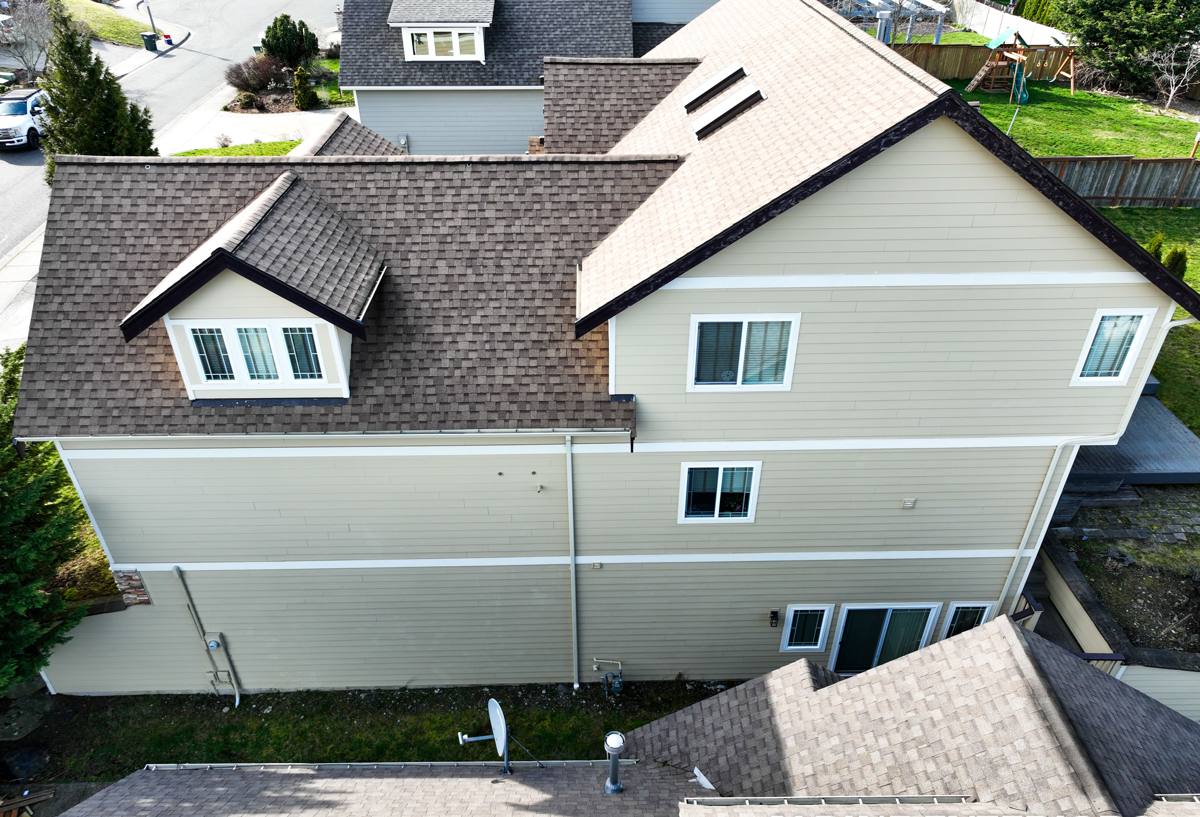
What Local Conditions Actually Do to a Deck
Salt Air and Corroding Hardware
You don't have to be beachfront for salt air to matter. Moisture carrying salt moves inland on wind and settles on any exposed metal — nails, screws, joist hangers, bolts. Over years, that accelerates corrosion in fasteners that aren't rated for it. A deck can look structurally sound while the hardware holding it together has been quietly weakening for years, which is exactly why fastener selection matters as much as the decking material itself.
Driving Rain and Water Intrusion
Whatcom County doesn't just get rain — it gets sustained, wind-driven rain that finds its way into gaps a drier climate would never test. Ledger board connections, flashing details, and the underside of decking boards all take on water that has nowhere to evaporate quickly. When those details are done wrong, or done to a minimum standard, water gets trapped against wood and framing and rot sets in from the inside where you can't see it.
The Long Moss Season
Shaded yards, tree cover, and the region's damp stretch from October through May give moss and algae a long runway to establish themselves on horizontal wood surfaces. Beyond looking bad, moss holds moisture against the board surface, which speeds up decay in wood decking and can make boards dangerously slick underfoot — a real concern on stairs and low-light areas of a deck.
Signs a Ferndale Deck Needs Replacing, Not Just Repair
Not every aging deck needs a full replacement. But certain signs point to structural issues that a few new boards won't fix:
- Soft or spongy spots in decking boards, especially near the house or in shaded corners
- Visible gaps, staining, or soft wood around the ledger board where the deck meets the house
- Wobble or movement in the railing posts when you push on them
- Rust streaks bleeding from fasteners or joist hangers
- Persistent moss or dark staining that comes back within weeks of cleaning
- Joists or beams that feel soft when probed with a screwdriver
- A deck older than 15-20 years that has never had the substructure inspected
If you're seeing more than one of these, it's worth having someone look at the framing before deciding whether repair or replacement makes sense.
Decking Material Options for This Climate
Every material has trade-offs here. None of them are wrong choices — the right one depends on how much upkeep you want to do and what you're willing to trade for a lower upfront cost.
| Material | Moisture & Rot Resistance | Moss/Mildew Behavior | Maintenance |
|---|---|---|---|
| Pressure-treated wood | Good if properly sealed and maintained | Moss and mildew can take hold if not cleaned and resealed regularly | Annual cleaning and resealing recommended in this climate |
| Cedar | Naturally rot-resistant but still needs sealing here | Prone to graying and moss buildup without upkeep | Periodic sealing and cleaning to preserve appearance and lifespan |
| Composite decking | Does not rot; handles sustained moisture well | Moss and algae can still grow on the surface and need periodic washing | Low — occasional cleaning, no sealing or staining |
| PVC/capstock decking | Fully moisture-resistant, no organic material to rot | Smooth surface resists moss adhesion better than wood-based products | Lowest — wash as needed, no sealing |
Composite and PVC decking generally cost more upfront than pressure-treated wood, but in a climate that keeps boards wet for months at a stretch, the reduced maintenance and longer service life often even that out over the life of the deck. We'll walk through the honest trade-offs for your specific yard, sun exposure, and budget rather than pushing one product across the board.
What a Correct Deck Replacement Actually Involves
Structural Framing and the Ledger Board
The ledger board — where the deck attaches to the house — is the single most common source of long-term failure on decks in this region. Proper flashing behind and over the ledger, correct fastener spacing, and a gap or membrane that keeps water from tracking behind the siding are non-negotiable details, not upgrades. A deck that's structurally attached but poorly flashed will trap water against your home's framing, which turns a deck problem into a siding and wall problem.
Flashing and Water Management
Every horizontal surface and every point where wood meets wood needs a plan for where water goes. That includes ledger flashing, joist tape or protective wrap on top of framing lumber, and gapping between boards that allows drainage instead of pooling. In a climate with as much sustained rain as ours, skipping these details shortens the life of the deck by years.
Footings and Post Bases
Footings need to be sized and set to local frost and soil conditions, with post bases that keep wood off standing water and concrete. Post bases that hold moisture against the end grain of a post are one of the more common hidden failure points we find when we tear out an old deck.
Fasteners and Hardware
Given the salt air factor, we use fasteners and structural hardware rated for coastal or corrosive exposure rather than standard-grade hardware. It costs more than the minimum, but it's the difference between hardware that lasts as long as the deck and hardware that becomes the weak point in five or six years.
Our Deck Replacement Process
- On-site assessment. We inspect the existing deck, including probing framing and the ledger connection, to understand what's actually failing versus what's cosmetic.
- Material and design discussion. We walk through decking material options, railing choices, and layout with your budget and maintenance preferences in mind.
- Written estimate. You get a clear scope of work and price before anything is scheduled — no surprise add-ons mid-project.
- Permitting. Where the project requires it, we handle the permit application with the local building department.
- Demolition and disposal. The old deck comes out, including a check of the ledger area and any framing hidden beneath it.
- Rebuild. Framing, flashing, footings, decking, and railing go in to code, with attention to the water-management details this climate demands.
- Final walkthrough. We go over the finished deck with you, including basic maintenance guidance for the material you chose.
Permits and Local Code Considerations
Deck replacement projects in Whatcom County commonly require a permit, particularly when the project involves structural changes, new footings, or work near the house's foundation. Requirements can vary depending on deck size, height, and attachment method, so we confirm what applies to your specific project with the local building department rather than assuming. Guardrail height, stair rise and run, and baluster spacing are also governed by code — details that matter for safety as well as for passing inspection.
Why Hire a Crew That Already Works in Ferndale
A contractor who only occasionally works this far north can miss things that are obvious to a crew that works Whatcom County regularly — how far salt air actually reaches inland in a given neighborhood, which yards hold moisture longest through the wet season, and which flashing details matter most given how this area's rain behaves. We're not guessing at what "coastal-adjacent" means for a deck build here; it's the standard condition we build for. That translates into fewer callbacks and a deck that's actually sized up for the climate it has to survive, not a generic build dropped into a Pacific Northwest yard.
Keeping a New Deck Ahead of Moss and Moisture
Whatever material you choose, a few habits go a long way in this climate:
- Sweep debris and leaves off the deck regularly, especially in shaded areas where moisture lingers
- Clean moss and algae buildup before it has a chance to stain or become a slip hazard
- For wood decking, plan on resealing on a regular schedule rather than waiting until it looks worn
- Keep gutters and downspouts clear so runoff isn't draining directly onto or under the deck
- Check railing posts and stair connections annually for movement or soft wood
If you're seeing signs of trouble on your current deck, or you're just ready to plan ahead of next winter's rain, we're happy to take a look and give you a straightforward, no-pressure estimate. Use the form below to get started.