 Birch Bay
 Metal Roofing on Lummi Island: Built for Salt Air, Rain, and Moss
Homes on and around Lummi Island sit close enough to the water that the roof takes a different kind of beating than a house twenty miles inland. Salt-laden air off the Salish Sea, driving rain that comes in sideways during winter storms, and a moss season that can run most of the year all work against a roof at the same time. A roofing system that would be perfectly fine in a drier part of Whatcom County can fall short here — not because the material is bad, but because it wasn't matched to this specific exposure.
Metal roofing, installed correctly, handles this combination better than most other roofing materials. But "installed correctly" is doing a lot of work in that sentence. Panel choice, fastener type, flashing detail, and coating all matter more in a coastal environment than they do somewhere sheltered. This page covers what that actually means for a home in this area, and what to expect if you're considering a metal roof here.
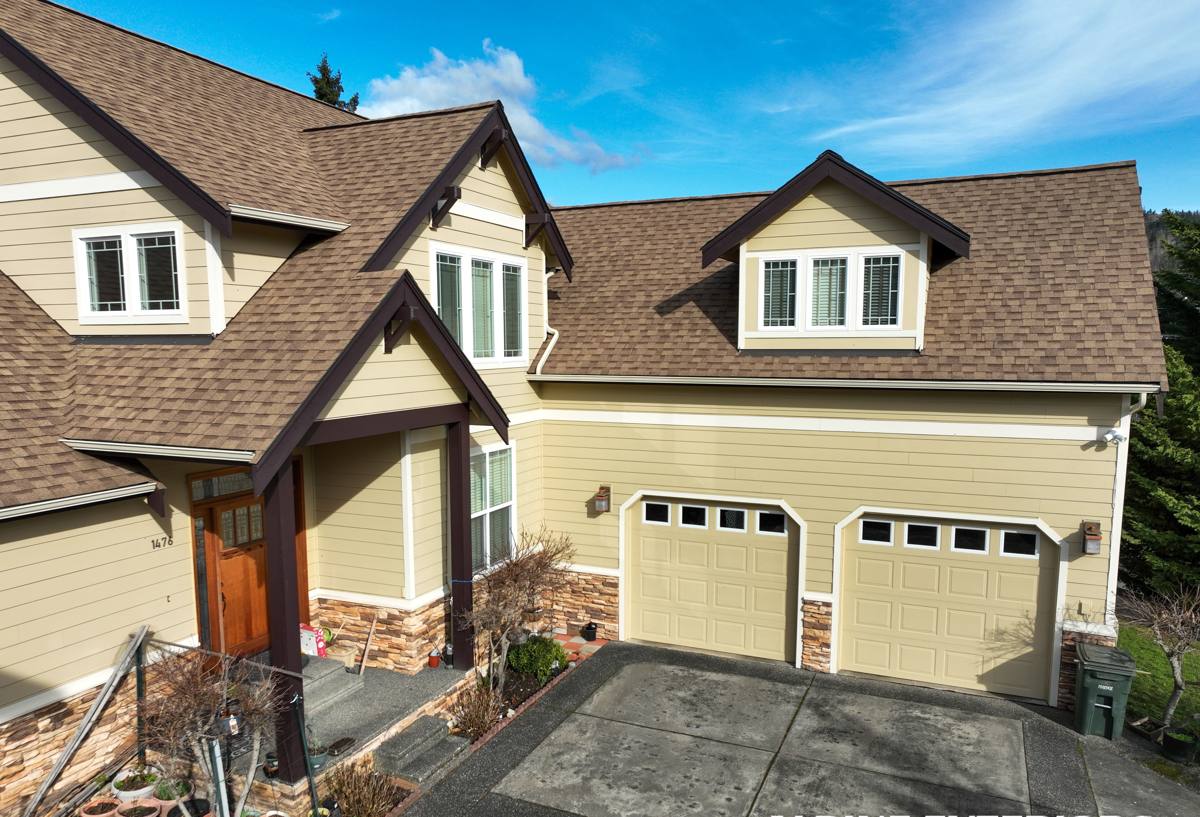
What Coastal Exposure Actually Does to a Roof
It helps to understand the specific mechanisms at work, because they change what "good" roofing looks like in this location.
Salt Air and Corrosion
Airborne salt doesn't need direct ocean spray to cause problems — it travels on the wind and settles on any exposed metal, especially fasteners, flashing, and cut edges. Over years, untreated or poorly coated metal can corrode from the outside in, starting at the weakest points: screw heads, panel seams, and anywhere a cut edge exposes bare metal. This is why coating quality and fastener material matter more here than they would twenty miles from the water.
Driving Rain
Storms coming off the water tend to push rain sideways rather than straight down, which puts pressure on details that a roof in a calmer setting rarely has to deal with — vent boots, ridge caps, valleys, and anywhere two roof planes meet. Wind-driven rain finds gaps that vertical rain never would. A roof detailed for average conditions instead of driving rain will eventually show it as a slow leak that's hard to trace back to its source.
Moss and Constant Moisture
Western Whatcom County stays damp for a long stretch of the year, and shaded or north-facing roof sections can stay wet for days after a storm passes. Moss thrives in that environment, and on the wrong material it holds moisture against the roof surface and works into seams and fastener points. Metal doesn't feed moss the way some roofing materials do, but moss and debris can still collect in valleys and against protrusions if the roof isn't kept clear.
Choosing the Right Metal Roofing System for This Climate
Not all metal roofing is the same product wearing different colors. The panel style and how it's fastened make a real difference in how it performs against salt air and wind-driven rain.
| System Type | How It's Fastened | Best Fit For This Climate |
|---|---|---|
| Standing seam | Concealed clips, no exposed fasteners on the field of the panel | Strongest choice near the water — fewer penetration points for salt and moisture to attack over time |
| Exposed-fastener panel | Screws driven through the panel face, typically with rubber washers | Lower upfront cost, but washers age and screws need periodic checking in a salt-air environment |
| Metal shingles/shakes | Interlocking panels, fasteners generally concealed | Good option where a traditional shingle look is wanted with metal's durability |
For most homes in this area, we lean toward standing seam because it minimizes the number of exposed fastener points — which is exactly where salt-air corrosion tends to start. Exposed-fastener panels are a legitimate, more affordable option, but they come with a maintenance commitment: the washers and screws need to be inspected periodically and replaced before they fail, not after.
Coatings Matter as Much as the Metal
The base metal (steel or aluminum) is only part of the story — the paint or coating system is what actually stands between the metal and the salt air. We favor products with coating warranties that specifically account for coastal or marine exposure, rather than a generic inland warranty that assumes a drier, less corrosive environment. This is a detail worth asking about directly, because not every coating is rated the same way, and the difference shows up ten or fifteen years down the road, not in year one.
What a Correct Installation Involves Here
A metal roof is only as good as the details underneath and around it. On a coastal property, a few of those details carry more weight than they would elsewhere:
- Underlayment: A high-quality synthetic or self-adhered underlayment as a backup water barrier, especially in valleys and around penetrations, in case wind-driven rain gets past the panel seams
- Flashing: Properly formed and sealed flashing at every roof-to-wall transition, chimney, and valley — this is the single most common source of leaks on any roof, metal or otherwise
- Fastener material: Corrosion-resistant fasteners matched to the panel metal, to avoid galvanic reaction between dissimilar metals
- Ventilation: Proper intake and exhaust ventilation so moisture from inside the home doesn't get trapped against the underside of the roof deck
- Panel layout: Panel runs and seam placement planned around the prevailing wind and rain direction for the specific site, not just laid out for convenience
Skipping any one of these doesn't usually cause an immediate problem — it shows up as a leak or corrosion issue years later, after the crew that installed it is long gone.
Our Process, From Estimate to Finished Roof
- On-site assessment: We walk the roof and attic space, note the exposure direction, existing ventilation, and condition of the current roof and decking.
- System recommendation: Based on that assessment, we recommend a panel type and coating suited to the specific exposure of that home, not a one-size-fits-all package.
- Written estimate: A clear, itemized quote so you know what's included — tear-off, decking repairs if needed, underlayment, flashing, and the panel system itself.
- Permitting: We handle the local permitting process so you don't have to track it down yourself.
- Installation: Tear-off (if needed), deck inspection and repair, underlayment, flashing, panel installation, and final detail work at every penetration and transition.
- Final walkthrough: We walk the finished roof with you and go over basic care before we consider the job done.
Cost Factors for a Metal Roof in This Area
Metal roofing costs more upfront than asphalt shingles, and the total depends on several factors specific to the property. Rather than quote a number that won't match your situation, here's what actually drives the price:
| Factor | Why It Affects Cost |
|---|---|
| Panel system chosen | Standing seam costs more than exposed-fastener panels due to labor and material |
| Roof complexity | Valleys, dormers, and multiple roof planes require more flashing and labor time |
| Tear-off vs. overlay | Removing an old roof adds cost but is often the right call for a long-term coastal install |
| Decking condition | Any rotted or damaged decking found underneath needs to be replaced before the new roof goes on |
| Coating tier | Marine-grade coatings cost more than standard finishes but hold up longer against salt air |
| Roof access | Steep pitch or difficult site access adds labor time and safety equipment needs |
We walk through these factors with every homeowner before finalizing a quote, so there's no guessing about where the number comes from.
Maintenance in a Moss-Prone, Salt-Air Environment
Metal roofing needs less maintenance than most materials, but "less" isn't "none" — especially this close to the water. A simple annual check goes a long way:
- Clear debris and moss buildup from valleys and against any roof penetrations
- Check exposed fasteners (if you have an exposed-fastener system) for loosening or washer wear
- Look at flashing around chimneys, vents, and wall transitions for gaps or sealant breakdown
- Rinse off heavy salt or debris buildup after major storms if it's safe to access the roof
- Keep gutters clear so water isn't backing up against roof edges
None of this requires a specialist visit every year, but it's worth a quick look after the winter storm season, since that's when driving rain and wind put the most stress on flashing and seams.
Why a Crew That Already Works This Area Matters
Roofing crews that mostly work inland jobs don't always think about salt-air coating ratings or wind-driven rain detailing, because they don't run into those problems as often. A crew that regularly works properties around Birch Bay and the surrounding Whatcom County coastline has already seen what happens when those details get skipped — the corroded fastener, the leak that traces back to an under-detailed valley, the moss buildup that could have been prevented with better panel layout. That's not a marketing point, it's just what repeat exposure to this specific climate teaches you.
It also means we're realistic with homeowners about trade-offs. We'll tell you honestly when a lower-cost option is a reasonable choice and when it's likely to cost more in maintenance down the road. Our job is to give you a roof system that fits your home, your budget, and this specific coastal environment — not to upsell the most expensive option on every job.
Is Metal Roofing the Right Call for Your Home?
Metal roofing isn't the only reasonable option for a coastal Whatcom County home, but it's a strong one when it's specified and installed correctly for the exposure. If your current roof is aging, showing corrosion, or you're planning ahead for a replacement, it's worth having someone look at the specific conditions on your property before deciding on a system.
If you'd like a straightforward look at your roof and what it would take to do this right, we're happy to come take a look. There's a form below to request a free, no-pressure estimate — we'll walk the roof, answer your questions, and give you a clear picture of your options.