 Birch Bay
 New Roof Installation for Lummi Island Homes
Lummi Island sits out in Whatcom County waters, reached by a short ferry crossing rather than a bridge, and that setting shapes everything about how a roof ages there. Homes on the island take a heavier, more direct dose of salt-laden air than houses even a few miles inland, get rain driven sideways off open water instead of falling straight down, and sit under a moss and mildew season that can run most of the year on shaded or north-facing roof slopes. A roofing system that performs fine in a sheltered mainland neighborhood can wear out noticeably faster once it's exposed to that combination.
This page covers new roof installation specifically for Lummi Island homes — what the climate demands, what correct installation actually involves, and how the island's ferry-access setting affects planning a job. It's written as general guidance for the area, not a claim about any specific property.
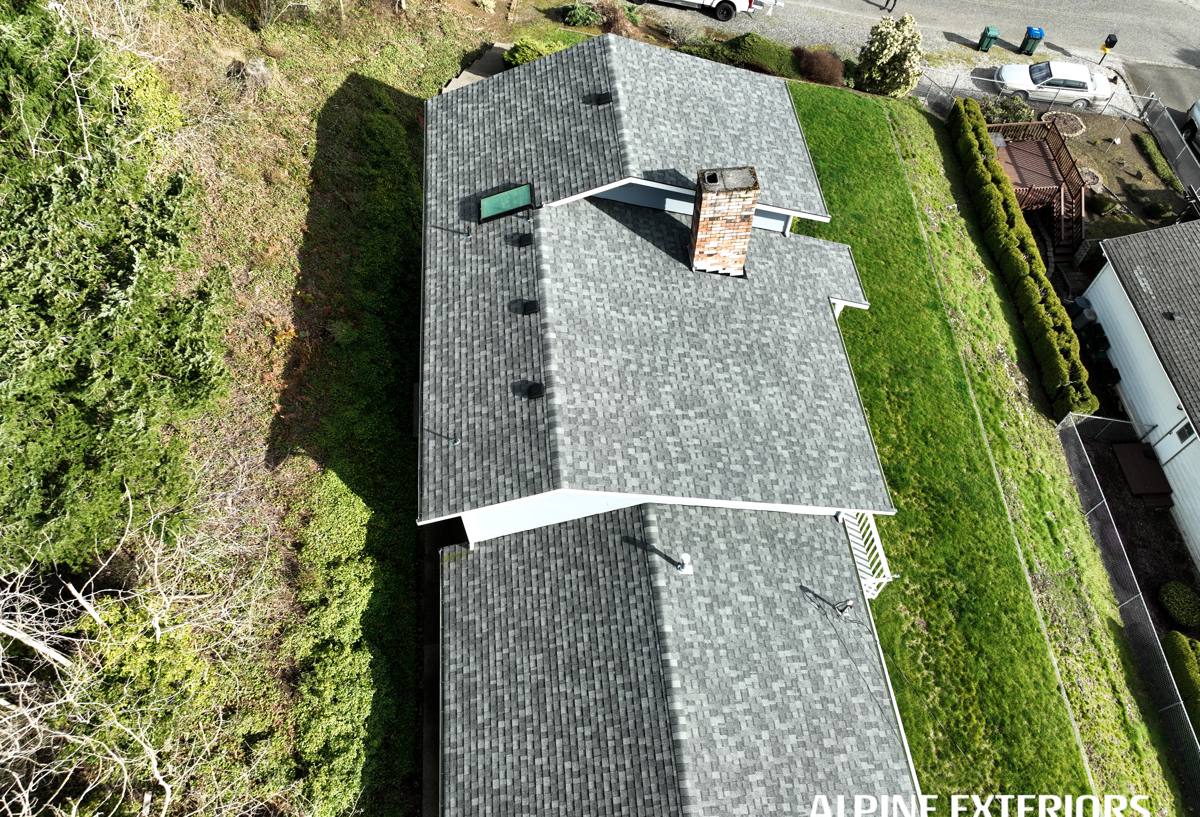
What Island Exposure Does to a Roof
Salt Air and Corrosion
Salt carried on the wind is corrosive to metal flashing, fasteners, and roof vents, and it works faster than most homeowners expect. On an island surrounded by open water, that exposure is more constant than it would be even a short distance inland, which means lower-grade metal components can start showing rust and pitting well before they would on a sheltered mainland roof. Fastener and flashing material selection matters more here, not less.
Wind-Driven Rain
Open water means open wind, and wind pushes rain sideways into roof valleys, ridge caps, and flashing joints instead of letting it run straight down and off. That's a harder test of a roofing system's edge and penetration details than a simple rainfall total suggests, because water is being driven into seams from the side, not just falling from above. Roofs installed with shortcuts at valleys, chimneys, or vent boots tend to leak here first, and often sooner than they would inland.
A Long Moss and Mildew Season
Mild temperatures, tree cover, and near-constant moisture add up to a moss season that can stretch across most of the year on shaded or north-facing slopes. Moss holds moisture directly against roofing material, and over time that trapped moisture works into fastener holes and underlayment. It's usually visible on the roof well before it shows up as an interior leak, which is part of why we treat moss growth as an early warning sign rather than a cosmetic nuisance.
Ferry Access and Job Logistics
Lummi Island is reached by ferry rather than by road, which is a real factor in planning a roofing job that a mainland property doesn't have. Material deliveries, dumpster drop-off and pickup, and crew and equipment transport all need to work around ferry scheduling. It doesn't change what a correct roof installation requires, but it does change how a job gets planned and staged, and a crew that hasn't accounted for it can end up with delays that show up as extra days with your roof partially open to the weather.
Choosing the Right Roofing System for This Exposure
Material choice on Lummi Island should be driven by how a product handles sustained moisture and salt exposure, not just by upfront cost. The table below compares the roofing systems most commonly used on homes in this part of Whatcom County.
| Roofing System | How It Handles This Climate | Trade-Offs to Know |
|---|---|---|
| Architectural asphalt shingles (algae-resistant line) | Solid moisture and wind performance when installed with correct underlayment and flashing; algae-resistant granules slow moss and staining | Still needs periodic moss removal in shaded areas; service life shorter than metal |
| Standard three-tab asphalt shingles | Lower wind and impact resistance; moss and algae take hold faster without resistant granules | Lowest upfront cost, but often the shortest service life in this exposure |
| Standing seam metal roofing | Excellent shedding of wind-driven rain and strong resistance to moss buildup on smooth panel surfaces | Higher upfront cost; correct fastener and coating spec matters for corrosion resistance near open water |
| Wood shake | Absorbs and holds moisture, which accelerates rot and moss growth in a wet, shaded climate | Higher ongoing maintenance burden; we don't recommend it for this exposure |
For most Lummi Island homes, we lean toward algae-resistant architectural shingles or standing seam metal, chosen based on the home's roof pitch, budget, and how much shade the roof sits under. Neither is automatically the right answer — a low-slope, heavily shaded roof often does better under metal, while a straightforward gable roof in more open sun can perform well with a quality architectural shingle for less money.
What a Correct New Roof Installation Involves
Tear-Off vs. Overlay
We tear off existing roofing rather than installing over it on Lummi Island jobs. Overlaying traps whatever moisture or damage already exists under the new layer, and on a roof that's been dealing with this much sustained moisture exposure, that hidden condition is common enough that we want eyes on the deck before new material goes down. A tear-off also lets us catch soft or rotted sheathing early, before it becomes a bigger structural repair.
Underlayment and Flashing Details
In a climate with this much wind-driven rain, underlayment and flashing details carry more of the waterproofing load than the shingles or panels themselves. We use synthetic underlayment rated for extended exposure, self-adhered ice-and-water membrane at valleys, eaves, and roof penetrations, and properly lapped step flashing at every wall and chimney intersection. These are the details that separate a roof that holds up through a decade of coastal storms from one that starts leaking after the first hard winter.
Ventilation
Proper intake and exhaust ventilation keeps moisture from condensing inside the attic space, which matters as much as keeping rain out from above. A roof that's sealed tight against wind-driven rain but poorly ventilated can trap humid air underneath, feeding the same mold and rot problems the exterior detailing was supposed to prevent. We size and balance ventilation as part of every new roof installation, not as an afterthought.
Fastener and Flashing Material
Given the salt exposure on the island, we spec corrosion-resistant fasteners and flashing rather than standard-grade hardware. It costs more upfront than mild steel or lower-grade galvanized components, but it's a small line item against the cost of re-flashing a roof in half the time because the original hardware corroded early.
Getting Materials and Crews to an Island Job
Because Lummi Island is ferry-accessed, we plan deliveries and staging around the ferry schedule rather than treating it like a mainland job with a driveway drop. That means coordinating material delivery timing, making sure dumpster and debris removal is scheduled realistically, and building crew transport into the job timeline up front instead of discovering the constraint mid-project. None of this changes the installation standards we hold to — it changes how carefully the job needs to be planned before the first shingle comes off.
What This Means for Your Timeline
An island roof replacement can take a bit more lead time to schedule than a comparable mainland job, simply because materials and equipment need to be staged around ferry availability. Once a crew and materials are on-island, the actual installation work proceeds the same way it would anywhere else — the difference is almost entirely in the planning stage, not the workmanship.
Cost Factors for a New Roof on Lummi Island
| Factor | What It Affects | Why It Matters on Lummi Island |
|---|---|---|
| Roofing material chosen | Upfront cost and long-term service life | Metal and algae-resistant shingles cost more but hold up better against this specific exposure |
| Tear-off vs. deck repair needs | Labor and material costs before new roofing goes on | Sustained moisture exposure makes hidden deck damage more common on older island roofs |
| Roof pitch and complexity | Labor time and safety staging | Steeper or more complex rooflines take longer to detail correctly around valleys and penetrations |
| Ferry-based logistics | Delivery and scheduling lead time | Material and dumpster transport needs to work around ferry availability, not a driveway drop |
| Ventilation upgrades | Attic moisture control | Older island homes often need ventilation brought up to current standards as part of a reroof |
Exact numbers depend on the specific home, roof condition, and material choice, which is why we walk the property in person before giving a real estimate rather than quoting off a generic price sheet.
Signs Your Roof Needs Replacement, Not Repair
- Moss that returns quickly after cleaning, especially on shaded or north-facing slopes
- Shingles that are cracked, curling, or missing granules across large sections of the roof
- Soft or spongy spots when the roof deck is walked
- Daylight visible through the roof deck from inside the attic
- Rust staining or corrosion on flashing, vents, or fasteners
- Interior water stains on ceilings or upper walls, particularly after wind-driven storms
- A roof approaching or past the expected service life of its material
- Repeated repairs to the same section of roof rather than one clear repair that holds
How Our Process Works
- We inspect the roof in person, including the attic where accessible, to assess deck condition, ventilation, and existing damage.
- We give a straight recommendation on repair versus full replacement, based on what we actually find.
- We plan material delivery, dumpster placement, and crew scheduling around ferry access before setting a start date.
- We tear off existing roofing, address any deck or sheathing damage, and install underlayment, flashing, and ventilation to standards suited to this exposure.
- We install the new roofing system with fastener and flashing details specified for salt air and wind-driven rain, not generic minimum-code specs.
Why a Crew That Already Works Lummi Island Matters
A roofing crew that regularly works Lummi Island already understands the ferry logistics, has a realistic sense of how salt air and moss behave on real island roofs over a full year, and doesn't have to learn those constraints on your job. That experience shows up in practical ways: knowing which valleys and penetrations need extra flashing attention in this exposure, planning delivery and disposal around ferry timing instead of guessing, and not treating an island job like a standard mainland reroof with a boat ride attached. If you own a home on Lummi Island and your roof is nearing the end of its service life, or you're seeing moss, staining, or leaks that keep coming back, we're glad to take a look and give you a straight assessment — with no pressure to sign anything on the spot. The form below gets you a free estimate.