 Birch Bay
 Marietta's Roofs Work Harder Than Most
Marietta sits close enough to the water that salt air is part of daily life, and that changes what a roof needs to survive here. Between the salt-laden wind coming off the bay, the driving rain that Whatcom County sees for a good chunk of the year, and a moss season that can stretch from fall through spring, a roof in this part of Birch Bay is under more or less constant pressure. None of that is dramatic on any given day. It's the slow, cumulative kind of wear that shows up five or ten years later as premature granule loss, soft decking, or a moss mat holding water against the shingles.
A new roof installation done right for Marietta isn't just about picking a shingle color and nailing it down. It's about building a roof system — decking, underlayment, ventilation, flashing, and the finish material — that's matched to this specific coastal, wet-winter climate. That's the lens we bring to every roof we install in this neighborhood.
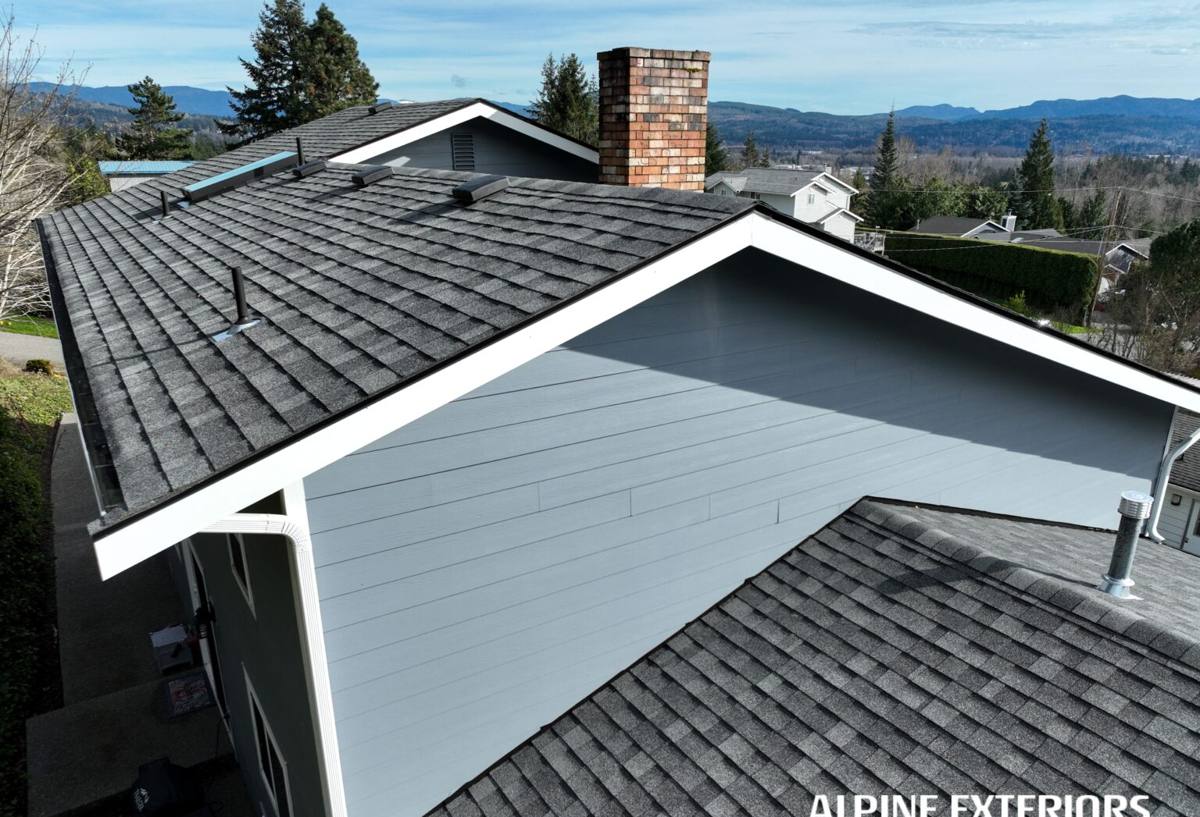
What Marietta Homes Need From a New Roof
Every roofing climate has its own priorities. In Marietta, three things matter more than they might in a drier or more inland part of Washington:
- Moisture management first. With rain a near-constant presence for much of the year, every seam, flashing detail, and penetration has to shed water reliably — not just when it's installed, but for decades.
- Salt-air tolerance. Fasteners, flashing metals, and vent components corrode faster near the water than they do a few miles inland. Material choices need to account for that.
- Moss and algae resistance. Shade, moisture, and mild temperatures make Whatcom County ideal moss habitat. A roof that can't shed moisture quickly becomes a moss farm within a few years.
A roof that ignores any one of these three tends to underperform its warranty, regardless of how good the shingle itself is.
What a Correct New Roof Installation Involves
Starting With the Deck
Before any new material goes down, the roof deck gets inspected. Soft spots, delamination, or water staining on the plywood or OSB underneath the old roofing usually mean moisture has already been getting in — sometimes for years without an obvious leak inside the house. Replacing damaged sections of decking isn't an upsell; it's the difference between a roof that lasts and one that fails from underneath.
Underlayment That Matches the Climate
In a region with this much sustained rainfall, we don't treat underlayment as an afterthought. A synthetic underlayment with strong water resistance, paired with self-adhered membrane at vulnerable areas — eaves, valleys, and around penetrations — gives the roof a real second line of defense if wind-driven rain ever gets past the primary roofing material.
Flashing Done Right
Most roof leaks don't come from the field of the roof — they come from flashing: chimneys, skylights, sidewalls, vents, and valleys. Flashing has to be formed and layered correctly with the underlayment and roofing material, not just caulked over. Caulk is a maintenance item, not a waterproofing strategy.
Ventilation That Actually Balances
A roof needs balanced intake (soffit) and exhaust (ridge or other) ventilation to let heat and moisture escape the attic. Get this wrong and you can trap moisture under the deck, which accelerates rot, promotes moss growth from the underside, and can void material warranties. We check attic ventilation on every new roof, not just the visible roofing surface.
Roofing Material Options for Marietta Homes
There's no single "best" roofing material — the right choice depends on budget, roof pitch, exposure to salt air and shade, and how the home is built. Here's how the common options stack up for a Marietta property:
| Material | Typical Lifespan | Salt Air / Moss Performance | Notes |
|---|---|---|---|
| Architectural Asphalt Shingle | 25–30 years | Good with algae-resistant granules; needs periodic moss removal | Most common choice; wide color range, moderate cost |
| Standing Seam Metal | 40–50+ years | Excellent — sheds water fast, minimal moss habitat | Higher upfront cost; best on steeper pitches |
| Synthetic/Composite Shingle | 30–40 years | Good; less organic surface for moss to grip | Mimics cedar or slate look without the maintenance |
| Cedar Shake | 20–30 years with upkeep | Requires diligent moss/moisture maintenance | We're honest that this is the highest-maintenance option in a wet, mossy climate |
Most homeowners in Marietta land on a quality architectural asphalt shingle with algae-resistant granules — it balances upfront cost, appearance, and real-world performance in this climate well. For homes with a lot of tree shade or a history of aggressive moss growth, we'll often walk through metal or synthetic options in more detail, since the lower moss/moisture retention can mean fewer maintenance calls over the life of the roof.
Our New Roof Installation Process
- On-site inspection. We walk the roof and attic, check the deck, ventilation, and flashing details, and take measurements.
- Written estimate. You get a clear scope of work and pricing — no vague allowances or surprise add-ons hiding in fine print.
- Material selection. We walk through the options that fit your home, budget, and exposure, including trade-offs honestly.
- Tear-off and deck inspection. Old roofing comes off, the deck is inspected in daylight, and any repairs are documented before we cover it back up.
- Underlayment and flashing installation. This is where most of the long-term water protection actually happens.
- Roofing material installation. Installed to manufacturer specification, which is also what keeps material warranties valid.
- Ventilation check and cleanup. We confirm intake/exhaust balance and do a full magnetic sweep and debris cleanup of the property.
- Final walkthrough. We go over the finished roof with you before we consider the job done.
Moss and Algae: The Long Game
Even a correctly installed roof will get moss spores landing on it in Whatcom County — that's just the environment. What determines whether moss becomes a problem is how quickly the roof sheds water and dries out, and whether shaded or north-facing sections get periodic attention. A few things go a long way:
- Keeping overhanging branches trimmed back to reduce shade and debris buildup
- Gentle, non-pressure-washing moss removal rather than aggressive scraping that damages granules
- Clean, unobstructed gutters so water isn't backing up under shingle edges
- Zinc or copper control strips at the ridge on new installations, which help suppress moss regrowth over time
We'll talk through moss prevention as part of any new roof installation — it's a lot easier to build it in at installation than to retrofit it later.
Signs a Marietta Roof Needs Replacing Rather Than Repairing
Not every roofing issue means a full replacement, but there's a point where patch repairs stop making financial sense. Common signs we look for:
- Granule loss heavy enough that shingles look bald or patchy in spots
- Curling, cracking, or missing shingles across multiple areas of the roof, not just one spot
- Soft or spongy decking felt underfoot during inspection
- Daylight visible through the attic roof boards
- Persistent moss mats that keep returning after cleaning
- A roof already at or past 20–25 years old with asphalt shingles
- Repeated leaks in different locations rather than one isolated spot
What Affects the Cost of a New Roof
Every roof is priced based on the specifics of the home, but the main cost drivers are fairly consistent:
| Factor | Why It Matters |
|---|---|
| Roof size and complexity | More valleys, dormers, and penetrations mean more labor and flashing detail |
| Roof pitch | Steeper roofs take longer and require more safety setup |
| Deck condition | Any rotted or delaminated decking needs replacement before new material goes down |
| Material choice | Asphalt, metal, and synthetic options carry different material and labor costs |
| Tear-off layers | Removing multiple existing layers of roofing adds labor time |
| Access | Tight lots, landscaping, or limited driveway access can affect setup and disposal logistics |
We don't quote roofs over the phone sight-unseen — an accurate number requires actually looking at the roof and attic. What we can promise is a written estimate that spells out exactly what's included before any work starts.
Why a Crew That Already Works Marietta Matters
A roofing crew that regularly works this stretch of Whatcom County already knows how salt exposure behaves on flashing and fasteners, which shingle lines actually hold up to sustained coastal rain, and where moss tends to establish first on a given roof orientation. That's not something you get from a general roofing crew passing through on a one-off job. It also means we're a known, reachable local business if you ever have a question about your roof years after installation — not a name from an out-of-town lead-generation site.
If your roof in Marietta is showing its age, or you're planning ahead rather than waiting for a leak to force the decision, we're happy to take a look and walk you through what we see — no pressure, no hard sell. Reach out using the form below for a free estimate.