 Birch Bay
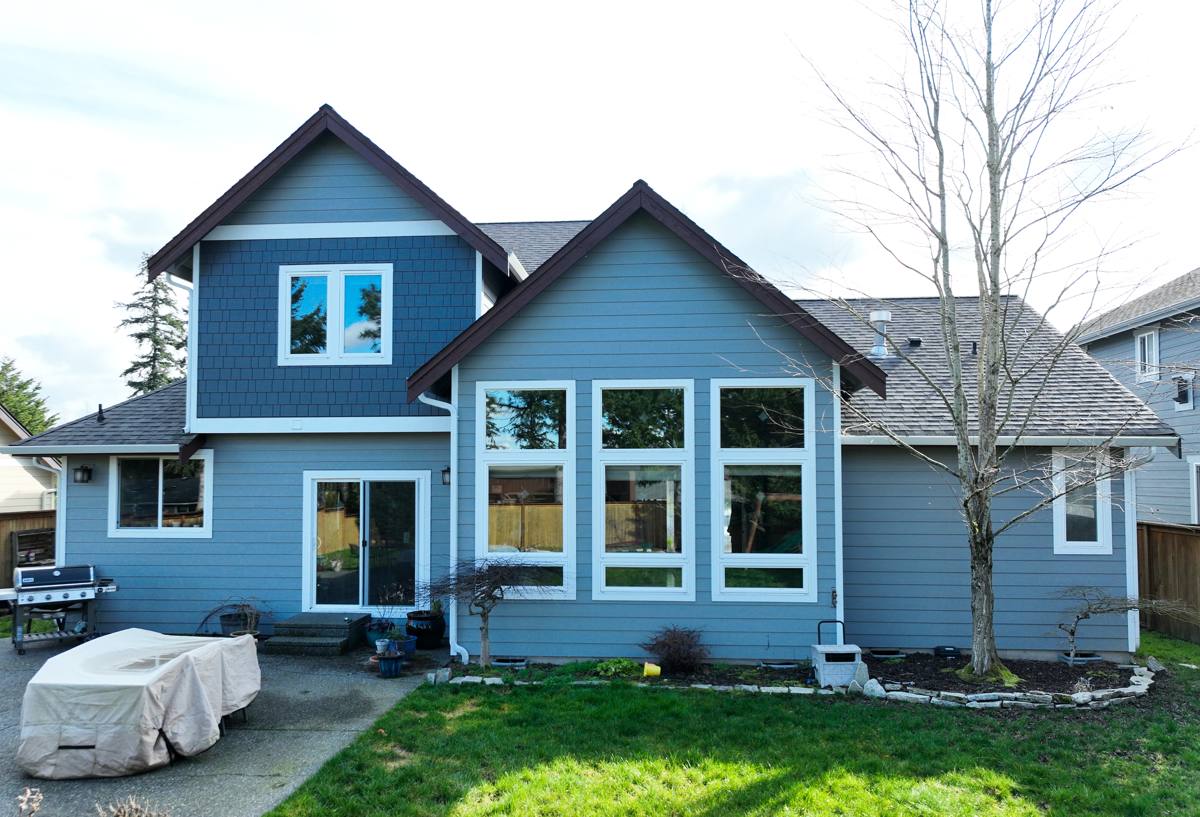
 Siding Replacement Built for Marietta's Coastal Exposure
Marietta sits close enough to Birch Bay and the Strait of Georgia that its homes take on a specific mix of weather stress: salt-laden air moving off the water, driving rain that comes in sideways during winter storms, and a moss season that can stretch from October through May in the shaded, damp pockets between houses and tree lines. Siding here doesn't just need to look good — it needs to survive a slow, steady chemical and moisture assault that inland Whatcom County homes simply don't deal with in the same way.
When we replace siding on a Marietta home, we're not treating it like a generic remodel. We're treating it like a coastal exposure problem with a cosmetic outcome. That distinction changes what materials we use, how we detail the flashing, and how we sequence the job.
What Marietta's Climate Actually Does to Siding
Salt Air
Airborne salt doesn't just sit on the surface — over years it works into fasteners, caulk joints, and any exposed wood fiber. Untreated or under-protected materials corrode fasteners faster and break down finishes unevenly, which is why you'll often see chalking, fading, or soft spots concentrated on the water-facing side of a house well before the rest of the siding shows wear.
Driving Rain
Wind-driven rain off the water doesn't fall straight down — it gets pushed sideways and up under laps, trim edges, and butt joints that would stay dry in a calmer climate. Siding systems that rely on face-sealing (caulk alone, rather than proper lap geometry and drainage planes) tend to fail here first, because the rain finds every gap the wind can reach.
Moss and Sustained Damp
Long stretches of overcast, cool, wet weather mean siding surfaces stay damp longer between dry-outs than they would inland. Moss and algae take hold on any surface that holds moisture or organic debris, and on porous or poorly finished materials that damp cycle also feeds rot at seams and bottom edges.
None of this is unique to any one street or block in Marietta — it's a function of proximity to Birch Bay and the open water, and it applies across the neighborhood.
Why We Install Only James Hardie Fiber Cement Here
We've standardized on James Hardie for every siding replacement we do, including in Marietta, for reasons that are specific to this climate rather than general brand preference:
- Non-combustible core: fiber cement doesn't feed a fire the way wood-based products can, which matters for insurance and peace of mind regardless of coastal exposure.
- Moisture-resistant by composition: the fiber cement itself doesn't swell, rot, or delaminate the way engineered wood products can when they take on repeated moisture cycling.
- Factory-applied ColorPlus finish: baked-on at the factory under controlled conditions, it holds color and resists the chalking and fade that field-applied paint struggles with in salt air.
- HZ5 / HZ10 climate-engineered lines: Hardie's HZ product designations are engineered for specific moisture and freeze-thaw exposure levels, which is directly relevant to a marine-influenced climate like this one.
- Long transferable warranty: backed by the manufacturer, not just our own labor guarantee, which matters on a house that's going to face decades of this weather.
We don't install vinyl, LP SmartSide, Cemplank, Allura, or primed wood siding — not because those products are junk, but because each carries trade-offs (seam behavior, moisture sensitivity, maintenance intervals, or warranty structure) that we've decided aren't worth carrying into a coastal-exposure job. Hardie is what we're willing to put our name behind here.
What a Correct Siding Replacement Involves
Tear-Off and Sheathing Inspection
Every proper replacement starts with full removal of the old siding, not an overlay. That's the only way to actually inspect the sheathing underneath for hidden rot or moisture damage — which is common on coastal-exposed walls that have been quietly taking on water behind failed caulk joints for years.
Weather-Resistive Barrier
A continuous, properly lapped weather-resistive barrier goes on before any siding. In a driving-rain climate, the barrier and the flashing details around it matter as much as the siding itself — most siding failures we find start at a flashing detail, not the siding panel.
Flashing at Every Penetration
Windows, doors, hose bibs, vents, and deck ledgers all need proper flashing integrated with the barrier, not just caulked over. This is the detail that determines whether wind-driven rain stays out or finds its way behind the siding.
Hardie Installation to Manufacturer Spec
Correct fastener type and spacing, proper clearances above grade and roofing, correctly lapped joints, and factory-finished cut edges sealed per Hardie's instructions. Installation sensitivity is real with fiber cement — done right it performs for decades; done loosely it can develop problems well before its potential lifespan.
Trim, Caulk, and Paint Touch-Up
Final detailing at trim boards, corners, and any field-cut edges, using sealants rated for exterior/marine exposure rather than general-purpose caulk.
Our Process for Marietta Jobs
- On-site assessment: we walk the exterior, note which elevations take the most wind and rain exposure, and check for existing moisture damage at trim, corners, and penetrations.
- Scope and material plan: we spec the Hardie product line, profile, and finish that fits the home and confirm quantities.
- Written estimate: a clear breakdown of tear-off, sheathing repair allowance, barrier and flashing work, and installation — no vague lump-sum guessing.
- Scheduling around weather: we sequence tear-off and barrier installation to minimize how long any wall sits open to the weather, which matters more here than in a drier climate.
- Installation: full tear-off, sheathing repair as needed, barrier, flashing, Hardie installation, trim and caulk detailing.
- Final walkthrough: we go over the finished job with you before calling it done.
Why a Crew That Already Works Marietta Matters
A contractor who works Birch Bay and the surrounding shoreline neighborhoods regularly already knows which elevations on a typical local home take the worst of the weather, roughly how long a Whatcom County winter gives you between dry stretches for tear-off work, and what a saltwater-influenced moss cycle actually looks like on a wall versus a roof. That's not something you can fully substitute with a general remodeling crew from further inland — the failure patterns here are specific, and catching them early during tear-off is what keeps a siding job from turning into a rot-repair job.
We also know the practical logistics: material staging in a neighborhood with tighter lots, working around the local weather windows, and coordinating around whatever else the house needs done at the same time.
Cost Factors on a Marietta Siding Replacement
| Factor | Why It Affects Cost |
|---|---|
| Sheathing condition | Hidden rot found during tear-off adds repair scope — common on coastal-exposed walls with a history of caulk-only detailing |
| Home size and wall complexity | More corners, dormers, and trim details mean more cutting, fitting, and labor time |
| Hardie product line chosen | Lap siding, panel systems, and shingle-style profiles carry different material costs |
| Existing siding removal | Layered or heavily caulked old siding takes longer to strip cleanly than a single layer |
| Access and staging | Tight lots, slopes, or limited driveway access can add time for material handling |
| Flashing and penetration count | More windows, vents, and fixtures mean more flashing detail work |
Signs Your Marietta Home Needs Siding Replacement, Not Just Repair
- Soft or spongy spots when you press on the siding, especially near the bottom courses or corners
- Persistent moss or algae growth that comes back within weeks of cleaning
- Visible warping, delamination, or swelling on any wall panel
- Paint that's chalking, peeling, or fading unevenly, particularly on the water-facing side
- Rust streaking from fasteners or trim hardware
- Gaps opening up at butt joints, corners, or trim boards
- Interior signs — musty smell, staining, or soft drywall — near exterior walls
If you're seeing more than one of these, it's usually a sign the underlying moisture barrier has been compromised for a while, not just a cosmetic issue.
What to Expect During the Job
Tear-off is noisy and the house will look rough for a stretch — that's normal and temporary. We keep exposed wall sections covered and protected between phases, especially if rain is forecast, since leaving sheathing exposed too long in this climate defeats the purpose of doing the job right. Most single-family homes take a matter of days to a couple of weeks depending on size and complexity; we'll give you a realistic timeline specific to your house once we've scoped it.
If your Marietta home's siding is showing its age or you're just planning ahead for the next stretch of Birch Bay winters, we're happy to come take a look. The estimate is free, there's no pressure, and you'll get a straight answer about what your siding actually needs — use the form below to get started.