 Birch Bay
 Why Sumas Roofs Wear Differently Than You'd Expect
Homeowners in Sumas often assume a roof either "holds up" or it doesn't, and that failure means a leak. In practice, most roofs in this part of Whatcom County don't fail all at once — they fail slowly, from the top down, through moisture cycles most people never see happening. Marine air off the Salish Sea pushes moisture-laden weather inland across the county for much of the year, and Sumas gets its share of it: driving rain that finds every gap in a worn roof system, long stretches of overcast humidity that never fully dry a roof surface, and a moss season that can run from early fall through spring. None of that is dramatic on its own, but stacked together year after year, it's exactly the kind of slow, patient wear that shortens the life of a roof that wasn't built or installed with this climate in mind.
A new roof installation is the point where you get to correct all of that at once — not patch around old mistakes, but start clean with materials, ventilation, and flashing details matched to what this area actually throws at a house. That's the difference between a roof that needs attention every couple of years and one you can mostly forget about for a couple of decades.
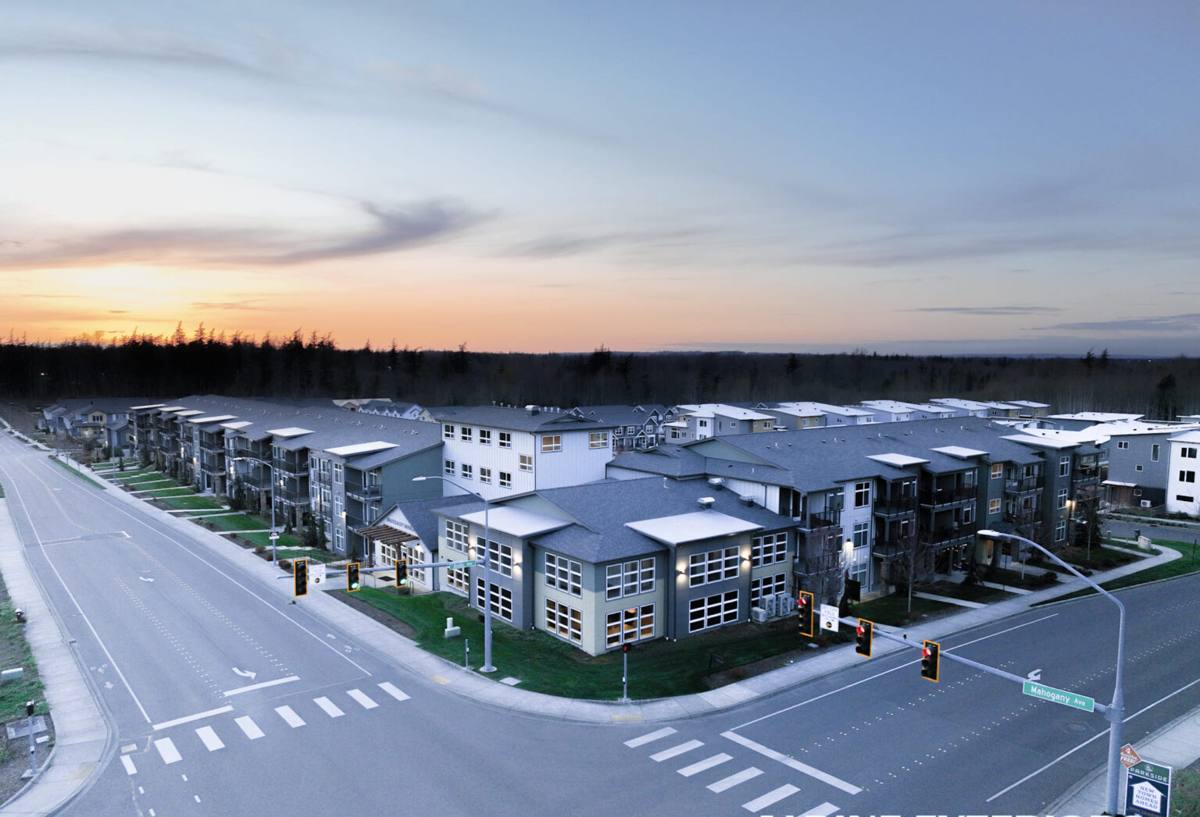
What "Correct" Actually Means for a New Roof Here
A new roof is more than shingles nailed to plywood. In Sumas and the surrounding county, a correctly installed roof system has to manage water at every layer, not just the top one. That means:
- Full tear-off to the deck on most reroofs, so we can actually see the condition of the sheathing instead of covering up rot or soft spots.
- Deck repair or replacement anywhere moisture has already gotten in — plywood that's delaminating or soft underfoot doesn't get roofed over, it gets replaced.
- Ice-and-water shield at eaves, valleys, and around penetrations — the areas where wind-driven rain and ice dams are most likely to force water backward under the roofing material.
- Synthetic underlayment across the full deck as a secondary water barrier, since no roofing material — including the best shingle or metal panel — is a perfect seal on its own.
- Properly lapped and sealed flashing at every chimney, skylight, wall intersection, and valley, since flashing failures are the single most common source of "new roof" leaks.
- Balanced intake and exhaust ventilation, so the attic can actually dry out between wet stretches instead of trapping moisture against the underside of the deck.
Skip any one of these and the roof might look finished from the driveway while still being set up to fail early — usually right where moss, standing water, or wind-driven rain concentrates.
Moss Season Deserves Its Own Plan
Moss isn't just cosmetic. It holds moisture directly against roofing material, works its way under shingle tabs and shakes, and lifts material over time — which is exactly how a small moss patch turns into a leak two winters later. A new roof installation is the right time to address this at the source rather than fight it every fall: proper slope and drainage detailing, zinc or copper strips at the ridge on shingle roofs where appropriate, and material choices that don't hold moisture the way older or lower-grade products do. We won't oversell a "moss-proof" roof — no such thing exists in this climate — but we can build one that sheds moisture fast enough that moss has a much harder time getting a foothold.
Material Options for a Sumas Reroof
There's no single "best" roofing material for every house — it depends on the roof's slope, the home's style, your budget, and how much long-term maintenance you're willing to take on. Here's an honest comparison of the options we most often install in this area:
| Material | Typical Lifespan | How It Handles Moss & Moisture | Maintenance |
|---|---|---|---|
| Architectural asphalt shingles | 25–30 years | Good with proper ventilation and zinc strips; needs periodic moss treatment | Low to moderate |
| Standing seam metal | 40–50+ years | Excellent — sheds water fast, minimal surface for moss to grip | Low |
| Composite/synthetic shake | 30–50 years | Good — doesn't absorb moisture like wood shake, resists rot | Low |
| Cedar shake | 20–30 years | Requires ongoing moss and moisture management; absorbs and releases water | High |
We're upfront that cedar shake, while a beautiful and traditional look, is the material most likely to fight you in a climate this wet — it needs consistent upkeep to hold up, and that's a real cost over the life of the roof, not just at installation. Composite shake gives homeowners who want that look a lower-maintenance path. Standing seam metal is the strongest long-term performer against moisture and moss, though it carries a higher upfront cost. Architectural shingles remain the most common choice because they balance cost, appearance, and performance well when installed correctly.
Our Installation Process
Every reroof follows the same sequence, whether it's a straightforward gable roof or something with multiple valleys and dormers:
- On-site inspection and measurement — we look at the existing roof, attic ventilation, and any problem areas before quoting anything.
- Written estimate — material options, scope, and price laid out clearly, no vague allowances.
- Tear-off and deck inspection — old material removed, deck checked and repaired as needed.
- Underlayment and ice-and-water shield installation — the water-management layer goes down before anything else.
- Flashing installation — chimneys, valleys, skylights, and wall intersections detailed by hand, not just caulked.
- Roofing material installation — installed to manufacturer spec, since that's what keeps material warranties valid.
- Ventilation check — intake and exhaust balanced for the attic's actual size and layout.
- Cleanup and magnetic sweep — job site cleared of debris and nails before we call it done.
- Final walkthrough — we go over the finished roof with you before wrapping up.
Most standard residential reroofs in the Sumas area take one to three days once work begins, weather permitting — steep or complex rooflines take longer. We schedule around the wet season where we can, but a well-run crew can still install correctly in typical Whatcom County drizzle; what matters is not roofing over a wet or damaged deck, which is why the tear-off and inspection step isn't something we rush.
Permits and Local Code
Reroofing in Whatcom County typically requires a building permit, and inspections may be required at specific stages depending on the scope of work and whether structural repairs are involved. We handle the permit process as part of the job rather than leaving it to the homeowner to sort out — it's one less thing to manage, and it protects you if there's ever a question about the work down the line, whether that's an insurance claim or a future home sale.
What Drives the Cost of a New Roof
Every roof is priced individually, but the same handful of factors move the number up or down on almost every job:
| Cost Factor | Why It Matters |
|---|---|
| Roof size and complexity | More valleys, dormers, and roof planes mean more flashing detail and labor time |
| Pitch | Steeper roofs require more safety equipment and slower, more careful work |
| Deck condition | Rotted or soft sheathing found during tear-off adds material and labor |
| Material choice | Asphalt, metal, and composite shake carry very different material costs |
| Layers of old roofing | Multiple existing layers add disposal cost and tear-off time |
| Access | Difficult site access can affect staging, dumpster placement, and crew efficiency |
We won't quote a job over the phone with any real accuracy — too much of that number depends on what we find once we're actually looking at the roof and, in some cases, what's underneath it. What we can promise is a written estimate that explains what you're paying for, not a lump number with no breakdown.
Signs Your Roof Is Telling You It's Time
Homeowners often wait until there's an active leak, but a roof usually gives warning signs well before that point. Watch for:
- Granules collecting in gutters or at downspout outlets
- Shingles that are curling, cracking, or missing
- Moss or dark streaking building up faster each year despite cleaning
- Daylight visible through the attic roof deck
- Soft or spongy spots when walking the roof (a sign for a professional to check, not to walk yourself)
- Sagging in the roofline, especially near valleys
- Rising energy bills tied to poor attic ventilation or insulation
Any one of these on its own isn't necessarily an emergency, but a few together usually mean the roof is past the point where repairs make more sense than replacement.
Why Local Experience Matters for This Job
A new roof installed to generic specs can still underperform in Whatcom County if it wasn't built for what this area actually experiences — sustained wind-driven rain, humidity that lingers instead of drying out quickly, and a moss season long enough to matter. A crew that already works in and around Sumas knows which details can't be shortcut here: ventilation sized for the actual moisture load, flashing that accounts for driving rain rather than just vertical rainfall, and material choices that hold up under repeated wet-dry cycling instead of a handful of dry-climate assumptions. That local knowledge doesn't show up as a line item on the estimate, but it's the difference between a roof that performs for its full expected lifespan and one that starts showing problems years early.
If your roof is showing its age or you're planning ahead rather than reacting to a leak, we're happy to take a look and walk you through your options. Use the form below to request a free, no-pressure estimate for your Sumas property.