 Birch Bay
 Asphalt Shingle Roofing Built for the Nooksack Area's Weather
Homes around Nooksack and the greater Birch Bay area in Whatcom County deal with a specific combination of punishment that a lot of standard roofing advice doesn't account for. Salt-laden air moving in off the water, long stretches of driving rain that comes in sideways as often as it comes straight down, and a moss season that can run eight or nine months out of the year. An asphalt shingle roof that's installed correctly for this climate will hold up for decades. One that's installed to a generic spec sheet, without local conditions in mind, starts showing problems in year five or six — granule loss, soft spots at the eaves, moss working its way under tab edges, and leaks at every flashing point that was cut corners on.
We're a local crew, and Nooksack is one of the areas we work regularly. That matters more than it sounds like it should, because roofing failures out here are rarely random — they follow a pattern tied directly to how this region's weather behaves.
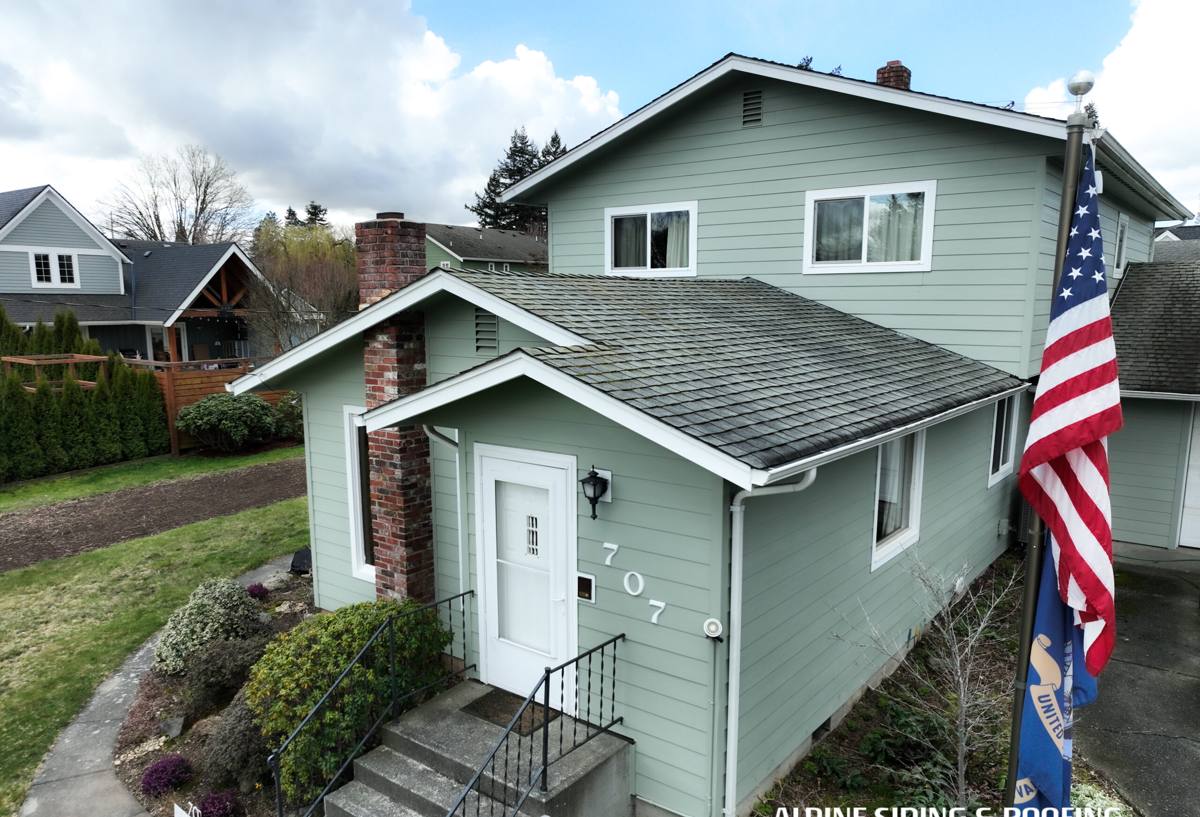
What This Climate Actually Does to a Shingle Roof
Salt Air and Metal Fatigue
Salt air corrodes exposed metal faster than inland environments — nail heads, flashing, and vent stacks are the first to show it. Cheap or under-gauged flashing can start rusting and leaking years before the shingles themselves are due for replacement. It's a slow process, so it's easy to miss until water is already getting into the deck.
Driving Rain and Wind-Driven Moisture
This part of Whatcom County gets rain that doesn't just fall straight down — wind pushes it sideways and up under shingle tabs, especially on the windward side of a roof. That means underlayment quality, shingle sealant strips, and nailing pattern all matter more here than in a climate with calmer, straight-down rain. A roof that would perform fine somewhere drier can leak here if it was installed to the bare minimum.
Moss and Constant Moisture
Long wet seasons and shaded tree cover common around Nooksack create ideal moss conditions. Moss isn't just cosmetic — it holds moisture against the shingle surface, works its root structure under tab edges, and accelerates granule loss. Left unaddressed, it shortens the usable life of a shingle roof significantly.
What a Correct Asphalt Shingle Install Involves
A roof that's actually built for this area isn't just "shingles nailed to plywood." Every layer underneath the shingles is doing real work against the weather described above.
- Ice and water shield at eaves, valleys, and around every penetration — the first line of defense against wind-driven rain finding its way under the shingle field.
- Synthetic underlayment across the full deck, properly lapped, as a secondary water barrier if wind ever gets moisture past the shingles themselves.
- Corrosion-resistant flashing at chimneys, walls, skylights, and valleys — this is where salt air does the most damage over time, so material choice here isn't optional.
- Correct nailing pattern — proper nail count and placement per shingle, driven flush (not overdriven or underdriven), which directly affects wind resistance.
- Balanced attic ventilation — intake at the eaves and exhaust at the ridge, sized to the attic volume, so moisture and heat don't build up under the deck and shorten shingle life from underneath.
- Starter strip and drip edge installed correctly at every edge, which is one of the most commonly skipped details on rushed jobs and one of the first places wind-driven rain gets in.
None of this is exotic. It's standard trade practice done properly, without shortcuts, with materials matched to what this specific area's weather does to a roof over time.
Signs a Nooksack-Area Roof Needs Attention
| What You See | What It Usually Means |
|---|---|
| Dark streaks or green patches | Moss or algae growth, often starting on shaded north-facing slopes |
| Granules collecting in gutters | Shingle surface wearing down, accelerated by moss and constant moisture |
| Curling or lifting shingle edges | Sealant strip failure or ventilation problems underneath |
| Rust streaks near flashing | Salt-air corrosion of metal flashing or fasteners |
| Soft spots when walked on | Deck moisture damage, usually from a long-term slow leak |
| Daylight visible in the attic | Gaps at flashing or deck damage that need immediate attention |
Catching these early is almost always cheaper than waiting. A roof with early-stage moss or a few compromised flashing points can often be repaired; a roof that's been leaking unnoticed for a season or two usually means deck replacement, which adds real cost.
Choosing the Right Shingle for This Climate
Not every asphalt shingle product performs the same way against salt air, wind, and moss. We steer clients toward products with a track record in wet coastal climates, and we're upfront about the trade-offs of each option rather than pushing whatever has the best margin.
| Shingle Type | Typical Lifespan | Best Fit For |
|---|---|---|
| 3-tab asphalt | 15–20 years | Budget-conscious projects, simpler roof lines |
| Architectural (dimensional) asphalt | 25–30 years | Most homes in this area — better wind rating and moss resistance options |
| Algae-resistant (copper-infused granule) shingles | 25–30 years | Shaded lots or homes with a history of moss and algae staining |
| Impact-rated shingles | 25–30+ years | Homes wanting extra durability against debris and storm impact |
Architectural shingles with algae-resistant granules are usually the right default recommendation for homes in this area, given how much moss pressure the climate puts on a roof. That said, the right choice always depends on the roof's slope, sun exposure, tree cover, and your budget — we'll walk through the real trade-offs rather than upsell a product you don't need.
Our Process
1. On-Site Inspection
We walk the roof, check the attic for ventilation and moisture issues, and look at flashing points, valleys, and deck condition — not just the shingle surface. This tells us whether you're looking at a straightforward re-roof or whether there's deck repair or ventilation work that needs to be priced in.
2. Honest, Written Estimate
You get a clear breakdown of materials, labor, and any deck or flashing repairs — no vague allowances that turn into surprise add-ons mid-project.
3. Tear-Off and Deck Assessment
Full tear-off to the deck so we can actually see what's underneath, rather than layering new shingles over old problems.
4. Proper Installation
Ice and water shield, underlayment, flashing, ventilation, and shingles installed to the standard described above — every layer matched to this area's climate, not just a minimum-code install.
5. Cleanup and Final Walkthrough
Full site cleanup including magnetic nail sweep, and a walkthrough so you know exactly what was done and what your warranty covers.
Cost Factors on a Nooksack-Area Re-Roof
| Factor | Why It Affects Price |
|---|---|
| Roof size and pitch | Steeper roofs take longer and require more safety setup |
| Number of layers to remove | Tear-off labor increases with each existing layer |
| Deck condition | Rotted or soft plywood needs replacement before shingles go down |
| Shingle grade chosen | 3-tab, architectural, and algae-resistant products vary in material cost |
| Flashing and ventilation needs | Chimneys, skylights, and poor existing ventilation add labor and material |
| Access and site conditions | Tree cover, tight lot access, or steep grading affect setup time |
We don't publish a flat per-square number because it's genuinely misleading until we've seen the roof — but we're always upfront about what's driving your specific number during the estimate, and we'll show you where you have room to adjust scope if budget is a concern.
Maintenance That Actually Extends Roof Life Here
- Have gutters cleared at least twice a year — clogged gutters back water up under the shingle edge, especially during heavy rain.
- Address moss while it's light — a soft wash or manual removal early is far cheaper than a roof with established moss growth.
- Trim back overhanging branches to reduce shade and debris buildup, both of which accelerate moss.
- Check attic ventilation isn't blocked by insulation — poor airflow traps moisture and shortens shingle life from underneath.
- Get a professional inspection after any major windstorm, even if nothing looks obviously wrong from the ground.
- Don't pressure wash shingles directly — it strips granules and does more harm than the moss it's meant to remove.
Why a Crew That Already Works the Nooksack Area Matters
Roofing crews that don't work this region regularly tend to spec roofs the same way they would anywhere else — because they haven't seen firsthand what salt air does to flashing over five winters, or how aggressive moss gets on a shaded north slope in Whatcom County. We have. That experience shows up in the small decisions: which flashing metal we use, how much ventilation we build in, which shingle lines actually hold their algae resistance out here versus which ones just claim it on paper.
It also matters for accountability. We're not a crew passing through — if something needs a warranty callback, we're local and reachable, not three counties away.
If you've got a roof in the Nooksack area showing moss, granule loss, or age, or you're planning ahead rather than waiting for a leak, we're glad to come take a look. The estimate is free, there's no pressure, and you'll get a straight answer about what your roof actually needs — use the form below to get started.