 Birch Bay
 What Nooksack's Climate Actually Does to a Roof
Homes in the Nooksack area sit inland from Birch Bay, but that doesn't mean the roof gets an easy ride. Marine air still moves through Whatcom County on wind-driven storms, carrying enough salt and moisture to accelerate corrosion on exposed metal fasteners, flashing, and gutter hardware over the years. Add in the region's long, wet shoulder seasons and the tree cover common on Nooksack lots, and you've got a roof that's almost never fully dry for more than a few days at a stretch between fall and spring.
That combination — persistent dampness, shade, and organic debris from overhanging trees — is exactly what moss and algae need to take hold. Once moss gets a foothold on a roof, it doesn't just sit there looking bad. It holds water against the roofing material, works its way under shingle tabs and shake edges, and slowly lifts and loosens the layers that are supposed to shed water.
Why Repairs Here Look Different Than in Drier Climates
A roof repair in a dry inland climate is often about UV damage and brittle materials. In Nooksack, the failure pattern is almost always moisture-driven: trapped water, soft or rotted decking under a worn section, rusted fasteners, or flashing that's lost its seal after years of freeze-thaw and constant damp cycling. A repair crew that doesn't understand that difference will patch the surface symptom and miss the underlying moisture problem — which is why the same leak often comes back within a year or two.
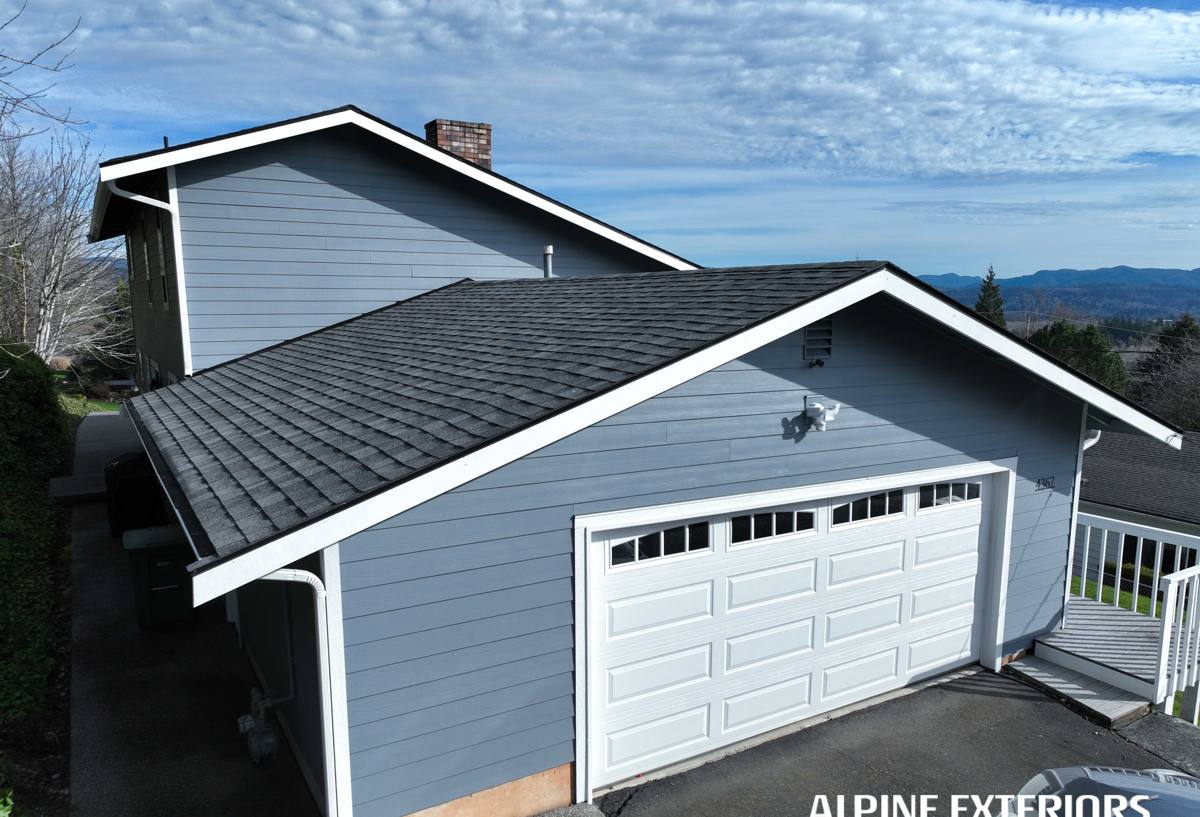
Signs a Nooksack Roof Needs Repair Now, Not Later
Roof damage in this climate rarely announces itself with a dramatic leak on day one. It shows up as small, easy-to-dismiss signs first. Catching them early is the difference between a modest repair and a much bigger interior repair bill.
- Dark streaking or thick moss growth concentrated on the shaded, north-facing slopes of the roof
- Granules collecting in gutters or at downspout outlets, a sign shingles are wearing thin
- Soft spots or slight sagging when walked on, which usually means the decking underneath is absorbing water
- Daylight visible through the attic roof deck, or damp insulation near the eaves
- Rust staining or visible gaps around chimney flashing, vent boots, and skylight curbs
- Water stains on interior ceilings that appear or worsen only during heavy, wind-driven rain
- Shingle tabs curling, cracking, or lifting at the edges, especially where tree branches overhang
Any one of these on its own might be minor. Two or three together, especially in the same area of the roof, usually mean water has already been getting in for a while.
The Repair Issues We See Most Often in the Nooksack Area
Moss-Related Damage
By the time moss is visible from the ground, it's typically been growing under the surface for a season or more. Removing it correctly means more than a quick blast with a pressure washer — done wrong, that can drive water further under the shingles or strip protective granules. A proper repair addresses the moss, checks the decking underneath for softness, and treats the cause (usually shade and debris buildup) so it doesn't just grow right back.
Flashing and Penetration Failures
Chimneys, skylights, plumbing vents, and roof-to-wall transitions are where most leaks actually start — not in the open field of shingles. Flashing seals degrade with repeated wet-dry cycling, and once a seal fails, water can travel a surprising distance along the decking before it shows up as a stain inside the house, which is why the leak's interior location often doesn't match where the roof failure actually is.
Valley and Gutter Backups
Roof valleys concentrate a lot of water fast during a heavy Whatcom County downpour, and if they're clogged with needles and moss debris, that water has nowhere to go but under the shingles at the edges. Gutters in the same condition compound the problem by holding water against the fascia and eave.
Storm and Wind Damage
Driving rain that comes in sideways during a windstorm can find its way under shingles that would otherwise be fine in calm weather, especially on exposed roof edges and ridge caps. Loose or missing shingles after a storm should get a look before the next round of weather, not after.
What an Honest, Correct Repair Actually Involves
A repair that holds up starts with figuring out why the roof failed in the first place, not just covering the visible damage. That means an inspection that goes past the obvious spot — checking the decking for soft or delaminated sections, tracing water stains back to their actual entry point, and confirming that ventilation and flashing details in the surrounding area aren't going to cause the same failure again in another year.
Once we know what's actually going on, the repair itself should:
- Remove and replace any damaged or rotted decking, not just the shingles on top of it
- Re-flash penetrations properly rather than just resealing over cracked flashing with caulk
- Match shingle type, weight, and color as closely as possible so the repair doesn't stand out
- Reset proper nailing patterns and shingle overlap so the repaired section performs like the rest of the roof
- Clear debris from valleys and gutters in the repaired area so water has a clean path off the roof
Skipping any of these steps to save time is how a "fixed" roof ends up leaking again in the same spot the following winter.
Repair or Replace? How We Help You Decide
Not every roof problem in Nooksack needs a full replacement, and we're not going to tell you it does. But there's a point where patching individual issues stops making financial sense compared to replacing an aging roof outright. Here's generally how we walk homeowners through that decision:
| Factor | Repair usually makes sense | Replacement usually makes sense |
|---|---|---|
| Roof age | Under 15-18 years, otherwise sound | Nearing or past its expected lifespan |
| Extent of damage | Isolated to one section or penetration | Widespread moss, granule loss, or soft decking across multiple slopes |
| Leak history | First occurrence, clear cause | Recurring leaks in different spots over several seasons |
| Decking condition | Solid, dry underneath damaged shingles | Soft, delaminated, or damp over a broad area |
| Underlayment condition | Still intact and doing its job | Brittle, torn, or failing in multiple areas |
We'll always give you the straightforward version of where your roof falls on that table, and if a repair is genuinely the right call, that's what we'll recommend and price out.
Our Process for Nooksack Roof Repairs
1. A Real Inspection, Not a Guess From the Ground
We get on the roof, check the attic side when we can access it, and look at the whole roof system — not just the spot you called about — since a leak in one area often points to a condition affecting more of the roof.
2. A Written Scope Before Any Work Starts
You'll get a clear explanation of what's actually wrong, what we plan to do about it, and what it will cost, before any work begins. No vague verbal estimates that change once the work starts.
3. The Repair, Done to Match the Rest of the Roof
We use materials that match your existing roof as closely as possible and rebuild the repaired section to the same standard as the original installation — proper flashing, proper overlap, proper fastening.
4. A Final Check and Cleanup
We walk the repair with you when it's done, clear the work area of debris, and make sure gutters and downspouts near the repair are clear so water moves off the roof the way it should.
Why a Crew That Already Works the Nooksack Area Matters
Roofing crews that mostly work drier, sunnier markets sometimes underestimate how aggressively moss and moisture come back in Whatcom County if the underlying conditions — shade, debris, poor airflow — aren't addressed. A crew that regularly works Birch Bay and the surrounding Nooksack area already knows which roof details tend to fail first in this climate, what a normal amount of moss regrowth looks like versus a sign of a deeper problem, and how to schedule repair work around the region's wetter stretches so the roof isn't left exposed mid-repair.
That local familiarity also means straight answers instead of upselling. If your roof needs a $400 flashing repair, that's what we'll tell you — not a scare story about a full replacement you don't need yet.
Keeping a Repaired Roof From Needing Repair Again
A good repair buys you time, but a few basic habits stretch that further in a climate that never really dries out:
- Trim back overhanging branches so the roof gets more sun and airflow, especially over the repaired section
- Clear gutters and valleys of needles and debris at least twice a year, more often under heavy tree cover
- Have moss growth treated before it spreads across a full slope, not after
- Get a quick visual check after any major windstorm, particularly around ridge caps and roof edges
- Schedule a walk-through inspection every couple of years, even with no visible problems
None of this requires special equipment or expertise — it's mostly about staying ahead of the moisture and organic debris that this climate keeps throwing at a roof.
Get a Straight Answer on Your Roof
If you're seeing moss buildup, a slow leak, or storm damage on a Nooksack-area roof, it's worth getting an honest look before the wet season makes the problem worse. We'll tell you plainly whether you're looking at a targeted repair or something bigger, with no pressure either way. Fill out the form below for a free estimate and we'll get back to you to schedule a visit.