 Birch Bay
 Why Siding Fails Faster on Point Whitehorn Homes
Point Whitehorn sits on the exposed edge of Birch Bay, where homes take a steady diet of salt-laden wind off the Strait of Georgia, driving winter rain, and a moss season that runs longer than almost anywhere else in Whatcom County. That combination is hard on any exterior, but it is especially hard on siding that was never engineered for coastal moisture cycling. Salt air accelerates corrosion on fasteners and trim, wind-driven rain finds every seam and gap, and shaded, damp corners of a home grow moss and algae for months at a stretch. None of that is dramatic on its own — it is slow, cumulative wear that shows up as small problems long before it becomes a big one.
We don't treat Point Whitehorn like a generic Birch Bay address. A home a few blocks off the water behaves differently than one tucked back from the shoreline, and a repair crew that doesn't already understand that difference is guessing at the diagnosis.
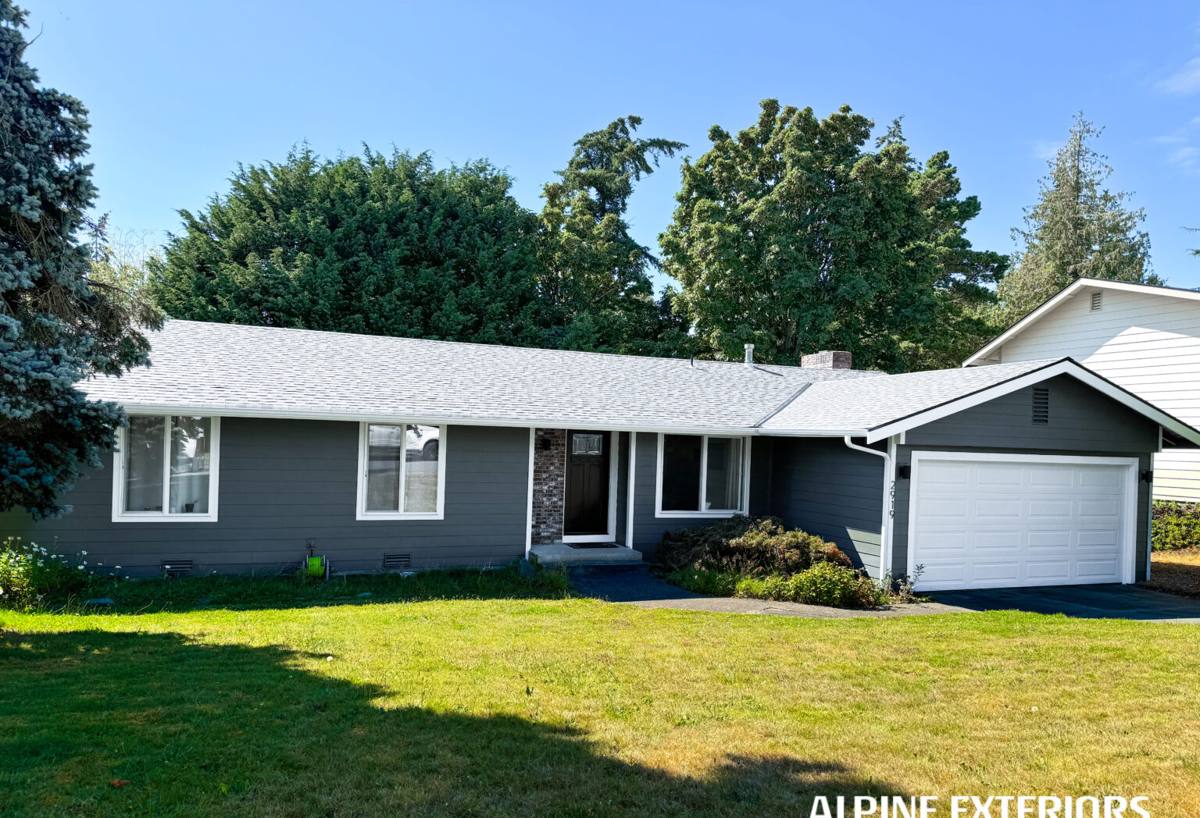
What Salt Air and Moss Actually Do to Siding
Salt Air and Fasteners
Airborne salt speeds up corrosion on exposed nail heads, trim fasteners, and metal flashing. Once a fastener starts to rust, it loses its grip strength and can back out slightly, which opens a gap for water to enter behind the siding — a problem that's invisible from the ground until paint starts bubbling or a board starts to sag.
Driving Rain and Seams
Wind off the water doesn't just fall on siding, it pushes rain sideways into laps, seams, and butt joints. Siding installed with tight, correctly lapped joints and proper flashing sheds that water. Siding installed with shortcuts — caulk substituted for flashing, joints that aren't staggered, or house wrap that wasn't lapped correctly — lets water track behind the cladding, where it can sit against sheathing for weeks between dry spells.
Moss, Algae, and Trapped Moisture
Long moss seasons mean north-facing walls, tree-shaded sections, and low clearance near grade or landscaping stay damp far longer than sun-exposed walls. Moss and algae growth on siding is partly cosmetic, but sustained dampness underneath that growth softens paint film, degrades caulking, and — on wood-based products — can start actual decay in the substrate.
Signs a Point Whitehorn Home Needs Siding Repair
- Soft, spongy, or visibly swollen sections of siding, especially near the bottom courses or around windows
- Paint that's peeling, bubbling, or chalking unevenly in patches rather than across the whole wall
- Persistent moss or algae staining that comes back within a season of cleaning
- Nail heads that are rust-streaked, popped, or visibly backing out
- Gaps opening up at butt joints, corner boards, or trim where caulk has failed
- Warping or cupping boards, particularly on the windward or north-facing elevations
- Water stains or discoloration on interior walls near exterior corners — a sign moisture has already gotten past the siding
Any one of these on its own might just need attention. Several showing up together, especially on the same elevation, usually means moisture has been getting behind the siding for a while and the repair needs to address the cause, not just the symptom.
What a Correct Repair Actually Involves
A siding repair that only replaces the visibly damaged board is a patch, not a repair. Done right, the process has to answer one question first: how did water get in, and is that path now closed? That means:
- Removing enough surrounding material to inspect the house wrap, flashing, and sheathing behind the damaged section — not just pulling the one bad board
- Checking for hidden rot or sheathing damage that extends beyond what's visible from outside
- Correcting the water path — re-flashing windows, doors, or penetrations, re-lapping house wrap, or adding proper drainage where it was missing
- Matching the replacement material so the repair doesn't stand out as an obvious patch, particularly on ColorPlus-finished siding where field-painting a repair section looks different from the factory finish
- Re-fastening correctly with fasteners rated for coastal exposure, not whatever was on hand
- Sealing and caulking at manufacturer-specified joints only — not smearing caulk over every seam as a substitute for proper flashing, which traps moisture instead of shedding it
Our Repair Process
1. On-Site Inspection
We walk the exterior, including elevations that are hard to see from the driveway, and identify every area showing stress — not just the spot the homeowner called about. On coastal properties we pay particular attention to the windward side and any shaded, low-airflow corners where moss and moisture linger.
2. Diagnosis Before Demolition
Before we pull anything off the wall, we explain what we think is happening and why — whether it's a flashing failure, a fastener issue, trapped moisture, or straightforward end-of-life wear. If we need to open up a section to confirm what's behind it, we tell you that up front.
3. The Repair Itself
We fix the actual cause — flashing, drainage, fastening — not just the cosmetic damage, then replace the damaged siding with matched material, correctly lapped and fastened.
4. Verification
Before we call the job done, we check that water sheds correctly off every repaired joint and that the surrounding, undamaged siding wasn't compromised in the process.
Why We Only Use James Hardie for Repairs Too
When we repair a section of siding, we use James Hardie fiber cement — the same standard we install on full jobs. There's a practical reason beyond consistency: Hardie's ColorPlus factory finish and HZ product lines are engineered for exactly the conditions Point Whitehorn deals with — moisture cycling, coastal exposure, and long damp seasons. Fiber cement is non-combustible, doesn't absorb moisture the way wood-based products can, and holds its factory finish far longer than field-applied paint on a patch job. Repairing a home with material that behaves the same way as what's already on the wall, and that's built for this specific climate, gives a longer, more predictable result than patching with whatever's convenient.
We don't install LP SmartSide, vinyl, Cemplank, Allura, or primed wood siding, and that applies to repair work as much as full replacement. If a repair section needs more than a patch — if the underlying material is failing broadly rather than in one isolated spot — we'll tell you honestly whether repair still makes sense or whether you're better served planning for replacement.
Repair or Replace: How We Help You Decide
| Factor | Leans Toward Repair | Leans Toward Replacement |
|---|---|---|
| Extent of damage | Isolated to one or two elevations or sections | Spread across most of the home |
| Cause of damage | Identifiable, fixable issue (single flashing failure, one impact) | Systemic — original install lacked proper flashing/wrap throughout |
| Age of existing siding | Well within expected lifespan | Near or past the material's realistic service life |
| Underlying sheathing | Sound, no widespread rot found | Rot or moisture damage found in multiple areas |
| Match feasibility | Replacement material and finish can be closely matched | Discontinued profile/color, or matching would look patched |
We'll give you a straight answer on which side of that table your home falls on — we're not going to sell a full replacement when a targeted repair will genuinely hold up, and we're not going to keep patching a wall that's telling you it's done.
What to Expect When You Hire Us
- A full exterior walk-through, not just a look at the spot you flagged
- A clear explanation of what's causing the damage before any work starts
- An honest repair-vs-replace recommendation, with the reasoning behind it
- Matched James Hardie material and correct fastening/flashing detail on every repair
- A written scope so you know exactly what's being done and why
Why Local Experience on Point Whitehorn Matters
A crew that already works this stretch of Birch Bay and Whatcom County knows which elevations on a coastal Point Whitehorn property take the worst of the wind, how long moss actually persists in the shaded corners here versus further inland, and what correct flashing detail looks like once you've seen a few dozen homes in this exact exposure fail without it. That's the difference between a repair that holds for years and one that reopens the same problem in the next wet season. We'd rather spend an extra fifteen minutes on the inspection than come back next winter to the same wall.
If you're seeing early signs of trouble on your siding — or you just want an honest opinion on whether a section needs a repair or is heading toward replacement — we're glad to take a look. Estimates are free and there's no pressure to move forward; use the form below to get started.