 Birch Bay
 Window Installation Built for Point Whitehorn's Shoreline Exposure
Point Whitehorn sits along the Whatcom County shoreline just up the coast from Birch Bay, with homes facing the open water of the Strait of Georgia and very little to break up the weather coming off it. That exposure changes what a window has to survive here compared to a house a few miles inland. Salt-laden air, wind-driven rain that comes in sideways during winter storms, and a moss season that can stretch across most of the wet months all put steady, cumulative stress on window frames, seals, and the wall assembly around them.
A window that performs fine in a sheltered neighborhood can fail years early on a bluff-front or waterview lot in this part of the county. This page covers what that means for homeowners in Point Whitehorn specifically — what to watch for, what a correctly installed window actually involves, and how our process is built around this exact kind of exposure.
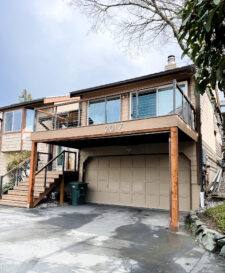
What Salt Air, Driving Rain, and Moss Season Do to a Window Over Time
None of these three factors is dramatic on its own in any single week. The damage comes from all three working on a window, year after year, without a break.
Salt Air and Metal Components
Airborne salt from the Strait settles on everything nearby, including window hardware, screen frames, and any exposed fasteners. Over time it accelerates corrosion on lower-grade metal parts — hinges, cranks, and cheap cladding fasteners in particular. Once hardware starts to seize or corrode, a window that used to open and close smoothly starts sticking, which is often the first sign homeowners notice, well before any visible water damage shows up.
Driving Rain and Poor Flashing
Rain that falls straight down is relatively easy to shed. Rain driven sideways by wind off the water behaves differently — it gets pushed up under trim, into gaps around the frame, and into any flashing detail that was installed loosely or out of sequence. A window can look fine from the outside for years while water is slowly working its way into the wall cavity behind it. By the time staining or soft trim shows up on the interior, there's usually already damage to the sheathing or framing that isn't visible yet.
Moss and Prolonged Moisture
The long wet season in this part of Whatcom County keeps wood trim, sills, and shaded wall sections damp for extended stretches, which is exactly the condition moss and mildew need to take hold. Moss on a roof gets attention because it's visible, but moss and organic buildup around window sills and trim boards holds moisture against the wood and paint, which shortens the life of both far faster than dry-climate wear would.
Signs Your Point Whitehorn Home May Need New Windows
Most window failures near the water show up gradually. A few minutes checking the exterior and interior side of each window can catch problems early, before they spread into the wall framing.
- Windows that stick, feel stiff, or won't latch fully — often the first sign of corroded or swollen hardware
- Visible gaps, cracked caulk, or separated trim where the window meets the siding
- Soft or discolored wood trim around the frame, inside or out
- Fogging or a persistent haze between panes of double-glazed glass, which means the seal has failed
- Cold drafts near the frame on windy days, even with the window fully closed
- Condensation forming on the inside of the glass regularly during cooler months
- Visible moss, algae, or dark streaking building up on the sill or lower trim
- Noticeably higher heating bills without any other explanation
Any one of these on its own might just mean a repair. Several of them together, especially on the side of the house facing the water, usually mean the window and its surrounding flashing need a proper look before winter storms make it worse.
Choosing Window Materials and Glass for This Climate
There's no single "best" window material for every home — it depends on exposure, budget, and how the house is built. In a coastal environment like Point Whitehorn, though, some choices hold up more predictably than others.
| Frame Material | How It Handles This Climate | Main Trade-Off |
|---|---|---|
| Vinyl | Won't corrode or rot; consistent performance in salt air and rain | Fewer color/finish options than wood or fiberglass |
| Fiberglass | Very stable in temperature swings and moisture; strong long-term option near the water | Higher upfront cost than vinyl |
| Wood (unclad) | Classic look, but needs consistent maintenance to resist moisture and moss buildup here | Ongoing upkeep — sanding, sealing, repainting |
| Wood with aluminum or vinyl cladding | Interior wood look with exterior protection against driving rain and salt exposure | Cladding seams need correct detailing or they become entry points for water |
Glass matters just as much as the frame. Double-pane, low-E glass is the practical baseline for this area — it manages heat loss and helps reduce interior condensation during the cold, wet months. On walls that take the brunt of the weather off the water, we'll often talk through impact-resistant or upgraded glazing packages, not because of any single extreme event, but because that side of the house does more work over the life of the window.
What a Correct Installation Actually Involves
The window unit itself is only part of the job. Most premature window failures we see near the coast trace back to installation details, not the product. A high-end window installed with rushed flashing will leak; a mid-range window installed correctly, in the right sequence, will outlast it.
Flashing and Water Management
Flashing has to be layered so that water is always directed outward and downward, shingle-style, over the layer below it — never tucked in a way that traps water against the sheathing. Sill pans, head flashing, and side flashing all have a specific order. Skipping or reversing that order is the single most common cause of hidden water damage behind a window.
Sealants and Fasteners Rated for Coastal Exposure
Not all caulks and sealants are built for constant salt exposure and UV. We use sealants rated for exterior, weather-exposed applications, and fasteners that won't corrode prematurely in salt air. Cutting corners here is invisible on install day and expensive five years later.
Insulation and Air Sealing Around the Frame
The gap between the window frame and the rough opening needs to be insulated and air-sealed correctly — not overpacked, which can bow the frame, and not left loose, which lets in drafts and moisture. Getting this right affects both comfort and long-term performance of the seal.
Our Window Installation Process
The steps don't change much from job to job, but the attention paid to flashing and sealing details is adjusted based on how exposed the specific wall is to wind and rain.
- On-site assessment of each window opening, existing flashing condition, and any hidden moisture or trim damage
- Review of frame material, glass package, and sizing options based on the home's exposure and budget
- Careful removal of the old window and inspection of the rough opening and sheathing underneath
- Repair of any damaged framing or sheathing found once the old window is out — this is common on older coastal homes
- Installation of sill pan and flashing in the correct shingle-lap sequence
- Setting and leveling the new window, followed by proper air sealing and insulation of the gap
- Exterior trim, weather-rated sealant, and finish work
- Final operation check and walkthrough so you know how the new hardware and any warranty coverage works
Energy Efficiency and Condensation Control in a Marine Climate
Whatcom County's marine climate means most homes are managing heat loss and humidity more than extreme cold. Older single-pane or failed double-pane windows lose heat steadily and often show interior condensation on cold, damp mornings — a sign that indoor humidity is hitting cold glass rather than being managed by the window itself. A properly sealed, insulated window with low-E glass cuts down on both problems: less heat lost through the glass and frame, and less condensation pooling on the sill where it can eventually feed mold or wood rot. For a shoreline property, that condensation control matters as much as the insulation value — it's often the difference between a sill that lasts and one that needs attention again in a few years.
Why Hiring a Crew That Already Works Point Whitehorn Matters
Window installation guidance in a manufacturer's manual is written for average conditions. It doesn't account for a wall that takes direct wind off the Strait, or a north-facing elevation that stays damp longer than the rest of the house. That's the kind of detail you only pick up by working on homes in this specific area repeatedly — knowing which elevations need extra attention to flashing, which trim details tend to trap moisture in this microclimate, and which materials hold up versus which ones look fine at install and struggle within a few winters.
We work throughout Birch Bay and the surrounding Whatcom County coastline, including Point Whitehorn, and we bring that local pattern recognition to every estimate — not a generic checklist, but an honest read on what your specific home and exposure actually need.
If you're seeing drafts, sticking hardware, fogged glass, or just want an honest opinion on whether your windows are holding up the way they should, we're happy to take a look. Reach out for a free, no-pressure estimate using the form below.