 Birch Bay
 Storm Damage Is Different on the Bellingham Side of Whatcom County
Bellingham roofs take a beating that looks nothing like storm damage in drier parts of the country. There's rarely a single dramatic event — no hailstorm that shreds a roof in twenty minutes. Instead, it's a slow accumulation: a windstorm off Bellingham Bay that lifts a row of shingles just enough to break the seal, weeks of driving rain that finds that opening, and a moss season that runs most of the year and quietly works moisture under everything it touches. By the time a homeowner notices a stain on the ceiling, the actual damage usually started months earlier.
We work on homes throughout Bellingham and the surrounding Birch Bay area, and the pattern is consistent. Salt-laden air off the water accelerates corrosion on fasteners, flashing, and vent boots. Wind off the Strait and the Bay doesn't just blow rain sideways — it drives it up under shingle tabs and around chimney flashing where a dry-climate roof would never see water. And because this region rarely gets the hard freezes that force homeowners elsewhere to deal with their roofs, small problems get left alone far longer than they should.
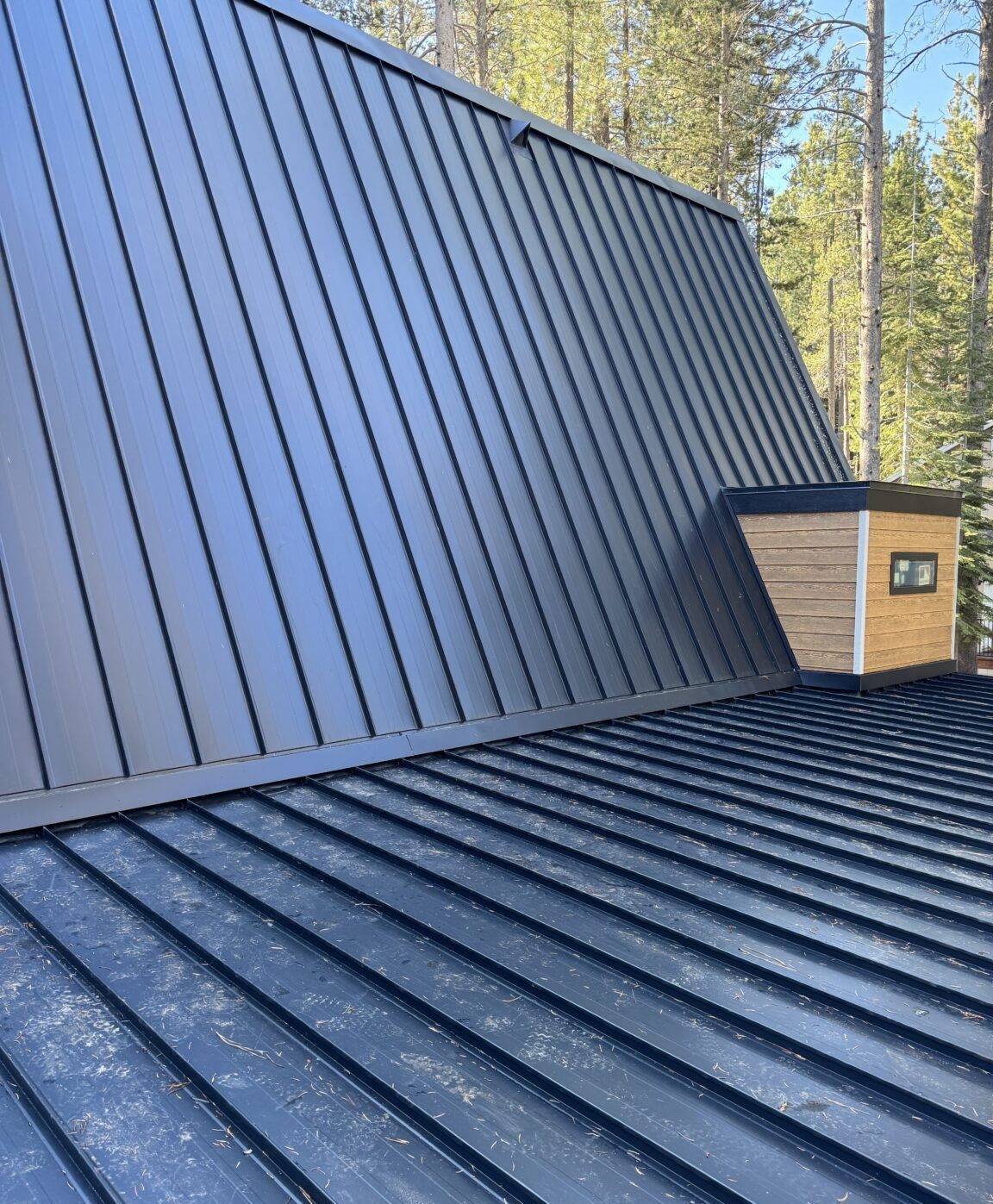
What Storm Damage Actually Looks Like Here
Wind Damage
Sustained wind and gusts off the water can lift shingle tabs, crease them, or tear them off outright. Even when shingles don't come off completely, a broken seal means the shingle no longer lays flat — and every rain after that works more water underneath it. This is the most common type of storm damage we find on Bellingham roofs, and it's also the easiest to miss from the ground.
Wind-Driven Rain Intrusion
Bellingham doesn't get much hail, but it gets a lot of rain moving nearly horizontal during a strong system. That kind of weather finds every weak point in flashing around chimneys, skylights, sidewalls, and roof-to-wall transitions. Water intrusion from driving rain often shows up as an interior stain nowhere near where the actual entry point is on the roof, which is why chasing the leak by eye from inside the attic rarely works on its own.
Moss and Trapped Moisture
This isn't a storm event on its own, but it's the reason storm damage here turns into structural damage faster than it would in a drier climate. Moss holds moisture against the shingle surface and roof deck for months at a time. Add a wind event that lifts or cracks shingles in a moss-covered area, and you've got a direct path for standing moisture to reach the decking. We regularly find soft, delaminating sheathing under moss mats that looked cosmetic from the ground.
Flashing and Fastener Failure
Salt air corrodes exposed metal faster than inland air does. Nail heads, flashing edges, and vent boot collars that would last two decades further from the coast can start failing well before that here. A storm doesn't have to be severe to finish off flashing that's already corroding — it just has to move enough water to exploit the gap that's already there.
Why Bellingham Homeowners Shouldn't Wait to Have It Checked
The damp shoulder seasons here mean a roof rarely gets a chance to fully dry out between storms. Water that gets under a shingle or past a flashing joint in October may not show up as a ceiling stain until February, after months of slow saturation into the decking and insulation. By the time it's visible indoors, the repair is often bigger than it would have been if it had been caught right after the storm that caused it.
We're not saying every gust of wind warrants a roof call. But after any storm strong enough to notice — downed branches, patio furniture moved, debris in the yard — it's worth a look, especially if the roof is more than 10-12 years old or has visible moss growth. A twenty-minute inspection costs a lot less than a ceiling repair and insulation replacement.
What a Correct Storm Repair Actually Involves
A lot of storm repair work we get called to fix is a prior patch job that only addressed the visible symptom. Doing it right means finding the actual entry point and repairing the roof system, not just the spot someone can see from the ground.
- Full inspection of the affected area and the surrounding field, not just the spot where the leak showed up inside
- Check of the roof decking underneath — soft or delaminated sheathing needs to be replaced, not covered over
- Flashing inspected and re-sealed or replaced at chimneys, skylights, sidewalls, and any roof penetrations nearby
- Matching shingles or roofing material as closely as possible in color and profile so the repair doesn't stand out
- Underlayment repaired or extended under the new material, not just shingles nailed over a gap
- Attic ventilation checked — trapped moisture from poor airflow makes storm damage worse and slower to dry
- Moss and debris cleared from the surrounding roof area so the repair isn't immediately undermined again
Materials Matter More Here Than Elsewhere
Because of the salt air and near-constant moisture cycle, we're careful about fastener and flashing material on any roof near the water — corrosion-resistant fasteners and properly lapped flashing hold up far longer here than standard hardware. It costs a little more up front. It's also the difference between a repair that lasts and one we get called back to redo in three years.
Our Process for a Storm Repair Call
- Inspection and documentation. We walk the roof, photograph the damage, and check the attic from inside where accessible. If this is an insurance claim, this documentation matters.
- Honest assessment. We tell you what's actually storm-related versus what's pre-existing wear — insurance adjusters draw that same distinction, and we'd rather you hear it from us first.
- Written scope and estimate. You know what's being repaired, with what materials, before any work starts.
- Repair. Decking, flashing, underlayment, and shingle work done to match the existing roof as closely as possible.
- Cleanup and walkthrough. Debris hauled off, work area cleared, and we walk the repair with you before we call it done.
Working With Your Insurance Claim
Storm damage is one of the more common reasons Whatcom County homeowners file a roof claim, and adjusters see a lot of Bellingham roofs, so they know what wind and moisture damage looks like in this area. What helps most is clear photo documentation tied to a specific storm date, and a repair scope that separates storm damage from ordinary wear like moss staining or age-related granule loss. We provide that documentation as part of the inspection — what you do with your claim from there is between you and your insurer, but we'll answer any questions your adjuster has about the scope of work.
Repair vs. Replace: What Actually Drives the Decision
| Factor | Leans Toward Repair | Leans Toward Replacement |
|---|---|---|
| Age of roof | Under 12-15 years | Nearing or past expected lifespan |
| Extent of damage | Isolated to one section | Multiple areas or widespread wind lift |
| Decking condition | Solid, dry sheathing | Soft, delaminated, or repeatedly wet decking |
| Moss history | Minor, recently cleaned | Long-term buildup with visible granule loss |
| Prior repairs | First storm event on this roof | Multiple past patches in different spots |
Most storm calls we get in Bellingham are legitimate repairs, not full replacements. But if a roof has taken repeated moisture damage over the years, a storm event is often what finally exposes how much of the underlying structure needs attention — and that's a conversation we'll have honestly, not one we'll use to upsell a job the roof doesn't need.
Signs Your Bellingham Roof Needs a Post-Storm Inspection
- Shingles visible in the yard or gutters after a windstorm
- Shingle tabs that look lifted, curled, or out of line with the rest of the roof
- New or spreading ceiling stains, especially near chimneys or skylights
- Granules collecting in gutters or at downspout outlets
- Visible daylight or gaps around flashing at roof penetrations
- Heavy moss growth combined with any of the above
- Musty smell in the attic after a heavy rain event
Why It Matters That We Already Work This Area
A crew that works Bellingham and Birch Bay regularly already knows which roof styles and ages are common here, what the corrosion pattern from the salt air actually looks like versus normal wear, and how aggressively moss needs to be managed on a roof that stays shaded and damp most of the year. That's not something a crew driving in from outside the county picks up on a single job. It also means we're not disappearing after the repair — if something about the work needs a follow-up look, we're still local.
If your roof took wind or rain damage in a recent storm, or you're just not sure whether what you're seeing needs attention, we're happy to take a look. Reach out for a free, no-pressure estimate using the form below.