 Birch Bay
 Storm Damage Roof Repair for Cottonwood Beach Homes
Cottonwood Beach sits right up against the water along Birch Bay, which means the roofs here take a different kind of beating than homes a few miles inland in Whatcom County. Wind off the bay drives rain sideways under shingle edges, salt air accelerates corrosion on flashing and fasteners, and the shaded, moisture-heavy tree cover common along this shoreline keeps roofs damp longer after every storm passes. When a wind event, heavy rain, or a falling branch damages a roof out here, the repair needs to account for all of that — not just patch the visible hole.
This page covers what storm damage repair actually involves for a Cottonwood Beach roof, what we look for during an inspection, and how we approach the work so the fix holds up through the next storm season, not just until the next one.
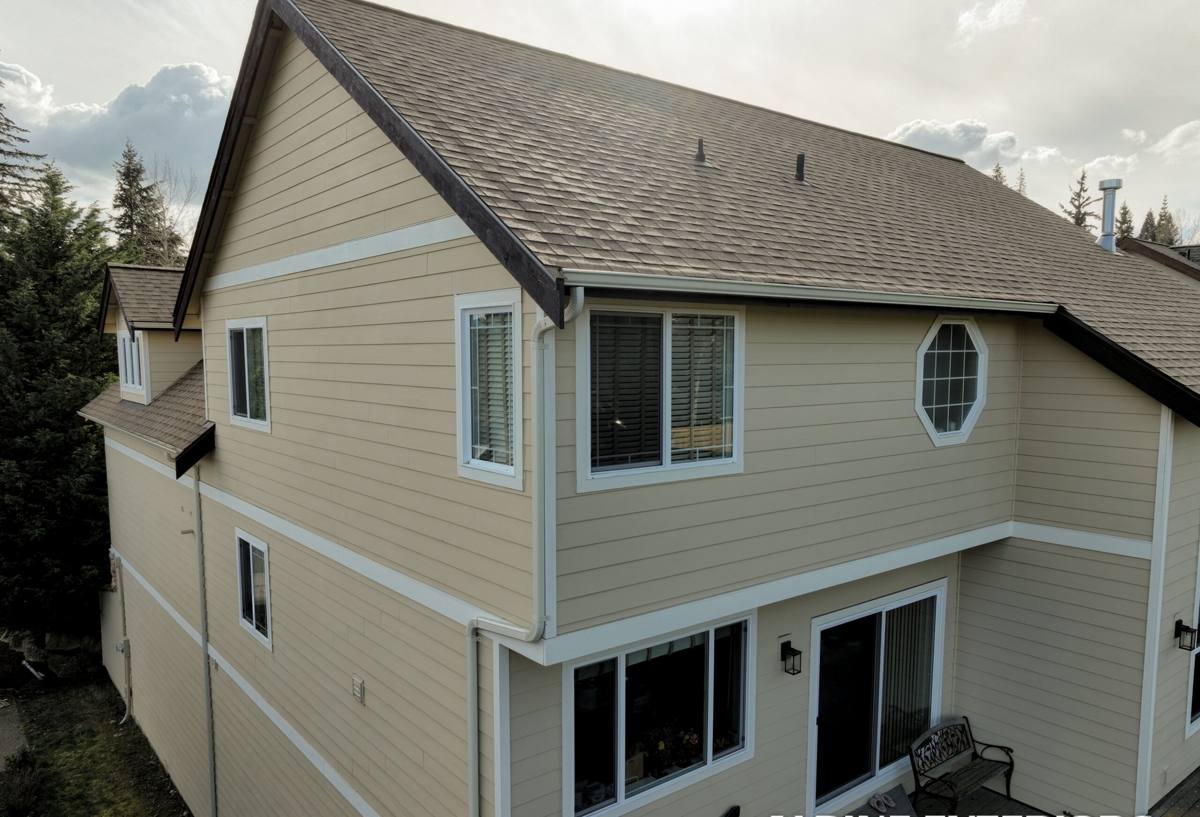
Why Storm Damage Hits Different in This Neighborhood
A few things stack together in Cottonwood Beach that don't apply the same way everywhere in Birch Bay or greater Whatcom County:
- Wind exposure off the water. Waterfront and near-waterfront lots take direct gusts with nothing to break them up, which is what lifts shingle tabs and drives rain up and under roofing material instead of down and off it.
- Salt air corrosion. Metal flashing, nail heads, and gutter hardware near the shoreline corrode faster than the same materials would inland. A fastener that's rusted through is a fastener that's no longer holding a shingle down.
- Long moss season. The Pacific Northwest's wet, mild winters already favor moss growth, and shaded or north-facing roof sections near the beach stay damp even longer. Moss holds moisture against shingles and works its way under tabs and around flashing, which is often what turns a small storm ding into a bigger leak.
- Mixed tree cover. Many Cottonwood Beach lots have mature conifers nearby. Storms here as often bring down branches and debris as they do straight wind damage.
None of this means Cottonwood Beach roofs are doomed — it means the repair approach has to be matched to the actual conditions, not just a generic patch job.
Signs Your Roof Took Storm Damage
Some damage is obvious right after a storm. A lot of it isn't, and shows up weeks later as a stain on a ceiling or a soft spot underfoot. After any significant wind or rain event, it's worth checking for:
- Shingles that are lifted, curled, cracked, or missing entirely
- Granules collecting in gutters or at the base of downspouts
- Bent, lifted, or missing flashing around chimneys, vents, and roof valleys
- Dented or dislodged gutters and downspouts
- Water stains on interior ceilings or upper walls, especially after the next rain
- Visible daylight through the attic decking
- Debris, branches, or moss buildup concentrated in one section of the roof
- Soft or spongy spots when walking the roofline (a sign water has already gotten into the decking)
If you see any of these, it's worth having someone look at it before the next storm turns a small problem into a ceiling repair.
What a Correct Storm Damage Repair Actually Involves
A rushed storm repair often just covers the hole. A correct one traces the damage back to its cause and fixes that too. For Cottonwood Beach, that usually means:
1. Finding the real entry point
Water doesn't always show up where it got in. A stain on a ceiling can trace back to a flashing gap several feet away, following the roof deck or a rafter before it drips. We check the full roof plane around any visible damage, not just the spot that looks bad.
2. Checking the decking underneath
If water has been getting in for more than one storm cycle, the plywood or OSB decking underneath the shingles can be soft or delaminating. Replacing shingles over damaged decking doesn't fix anything — it just hides it again until the next leak.
3. Matching materials and fastener grade to the exposure
Given the salt air near the water, we favor corrosion-resistant flashing and fasteners for repairs in this area rather than standard-grade hardware that will rust out again in a few seasons. It costs a little more up front and saves a repeat repair later.
4. Re-sealing and re-securing surrounding material
Wind damage rarely stays confined to the exact spot that failed. Adjacent shingles are often loosened even if they didn't tear off. Part of a correct repair is re-securing that surrounding material so the next windstorm doesn't finish the job.
Our Storm Damage Repair Process
| Step | What Happens |
|---|---|
| 1. Inspection | Full roof walk or ground/ladder assessment (roof condition dependent), checking shingles, flashing, decking, and interior ceilings for signs of water intrusion |
| 2. Documentation | Photos and notes on the damage, useful for your own records and for any insurance claim you choose to file |
| 3. Written estimate | Clear scope of what needs repair, what materials we're using, and why — no vague line items |
| 4. Repair | Remove and replace damaged shingles, decking, and flashing as needed; re-secure loosened surrounding material |
| 5. Final check | Walk the repair, check for any missed soft spots or gaps, and confirm the area sheds water correctly |
Repair Approaches: Matching the Fix to the Damage
Not every storm-damaged roof needs the same level of work. The right approach depends on how widespread the damage is and how much life is left in the rest of the roof.
| Approach | Best For | Cost Factors |
|---|---|---|
| Spot repair | Isolated shingle or flashing damage on an otherwise sound, newer roof | Lowest cost; limited to material and labor for the affected section |
| Section replacement | Damage concentrated in one roof plane, or decking compromised in a specific area | Moderate cost; depends on decking condition and size of the section |
| Full re-roof | Roofs already near the end of their service life, or with widespread moss and moisture damage on top of storm damage | Highest cost, but resets the clock instead of layering repairs on an aging roof |
We'll always tell you honestly which category your roof falls into. A roof with a few good years left rarely needs a full re-roof just because one storm knocked a section loose — but we won't talk you into a spot repair on a roof that's clearly failing underneath, either.
Insurance and Storm Claims
Many storm damage repairs in Whatcom County are covered in part by homeowners insurance, depending on your policy and the cause of the damage. A few things that help if you're considering a claim:
- Document damage with photos as soon as it's safe to do so, before any repair work starts
- Get a written estimate that clearly separates storm-caused damage from any pre-existing wear (insurers look closely at this distinction)
- Keep records of the storm date and any local weather reports, which can support the timeline of your claim
We're happy to provide documentation and a clear estimate to support a claim, but the claim itself is between you and your insurer — we won't pressure you into filing one, or into more work than your roof actually needs.
Why Local Experience in Cottonwood Beach Matters
A crew that mostly works inland roofs can still do competent work, but they won't necessarily think to spec corrosion-resistant fasteners for a waterfront lot, or recognize how much faster moss builds back up on a shaded, salt-air roof plane near the bay. Working regularly in Birch Bay and Cottonwood Beach specifically means we've seen how this coastline's combination of wind, salt, and moisture actually plays out on roofs over multiple storm seasons — not just in a single inspection.
After the Repair: Keeping Storm Damage From Coming Back
A good repair holds up longer with a little upkeep, especially given the moss and moisture conditions common in this area:
- Keep gutters and downspouts clear so water isn't backing up under roof edges
- Trim back tree branches that overhang the roof, both to reduce debris and to cut down shade that keeps moss growing
- Have moss treated or removed before it builds up thick enough to hold moisture against shingles
- After any major windstorm, do a quick visual check from the ground for missing or lifted shingles
None of this prevents every storm from causing damage, but it reduces how often small damage turns into a bigger repair.
Get a Free Estimate
If a recent storm left you with a leak, missing shingles, or damaged flashing on your Cottonwood Beach home, we're glad to take a look and give you a straightforward, no-pressure estimate — including an honest read on whether you're looking at a spot repair or something bigger. Fill out the form below to get started.