 Birch Bay
 Windows Built for Point Roberts' Coastal Exposure
Point Roberts sits out on its own point of land facing the Strait of Georgia and Boundary Bay, which means homes here take a harder hit from the weather than most inland Whatcom County properties. Salt-laden air off the water, wind-driven rain that comes in sideways during winter storms, and a moss season that runs longer than almost anywhere else in the region all put extra stress on window assemblies — the frames, the flashing, the sealants, and the glass itself. A window that's rated fine for a sheltered inland lot can start failing early out here if it wasn't installed with this specific exposure in mind.
This page covers what a correct window installation looks like for a Point Roberts home, what our process involves, and why it matters to hire a crew that already understands this stretch of coastline rather than a general contractor working from a generic checklist.
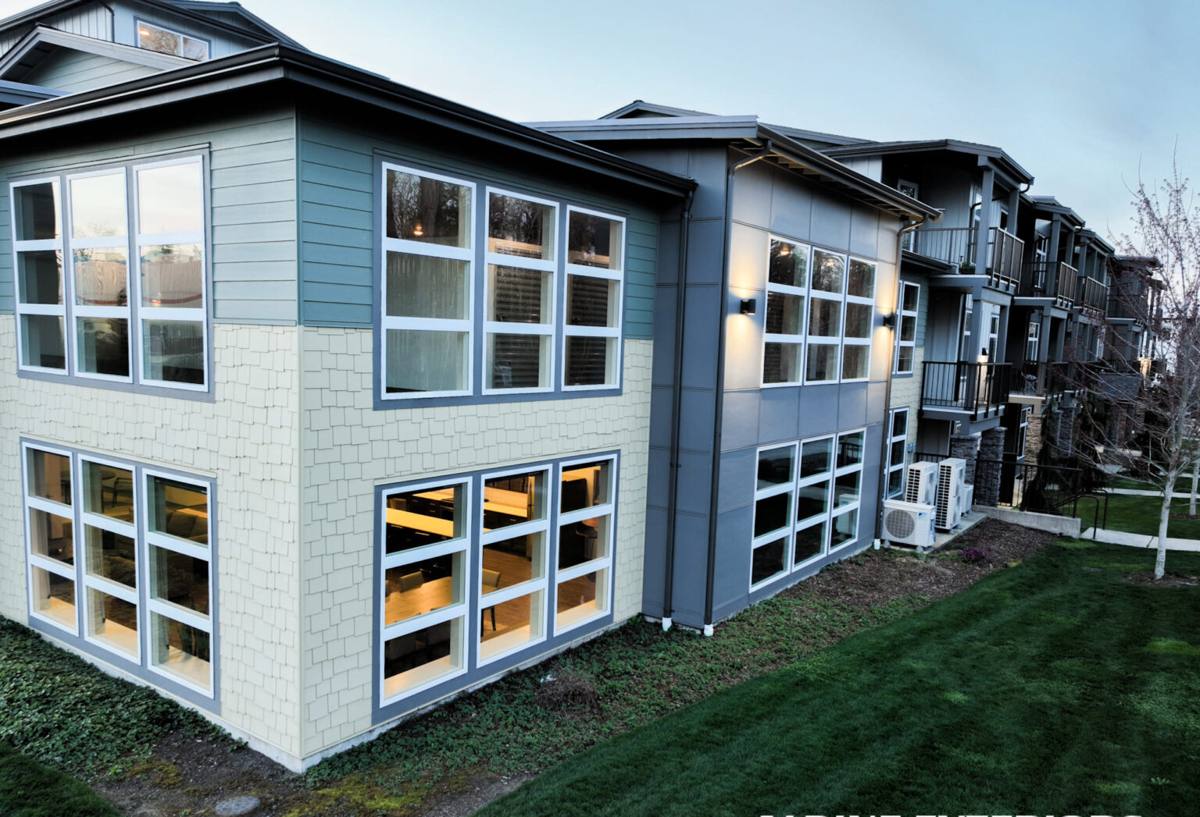
What the Local Climate Does to Windows
Salt Air and Corrosion
Airborne salt from the Strait doesn't just affect boats and cars — it settles on window hardware, screws, and any exposed metal flashing. Over years, bare or lower-grade aluminum components and unprotected fasteners can corrode faster here than they would twenty miles inland. This is why hardware choice and flashing material matter more in Point Roberts than in a lot of other Whatcom County neighborhoods.
Driving Rain and Water Intrusion
Wind-driven rain doesn't fall straight down — it gets pushed sideways and upward under trim and around poorly sealed openings. A window opening that relies on caulk alone, without proper sill pan flashing and correctly lapped weather-resistant barrier, is a leak waiting to happen during the next real storm. Most of the window-related rot we find in older homes here traces back to water getting behind the window rather than through the glass or sash itself.
Moss and Prolonged Dampness
Point Roberts' moss season runs long because the marine layer keeps north- and west-facing walls damp for extended stretches. Moss and algae holding moisture against trim boards and sills accelerates wood rot around window openings that aren't properly flashed or that have gaps in the sealant. Even good windows can be undermined by rot in the framing around them if that moisture problem isn't addressed at install time.
What a Correct Installation Actually Involves
A window installation is more than fitting a new unit into an old hole. Done right, it's a sequence of steps where skipping any one of them creates a weak point that shows up as a leak, drafts, or rot down the line — sometimes years later.
- Assessment and measurement — checking the existing opening, rough framing, and current window condition before ordering anything.
- Careful removal — pulling the old window without damaging the surrounding framing, and inspecting the sheathing and studs for hidden rot or water damage once it's out.
- Framing repair if needed — replacing any rotted or compromised wood before the new window ever goes in. Installing a new window into a rotted opening just hides the problem.
- Sill pan flashing — creating a sloped, sealed pan at the bottom of the opening so any water that does get past the window sheds outward instead of soaking into the framing.
- Weather-resistant barrier integration — lapping housewrap or building paper correctly around the flange so water is shed downward and outward, not trapped behind the window.
- Window setting and shimming — leveling and squaring the unit so the sash operates properly and the seal is uniform on all sides.
- Sealant and fastening — using sealants and fasteners rated for coastal exposure, not generic hardware that corrodes or fails under UV and salt air.
- Exterior trim and finish — trimming, caulking, and finishing the exterior in a way that sheds water away from the seams.
- Interior finish and function check — insulating the gap, finishing the interior, and confirming the window opens, closes, and locks properly.
Any one of these steps done carelessly can undercut the whole job. Sill pan flashing in particular is one of the most commonly skipped steps on lower-cost installs — it's not visible once the job is finished, so it's easy to shortcut, but it's often the single biggest factor in whether a window stays dry for the next twenty years.
Choosing the Right Window for This Exposure
There's no single "best" window brand for every home — the right choice depends on your home's exposure, your budget, and how much upkeep you want to do. What matters more than the brand name is the material's real-world behavior in salt air and sustained damp weather.
| Frame Material | Coastal Performance | Maintenance | Typical Cost Range |
|---|---|---|---|
| Vinyl | Good moisture resistance, won't corrode; quality varies by manufacturer | Low — occasional cleaning | Lower to mid |
| Fiberglass | Very stable in temperature swings and damp conditions, strong seal retention | Low | Mid to higher |
| Wood (unclad) | Attractive but vulnerable to prolonged moisture and rot without diligent upkeep | High — regular painting/sealing | Mid to higher |
| Wood-clad (aluminum or fiberglass exterior) | Good, if cladding and flashing are installed correctly | Low exterior, interior wood care | Higher |
| Bare aluminum | Prone to corrosion and condensation in salt air unless thermally broken and well-finished | Moderate to high | Lower to mid |
Our general standard for homes on this stretch of coast is to steer clients away from unclad wood exposed directly to the weather and bare aluminum frames unless there's a specific design reason and the client understands the maintenance commitment. That's not a knock on those materials everywhere — they just ask more of the homeowner in a salt-air, high-moisture environment than vinyl, fiberglass, or properly clad wood do.
Glass and Energy Performance
Low-E glass with argon or krypton gas fill helps hold interior warmth during the region's cool, damp winters and cuts down on condensation forming on the interior glass surface — a common complaint in older single-pane or early double-pane windows once the seals start to fail. If you're noticing fog or moisture between the panes on existing windows, that's a sign the seal has failed and the unit needs replacing, not just re-caulking.
Signs Your Windows Need Attention
- Fogging or moisture trapped between panes of a double-glazed window
- Soft or spongy wood trim around the window frame
- Visible gaps between the frame and siding, or cracked/missing caulk lines
- Drafts you can feel near the window even when it's closed and locked
- Difficulty opening, closing, or locking the sash
- Peeling paint or finish concentrated around the window opening rather than the whole wall
- Moss or dark staining building up on the sill or trim below the window
- Noticeably higher heating costs without another clear explanation
Any one of these on its own isn't necessarily an emergency, but a few showing up together around the same window is usually a sign the seal or flashing has failed and moisture is getting in behind the trim.
Our Process for Point Roberts Jobs
We start with a walk-around and honest assessment — we'll tell you if a window needs full replacement, or if a repair (new sealant, re-flashing, hardware replacement) will get you more life out of what's there. From there we handle measurement, material selection based on your home's exposure, removal, framing inspection and repair, installation with proper flashing and weather barrier integration, and finish work — all coordinated so the opening isn't left exposed to weather any longer than necessary.
Because Point Roberts is separated from the rest of Whatcom County by water and international border crossing, scheduling and material delivery take a bit more planning than a typical job in Birch Bay or Blaine. A crew that already works this area builds that logistics reality into the schedule from the start, instead of discovering it mid-project. We coordinate material delivery and crew scheduling in advance so your project timeline holds and you're not waiting on a truck that got held up at the border.
Why Hire a Crew That Already Works Point Roberts
General contractors who rarely work this area often quote and build for typical inland conditions — standard flashing details, standard sealant choices, standard scheduling assumptions. That approach can leave gaps that show up as leaks or premature hardware failure once the coastal weather has a few seasons to work on it. A crew familiar with Point Roberts' specific exposure — the salt air, the wind-driven rain off the water, and the extended damp season — builds in the extra flashing detail, the corrosion-resistant hardware, and the realistic scheduling from day one, rather than learning it the hard way on your house.
If you're weighing whether your windows need repair or full replacement, or you're planning ahead for a remodel, we're happy to take a look and give you a straightforward assessment — no pressure, no upsell. Fill out the form below for a free estimate and we'll get back to you with honest options for your home.