 Birch Bay
 Windows in Terrell Creek Deal With More Than Most
Terrell Creek sits close enough to the water that its homes take on the same weather load as the rest of Birch Bay: salt-laden air rolling in off the strait, long stretches of driving rain through the fall and winter, and a moss season that never really ends in the shaded, damp spots between houses and tree lines. Windows are one of the first places that weather shows up. A frame that's slightly out of level, a sill that wasn't sloped right, or a sealant bead that's starting to fail will let moisture find its way in long before anyone notices a stain on the drywall.
None of this is unique to any one house in the neighborhood — it's just what Whatcom County's marine climate does to building materials over time. The homes that hold up best aren't the ones with the fanciest windows. They're the ones where the installation was done right the first time, with the flashing, drainage, and sealing details treated as seriously as the window itself.
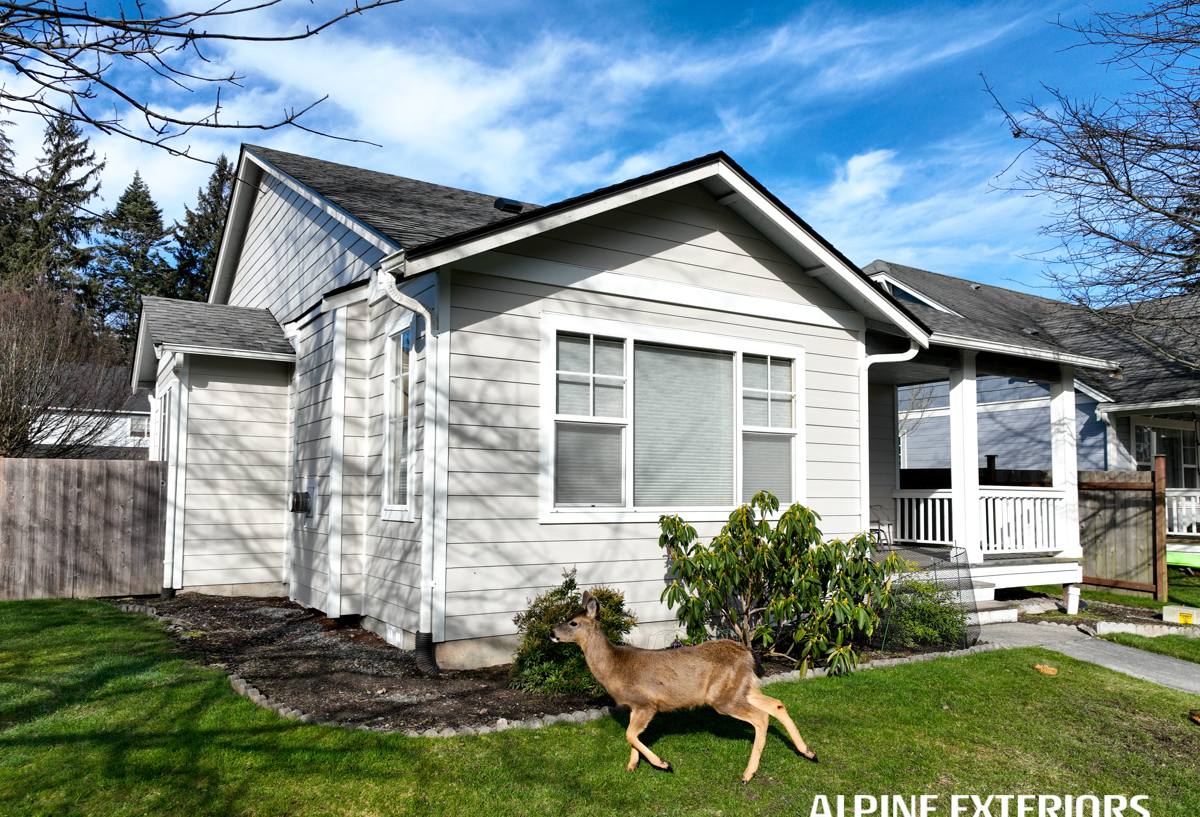
What Correct Window Installation Actually Involves
A window is only as good as the opening it sits in. Swapping an old window for a new one without addressing the rough opening, flashing, and water management is how homeowners end up with a nice-looking window that still leaks two winters later. For Terrell Creek homes, we treat every installation as a moisture-management job first and a window job second.
The details that matter most
- A sloped sill pan that directs any water that gets past the window back outside, not into the wall cavity
- Properly lapped flashing tape at the sill, jambs, and head — installed in the correct shingle-style order so water always sheds downward and outward
- A continuous bead of quality sealant at the exterior, sized and placed so it can actually do its job over time rather than just look tidy
- Backer rod and interior air-sealing so conditioned air isn't leaking out around the frame
- Shimming and fastening that keeps the window square and operating smoothly for years, not just on install day
Skip any one of these and the window itself — no matter how good the brand — becomes the weak point in the wall.
Problems We Commonly Find in This Area
Rot around older wood-frame windows
A lot of homes in this part of Birch Bay still have original wood windows or early vinyl replacements from decades back. Wood sashes and sills that haven't been repainted on schedule start to soften at the corners first — that's usually where water sits longest. By the time it's visible from inside, the sheathing behind it is often already compromised.
Condensation and fogged glass
Fogging between the panes means the seal on an insulated glass unit has failed and the gas fill is gone. It's not repairable — the glass unit (or the window) needs replacing. This shows up faster in coastal air than it does further inland.
Failed caulk and sealant joints
UV, salt air, and constant damp-dry cycling break down exterior sealant faster here than in a drier climate. A bead that looked fine three years ago can crack and pull away, and once it does, water starts working behind the trim.
Our Installation Process
1. On-site assessment
We look at the existing opening, not just the window. That means checking the sill for soft spots, looking at how the current unit was flashed (or wasn't), and noting anything specific to the house's exposure — a wall that takes the brunt of southwest weather gets treated differently than a sheltered side.
2. Removal and opening prep
Once the old window is out, we inspect the framing and sheathing before anything new goes in. Any soft or water-damaged wood gets replaced at this stage — installing a new window over a rotten sill just hides the problem for a while.
3. Flashing and sill pan installation
This is the step that actually determines whether the window stays dry for the next 20+ years. We build the sill pan and flashing sequence to shed water outward, every time, regardless of window brand.
4. Setting, shimming, and fastening
The window gets set level, plumb, and square, then fastened per the manufacturer's instructions — which matters for keeping any warranty intact.
5. Sealing and finish work
Exterior sealant, interior air-sealing, and trim work finish the job. We walk the homeowner through operation of the new windows and what to watch for going forward.
Choosing a Window for This Climate
There's no single "best" window — the right choice depends on budget, how much upkeep the homeowner wants to take on, and how exposed the house is. Here's how the common frame materials stack up for a place like Terrell Creek:
| Frame Material | Maintenance | Moisture Behavior | Typical Lifespan |
|---|---|---|---|
| Vinyl | Low — no painting, occasional cleaning | Doesn't rot; performs well in salt air | 20-30+ years |
| Fiberglass | Low to moderate | Very stable in temperature swings and moisture; holds paint well if ever needed | 30+ years |
| Wood (unclad) | High — regular repainting/sealing required | Susceptible to rot if maintenance lapses, especially near the coast | Varies widely with upkeep |
| Wood-clad (aluminum or vinyl exterior) | Moderate | Exterior clad protects wood core, but cladding seams need attention | 20-30 years with good detailing |
For homes directly exposed to salt-laden wind off the water, we generally steer homeowners toward vinyl or fiberglass for the exterior-facing performance and lower long-term maintenance burden. Wood and wood-clad windows can still be the right call for a specific look, but we're upfront that they ask more of the homeowner in upkeep — that's a trade-off, not a defect, and it's worth deciding on with full information rather than finding out the hard way.
Glass packages worth considering here
Double-pane with a Low-E coating is the baseline for this climate and handles the temperature swings and driving rain fine. Triple-pane adds insulation value and sound dampening, which is worth it for homes closer to the road or for anyone prioritizing energy efficiency, but it comes at added cost and weight. We'll talk through whether that upgrade makes sense for the specific house rather than upselling it across the board.
Cost Factors for Terrell Creek Window Projects
Every project is different, but the same handful of factors drive most of the cost variation we see on jobs in this area:
| Factor | Why It Matters |
|---|---|
| Number of openings | More windows means more labor and material, but per-window cost usually drops slightly with volume |
| Frame material and glass package | Vinyl is the most budget-friendly; fiberglass and triple-pane glass add cost but also long-term value |
| Condition of existing openings | Rotted sills or sheathing found during removal add repair time before the new window can go in |
| Window size and type | Standard double-hung windows install faster than large picture windows or custom shapes |
| Access and site conditions | Second-story or hard-to-reach openings take more time and equipment |
We give homeowners a broad range up front based on a quick look, then firm it up after the on-site assessment — no surprise add-ons once we're into the job unless we find hidden damage, and even then we show you what we found before moving forward.
Why a Local Crew Matters for This Neighborhood
Working windows in Terrell Creek regularly means we already know what this stretch of Whatcom County throws at a house — how far the salt air travels inland, which exposures take the worst of the winter storms, and how quickly moss and moisture build up on north-facing walls if they're not sealed right. That's not something a crew passing through the area for a one-off job picks up as fast.
It also means we're around after the job is done. If a question comes up a year or two later — a window that's sticking, a seal that looks off — we're not far away and we're not hard to reach. For exterior work that depends on getting water management right the first time, that local accountability is worth as much as the installation itself.
After Installation: Keeping Windows Performing
New windows installed correctly need very little — but a little attention goes a long way in this climate:
- Rinse salt residue off exterior frames and glass periodically, especially after storms
- Check exterior sealant annually for cracking or separation, particularly after the first year as materials settle
- Keep gutters and downspouts clear so water isn't sheeting down across window heads
- Clear moss and debris from sills and tracks before it holds moisture against the frame
- Operate windows through their full range a few times a year so weatherstripping and hardware don't seize up
None of this is a big time commitment, but skipping it is how a well-installed window still ends up with problems a decade in.
If you're dealing with drafty, foggy, or aging windows in Terrell Creek, we're happy to take a look and give you a straightforward, no-pressure estimate — just fill out the form below.