 Birch Bay
 Bellingham's Siding Problem Isn't One Thing — It's Three at Once
Homes in and around Bellingham take a slow, steady beating from three directions at the same time. Proximity to Bellingham Bay means salt-laden air working on fasteners, trim, and any exposed wood grain. Whatcom County's rain pattern means long stretches of low-intensity, wind-driven moisture rather than short hard downpours — the kind of weather that finds every gap in a siding system instead of just running off the surface. And the region's mild, damp shoulder seasons mean moss and algae get months of ideal growing conditions on anything that stays shaded and wet, which is most north- and west-facing walls here.
None of these three things is dramatic on its own. Together, over ten or fifteen years, they're what separates a siding job that still looks tight from one that's cupping, staining, or rotting at the seams. Fiber cement siding earns its reputation in exactly this kind of climate, but only when the product and the install are both right for it — which is the point of this page.
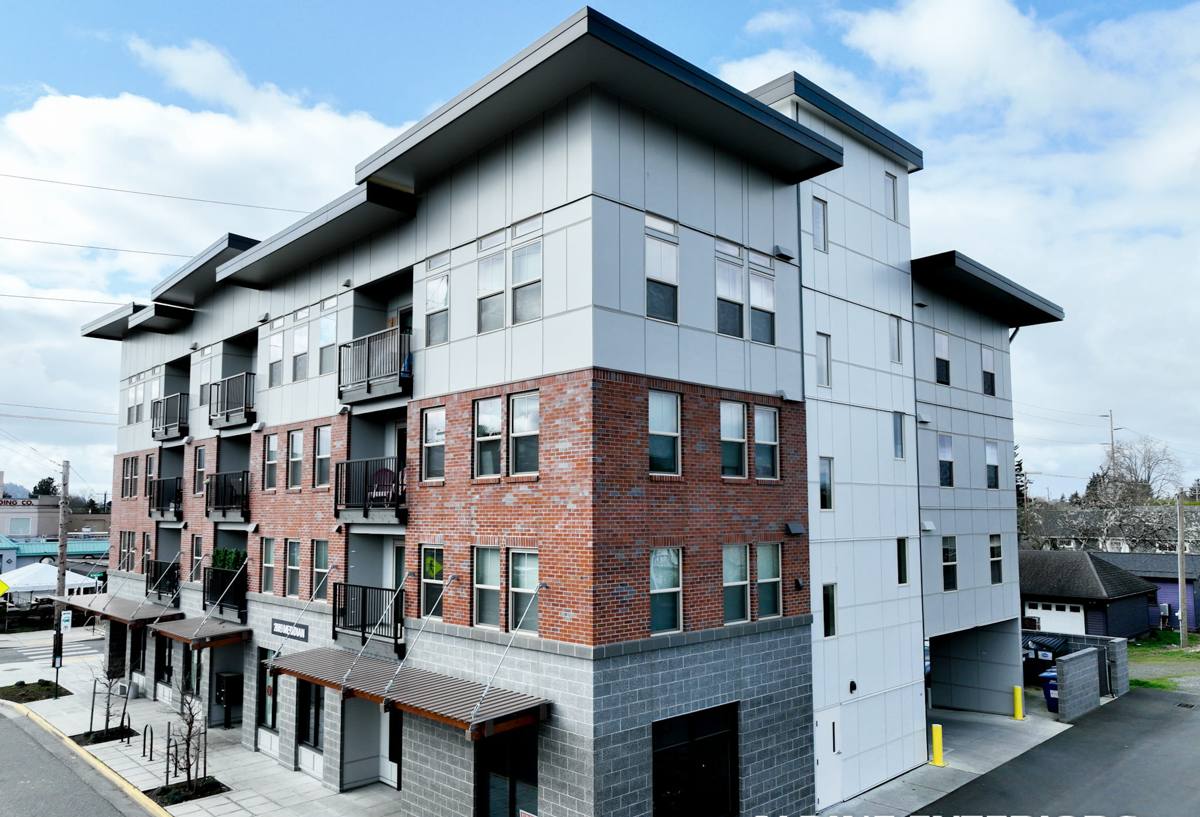
Why Fiber Cement Is the Right Call for This Area
Wood-based sidings — cedar, primed spruce, and engineered wood products like LP SmartSide — all share one vulnerability: their core is wood, and wood swells, checks, and eventually breaks down when it takes on repeated moisture cycling. In a climate that stays damp for months at a time, that cycling never really stops. Vinyl siding handles moisture fine on its own, but it's a thin, flexible material that telegraphs every irregularity in the wall behind it and becomes brittle with age and UV exposure — not a great match for a coastal wind pattern.
Fiber cement is cement, sand, and cellulose fiber pressed and cured into a rigid board. It doesn't absorb water into a wood core, it doesn't feed rot, and it holds paint and factory finish far longer than wood substrates because the surface itself isn't organic. That's why we standardized on it as the only siding product we install — not because every alternative is bad, but because we've made a professional judgment that fiber cement, installed correctly, is the best match for what Whatcom County weather actually does to a house over time.
Where Fiber Cement Still Needs Respect
Fiber cement isn't maintenance-free, and we won't tell a homeowner it is. It still needs correct clearances, correct fastening, and periodic repainting or recoating on the same cycle as any factory-finished exterior product. The difference is that when it's installed right, the moisture and salt exposure this region delivers doesn't turn into structural rot — it just requires normal upkeep.
What a Correct Fiber Cement Install Actually Involves
Most siding failures we see on inspection aren't product failures — they're installation shortcuts that don't show up until years later. In a climate like Bellingham's, those shortcuts get punished faster than they would somewhere dry. A correct install means:
- Proper water-resistive barrier and rainscreen or drainage gap behind the siding, so any moisture that gets past the cladding has somewhere to go
- Manufacturer-specified clearances — typically at least 6 inches above grade and 2 inches above roofing, decks, and patios — so splash-back and standing moisture don't sit against the board
- Correct fastener type, spacing, and embedment depth, since under- or over-driven nails are one of the most common causes of early plank movement
- Flashing at every window, door, and penetration, lapped correctly with the water-resistive barrier so water sheds outward, not behind the siding
- Factory-cut and factory-primed edges wherever possible, with any field cuts properly sealed per manufacturer spec
- Correct caulking at butt joints and trim — the right product, not just any exterior caulk, and only where the manufacturer actually calls for it
Skip any one of these and you can still end up with a wall that looks fine for a season or two before a driving rain finds the gap. This is the part of the job that matters more than which color or plank width gets chosen.
James Hardie's Climate-Engineered Lines
We install James Hardie exclusively, and one reason is that Hardie engineers its products by climate zone rather than selling one board for the whole country. Their HZ5 formulation is built for regions with damp, wet weather and freeze-thaw cycling — which fits Whatcom County's Pacific Northwest exposure better than a generic all-climate board. Combined with the ColorPlus factory finish — a baked-on finish applied under controlled conditions rather than field-painted after install — you get a top coat that resists the fading and moisture intrusion at the paint line that field-applied paint is more prone to over time.
James Hardie also backs its products with a strong transferable limited warranty, which matters more in a coastal climate than in a mild inland one, since warranty terms are where you find out how a manufacturer actually stands behind performance in the conditions the product will really face.
Salt Air and Fastener Corrosion — the Detail Most Jobs Miss
Close to Bellingham Bay, airborne salt accelerates corrosion on anything metal that isn't rated for it — fasteners, flashing, and trim accessories included. A siding job can use a top-tier board and still fail early if it's held on with the wrong fastener. Part of doing this correctly in this area means specifying corrosion-resistant fasteners and flashing components rated for coastal exposure, not just whatever's standard inland. It's a small line item that has an outsized effect on how the wall performs fifteen years out.
Our Process on a Bellingham Job
1. On-Site Assessment
We walk the exterior, check existing sheathing and water-resistive barrier condition where accessible, note drainage and grading issues, and identify any areas already showing moss, staining, or moisture damage. This is also where we flag which walls take the worst wind-driven rain and salt exposure, since orientation changes the plan.
2. Prep and Water Management
Old siding comes off, damaged sheathing gets addressed before anything new goes up, and we install a proper water-resistive barrier and drainage plane. This step gets skipped more often than homeowners realize, and it's the single biggest predictor of how a wall performs in a wet climate.
3. Installation to Manufacturer Spec
Hardie boards go up with correct clearances, fastening, and flashing at every penetration, using coastal-rated fasteners in salt-exposed areas.
4. Final Inspection and Walkthrough
We check caulking, trim, and finish details, then walk the job with the homeowner so they know what normal wear looks like versus something to call us about.
Cost Factors on a Bellingham Fiber Cement Job
| Factor | Why It Moves the Price |
|---|---|
| Existing wall condition | Rotted sheathing or hidden moisture damage found during tear-off adds repair scope before new siding goes on |
| Home size and wall complexity | More corners, dormers, and trim detail means more cutting, flashing, and labor time |
| Plank profile and finish | Lap width, texture, and ColorPlus color selection affect material cost |
| Access and site conditions | Steep lots, tight setbacks, or limited staging area affect labor time |
| Trim and accessory scope | Full trim replacement versus reusing sound existing trim changes material and labor totals |
We give a firm, written number after the on-site assessment — not a phone estimate — because wall condition and access genuinely change the scope on a job-by-job basis.
Why It Matters That We Already Work This Area
A crew that works Whatcom County regularly already knows which orientations take the worst of the driving rain, where moss tends to establish first, and how to sequence a job around the region's wet stretches so materials aren't sitting exposed during a bad weather run. That local pattern recognition doesn't replace following manufacturer spec — it's what makes following spec practical on a real schedule instead of theoretical on a data sheet.
Simple Homeowner Maintenance Checklist
- Rinse siding annually, especially shaded and north-facing walls, to slow moss and algae buildup
- Keep gutters clear so overflow doesn't run down the wall face
- Trim back vegetation and landscaping that holds moisture against the siding
- Watch caulked joints and trim intersections for cracking and have them resealed before gaps open up
- Have the exterior looked at after any major windstorm for loosened trim or flashing
If you're planning a siding project in Bellingham or elsewhere in Birch Bay's service area, we're happy to walk your home, point out what your specific walls are dealing with, and give you a straightforward, no-pressure estimate — use the form below to get started.