 Birch Bay
 Why Birch Bay Village Needs a Different Approach to Siding
Birch Bay Village sits close enough to the water that salt air is a daily fact of life, not an occasional weather event. Add Whatcom County's long wet season, wind-driven rain off the bay, and the shaded, damp conditions that let moss and algae take hold on north- and west-facing walls, and you have a set of conditions that punishes the wrong siding choice fast. A product that performs fine in a drier inland climate can fail early here — not because it's poorly made, but because it was never engineered for this combination of salt, moisture, and shade.
We install James Hardie fiber cement siding exclusively, and Birch Bay Village is exactly the kind of neighborhood that shows why. This page walks through what local homes actually need, what a correct installation involves, and how our process is built around the realities of this specific stretch of coastline.
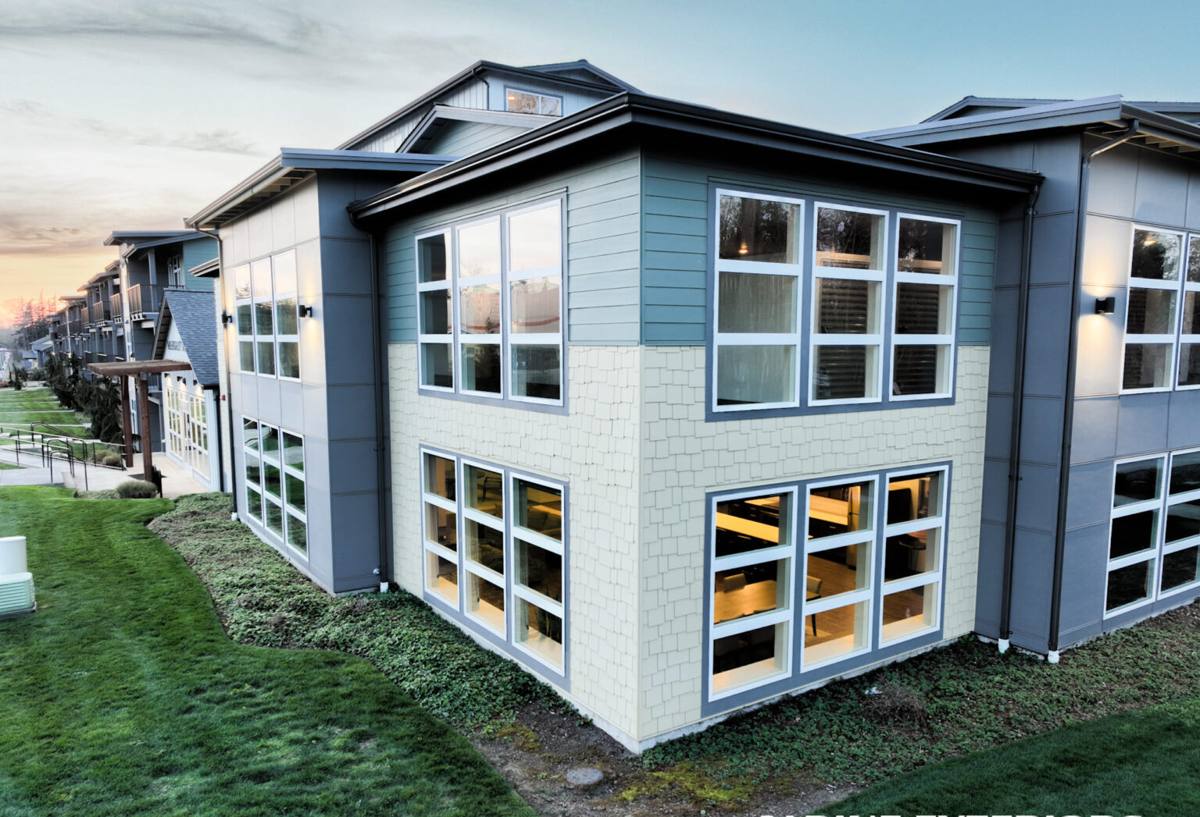
What Salt Air, Rain, and Moss Actually Do to a Home's Exterior
Salt Air
Airborne salt settles on every exterior surface near the bay. On wood-based sidings it accelerates moisture absorption at the surface, which speeds up swelling, cracking, and paint failure. On fasteners and trim, it accelerates corrosion if the wrong hardware was used. It doesn't take a storm to cause this damage — it happens gradually, day after day, as salt-laden moisture cycles through wet and dry.
Driving Rain
Birch Bay's exposure to wind off the water means rain doesn't just fall straight down — it drives sideways into wall assemblies, seeking any gap in flashing, caulking, or panel overlap. Siding that relies on face-sealed joints or that isn't installed with the right clearances and laps will eventually let water behind it, where it can sit against sheathing and framing unseen.
Moss and Algae Season
Shaded walls, overhanging trees, and the persistent damp of a Whatcom County fall through spring create ideal conditions for moss and algae growth on siding surfaces. This isn't just cosmetic — organic growth holds moisture against the siding surface longer than bare material would, compounding whatever moisture issues already exist underneath.
Why We Only Install James Hardie Fiber Cement
We don't install vinyl, LP SmartSide, cedar, primed spruce, Cemplank, or Allura. That's not a marketing position — it's a standard we hold because of what we've seen these conditions do to those materials over time in coastal Whatcom County.
- Vinyl can warp and become brittle with UV and temperature cycling, and its seams and J-channels give wind-driven rain more opportunities to work behind the surface.
- Wood-based products (cedar, primed spruce, LP SmartSide) are organic materials — they absorb moisture, and in a persistently damp, salt-exposed environment that means a shorter service life and more frequent maintenance to stay ahead of rot, even with quality factory treatments.
- Other fiber cement brands (Cemplank, Allura) are legitimate products, but we've standardized on one manufacturer so our crews install to one spec, one fastening schedule, and one warranty structure — consistency that reduces installation error, which is the single biggest driver of siding failure regardless of brand.
James Hardie fiber cement is non-combustible, dimensionally stable, and doesn't absorb moisture the way wood-based siding does. It's engineered in climate-specific HZ formulations, and it carries a factory-applied ColorPlus finish that resists fading and chipping far better than field-applied paint. For a neighborhood dealing with salt, driving rain, and a long moss season, that combination matters more than in almost any other setting we work in.
What a Correct Siding Installation Involves in This Environment
Fiber cement siding is only as good as its installation. In a marine climate, a handful of details separate a job that lasts decades from one that develops problems within a few years.
Water-Resistive Barrier and Flashing
Before any siding goes up, the wall needs a continuous, properly lapped water-resistive barrier with correctly integrated flashing at every window, door, and penetration. In a driving-rain environment, this layer is what actually keeps the wall assembly dry — the siding itself is the first line of defense, not the only one.
Rainscreen Gap
Where conditions call for it, we install a rainscreen gap behind the siding — a small air space that lets any moisture that does get past the siding drain and dry out instead of sitting against the sheathing. This is especially valuable on shaded, moss-prone walls where surfaces stay damp longer.
Fastening and Clearances
James Hardie specifies exact nailing patterns, fastener types, and minimum clearances from grade, roofing, and other surfaces. Skipping these — using the wrong fastener or closing up clearances to save time — is one of the most common ways installers void the warranty and set up early failure, especially in a corrosive salt-air environment where the wrong hardware degrades faster.
Caulking and Sealant Joints
Butt joints, trim intersections, and penetrations need the right sealant applied correctly, not just caulk smeared over a gap. In wind-driven rain, a poorly sealed joint is a direct path for water intrusion.
Our Process for Birch Bay Village Homes
- On-site assessment — We look at your home's specific exposure: which walls face the water and prevailing wind, where moss and algae are already established, and where past moisture damage shows up.
- Tear-off and sheathing inspection — Removing the old siding lets us check sheathing and framing underneath for rot or moisture damage before anything new goes on. Problems found here get addressed, not covered up.
- Water-resistive barrier and flashing installation — Continuous barrier, properly lapped, with flashing integrated at every opening.
- Rainscreen and furring where appropriate — Added on walls where shade, orientation, or past moisture issues call for extra drainage capacity.
- James Hardie panel or lap siding installation — Installed to manufacturer spec for fastening, clearance, and joint treatment.
- Trim, caulking, and final detailing — Every joint and penetration sealed correctly, not just cosmetically.
- Final walkthrough — We review the finished work with you and explain what maintenance, if any, to expect going forward.
Comparing Siding Options for a Marine, Moss-Prone Climate
| Material | Moisture Behavior | Salt Air Durability | Maintenance Burden |
|---|---|---|---|
| James Hardie Fiber Cement | Does not absorb moisture; dimensionally stable | Engineered for coastal/marine exposure (HZ lines) | Low — factory finish resists fading and chipping |
| Vinyl | Doesn't absorb moisture, but seams allow water intrusion | Can become brittle with UV/temperature cycling | Low, but prone to warping and fading over time |
| Cedar / Primed Spruce | Absorbs moisture; prone to swelling and rot | Accelerated degradation in salt air | High — repainting, sealing, rot monitoring |
| LP SmartSide | Engineered wood; better than raw wood but still moisture-sensitive at cut edges | Requires diligent edge-sealing near salt air | Moderate — edge sealing and inspection needed |
Signs Your Current Siding Is Already Struggling
- Persistent moss or algae staining that returns shortly after cleaning
- Soft spots, bubbling, or visible swelling, especially near the bottom courses or around windows
- Paint or finish that's peeling or chalking faster than expected
- Visible gaps at butt joints or trim where caulking has failed or shrunk
- Musty smells or soft drywall on interior walls that back onto exterior siding
- Rust streaking from fasteners, especially on wood or older vinyl installations
If any of these sound familiar, it's worth having the siding and the wall assembly behind it looked at before a cosmetic problem becomes a structural one.
Cost Factors for Birch Bay Village Siding Projects
Every home is different, but the main variables that affect the scope and cost of a siding installation here are consistent: the size and complexity of the home's exterior, how much of the existing sheathing needs repair once old siding comes off, whether a rainscreen assembly is called for on exposed or shaded walls, and the trim and detail work around windows, doors, and rooflines. We give a specific, itemized estimate after seeing the home in person — broad ranges without an on-site look aren't useful to you or to us.
Why Local Experience in Birch Bay Village Matters
A crew that already works this stretch of Whatcom County knows which walls in this neighborhood tend to take the worst of the wind-driven rain, how far moss creep typically runs before a wall needs attention, and how salt exposure differs even within a few blocks depending on tree cover and orientation. That local pattern recognition shapes real decisions — where we add a rainscreen gap, which trim details get extra sealant attention, and what maintenance schedule actually makes sense for your specific lot. It's the difference between a generic installation and one built for the home in front of us.
If you're considering new siding for a home in Birch Bay Village, we're happy to take a look and walk you through what we'd recommend and why. There's no pressure and no obligation — just a straight answer about what your home needs. Use the form below to request a free estimate.