 Birch Bay
 Roofing in Blaine: A Different Set of Conditions
Blaine sits about as close to saltwater and the Canadian border as a Washington town can get, and that location shapes what a roof has to deal with year-round. Homes here catch salt-laden air off the Strait of Georgia and Semiahmoo Bay, take on driving rain that comes in sideways during winter storms, and sit under a moss season that can run eight or nine months out of the year in the shadier, north-facing sections of a roof. A roof built for inland Whatcom County conditions, or installed by a crew that doesn't work this stretch of coastline regularly, often shows problems within a few years that a properly specified, properly installed roof would have avoided for decades.
This page is specifically about new roof installation for Blaine homes. Not a general roofing overview — the actual decisions, materials, and installation details that matter for a roof going on a house in this particular area.
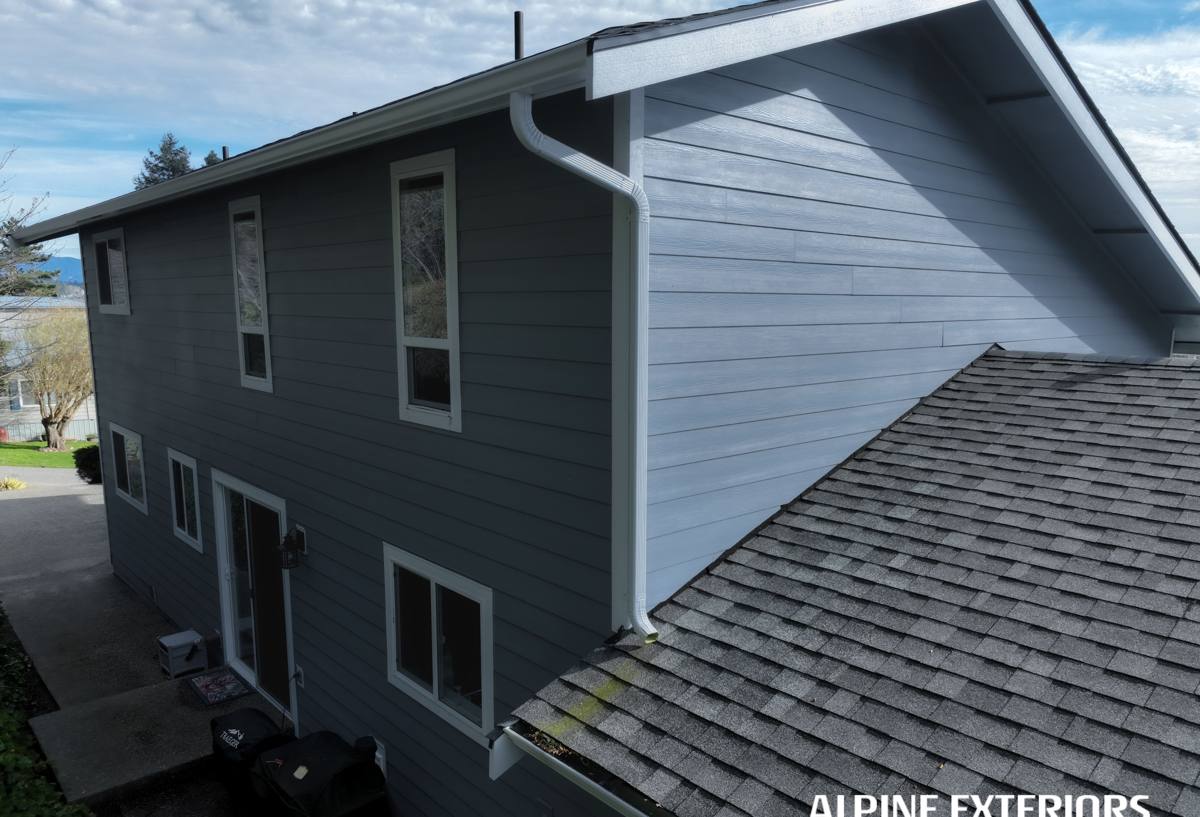
What Blaine's Climate Actually Does to a Roof
Salt Air and Metal Fasteners
Airborne salt accelerates corrosion on any exposed metal — nail heads, flashing, vent stacks, gutter hardware. On homes closer to the water, this happens faster than most homeowners expect. A roofing system that isn't specified with corrosion-resistant fasteners and flashing will show rust streaking and metal fatigue well ahead of the shingle's own service life, which then becomes the actual failure point of the roof even though the shingles themselves are fine.
Driving Rain and Wind-Driven Water
Blaine gets weather off the water that doesn't just fall straight down — it drives sideways under the force of onshore wind. That matters because standard shingle installation assumes rain falls more or less vertically. Wind-driven rain finds its way under shingle tabs, around poorly sealed penetrations, and into any gap in the underlayment that a calmer climate could get away with. Underlayment choice and fastening pattern both need to account for this, not just the shingle brand.
Moss, Shade, and Moisture Retention
Roofs with mature trees nearby, north-facing slopes, or valleys that stay damp longer after a storm are prone to moss and algae growth for most of the year in this region. Moss isn't just cosmetic — it holds moisture against the roofing surface, works its way under shingle edges as it grows, and can lift granules and shorten the life of asphalt shingles significantly if left unaddressed. A new roof installation should include material choices and detailing that make moss less likely to take hold, plus a maintenance plan for the areas where it will show up anyway.
What a Correct New Roof Installation Involves
A roof is a system, not a single product. Getting a new roof right in Blaine's conditions means every layer is doing its job, not just the shingles on top.
- Tear-off and deck inspection: Full removal of old roofing so the deck can actually be inspected — soft spots, rot, and old damage don't show up if you roof over them.
- Deck repair: Any compromised sheathing gets replaced before anything new goes down. This is the step that gets skipped by crews trying to save time, and it's the one that causes problems five years later.
- Ice and water shield at vulnerable points: Eaves, valleys, and penetrations get self-adhering waterproof membrane, not just standard underlayment, given how much wind-driven rain this area sees.
- Synthetic underlayment across the field: A durable, water-resistant layer under the full roof, not just at the edges.
- Corrosion-resistant flashing and fasteners: Given the salt air, this isn't optional — it's the difference between flashing that lasts the life of the roof and flashing that needs replacing in ten years.
- Proper ventilation: Balanced intake and exhaust ventilation keeps the attic dry and temperature-regulated, which reduces moisture buildup that contributes to moss, mold, and premature shingle aging from underneath.
- Correct nailing pattern and wind rating: Shingles installed to the manufacturer's high-wind nailing specification, not the minimum pattern, given the coastal exposure.
Material Choices That Make Sense Here
There's no single "best" roofing material for every home, but for Blaine's conditions, some choices consistently perform better than others.
| Material | How It Handles Local Conditions | Trade-offs |
|---|---|---|
| Architectural asphalt shingles (algae-resistant) | Copper-infused granules resist moss and algae growth; wide manufacturer selection; good wind ratings available | Still needs periodic cleaning in heavily shaded areas; lifespan shorter than metal |
| Standing seam metal | Sheds wind-driven rain effectively; moss has a harder time gaining a foothold on a smooth, sloped metal surface | Higher upfront cost; requires correct fastener spec to avoid galvanic corrosion near salt air |
| Basic 3-tab asphalt shingles | Lower upfront cost | Lower wind rating, shorter lifespan, and no built-in algae resistance — generally not what we recommend for this location |
We don't install roofing systems that skip algae-resistant granules or wind-rated fastening on homes in this area — not because those products are inherently bad everywhere, but because they're a mismatch for what Blaine roofs actually face. Our standard is to match the material and installation method to the site conditions, not to install whatever's cheapest and let the homeowner deal with the consequences.
How Our Process Works
1. On-Site Inspection and Honest Assessment
We walk the roof (or use appropriate equipment for steep or unsafe pitches), check the attic for ventilation and moisture signs, and look at the specific exposure of your property — how close to the water, how much shade, which slopes take the worst weather. This tells us what the roof actually needs, not just what's convenient to sell.
2. Written Estimate With Real Detail
You get a written scope that specifies tear-off, deck repair allowance, underlayment type, flashing material, ventilation plan, and shingle or metal product — not just a single lump-sum number with no breakdown.
3. Scheduling Around Weather
Roofing in this region means working around rain windows. We plan installation days with enough buffer that a wet system doesn't get sealed under new roofing, and we protect an open deck if weather turns mid-project.
4. Installation
Tear-off, deck inspection and repair, underlayment, flashing, ventilation, and final roofing material — installed in that order, with attention to the details above at every step.
5. Final Walkthrough
We walk the finished roof and the site cleanup with you, and go over what maintenance (if any) the specific roof will need going forward, including moss-prone areas to keep an eye on.
Signs a Blaine Home Needs a New Roof, Not a Repair
- Granule loss heavy enough that shingles look patchy or bald in sections, especially on the more weather-exposed slopes
- Soft or spongy spots when walking the roof, indicating deck damage underneath
- Daylight visible through the roof deck from inside the attic
- Persistent moss growth that comes back within a season or two of cleaning, especially combined with lifted shingle edges
- Multiple past repairs in different areas rather than one isolated issue
- Roof age at or past the manufacturer's expected service life for the material installed
- Visible rust or corrosion on flashing, vent boots, or fasteners
If only one or two of these apply and the roof is otherwise sound, a repair may be the more honest recommendation — we'll tell you that rather than push a full replacement that isn't needed yet.
Cost Factors Homeowners Should Understand
Roof replacement pricing varies by roof size, pitch, complexity (valleys, dormers, chimneys), deck condition once the old roofing is off, and material selected. Rather than quote a number that won't hold up once we're actually on your roof, here's what actually moves the price:
| Factor | Why It Matters |
|---|---|
| Roof size and pitch | More square footage and steeper pitches mean more material and labor time, and steep pitches require additional safety measures |
| Deck condition | Rot or soft sheathing found during tear-off adds repair cost that can't be accurately estimated until the old roofing is off |
| Roof complexity | Valleys, dormers, skylights, and multiple penetrations all add flashing work and labor time |
| Material selection | Basic asphalt, algae-resistant architectural shingles, and standing seam metal carry different material and installation costs |
| Access and site conditions | Steep lots, limited driveway access, or proximity to structures can affect equipment and disposal logistics |
Why a Crew That Already Works Blaine Matters
A roofing crew that regularly works Blaine and the broader Birch Bay area already knows which fastener and flashing specs hold up against salt air, which slopes on a given lot orientation tend to hang onto moss longest, and how to plan installation around this region's rain patterns instead of getting caught mid-tear-off by a system rolling in off the water. That local pattern recognition is the difference between a roof that's engineered for the actual site and one that's installed to a generic checklist and hopes for the best. It also means someone local is available if a question comes up after the job is done, instead of a crew that did one job in the area and moved on.
We're a Whatcom County exterior contractor, and Blaine and Birch Bay are roofs we install and maintain regularly — not an occasional service call outside our usual territory.
Get a Free, No-Pressure Estimate
If your Blaine home needs a new roof — or you're not sure yet whether it needs a repair or a full replacement — we're happy to take a look and give you a straight answer. Use the form below to request a free estimate with no obligation.