 Birch Bay
 Cottonwood Beach sits close enough to the water that its decks live a harder life than decks a few miles inland. Salt-laden air off Birch Bay, wind-driven rain, and a moss season that can stretch from October through May all work on wood, fasteners, and footings at the same time. A deck that would last two decades in a drier, more sheltered part of Whatcom County can start failing in half that time here if it wasn't built with this specific exposure in mind. This page covers what actually goes wrong with decks in Cottonwood Beach, what a correct replacement involves, and how we approach the job.
Why Decks Wear Out Faster in Cottonwood Beach
Three things compound on each other in this neighborhood: salt air, moisture, and shade. Salt carried on ocean air accelerates corrosion on any metal it touches — nail heads, screw threads, joist hangers, post bases. Once a fastener starts to rust, it loses grip on the wood around it, and that's often the first sign a deck is coming apart from the inside before it looks bad on the surface. Add in Birch Bay's driving rain, which tends to blow in at an angle rather than fall straight down, and water finds its way into joints, ledger connections, and end grain that a calmer climate would leave alone.
Then there's moss. Decks with any tree cover or a north-facing exposure stay damp for days after a storm, and moss doesn't just look bad — it holds moisture against the decking surface and makes boards slick and slower to dry. Over a few wet seasons, that constant dampness is what turns a cosmetic problem into a structural one.
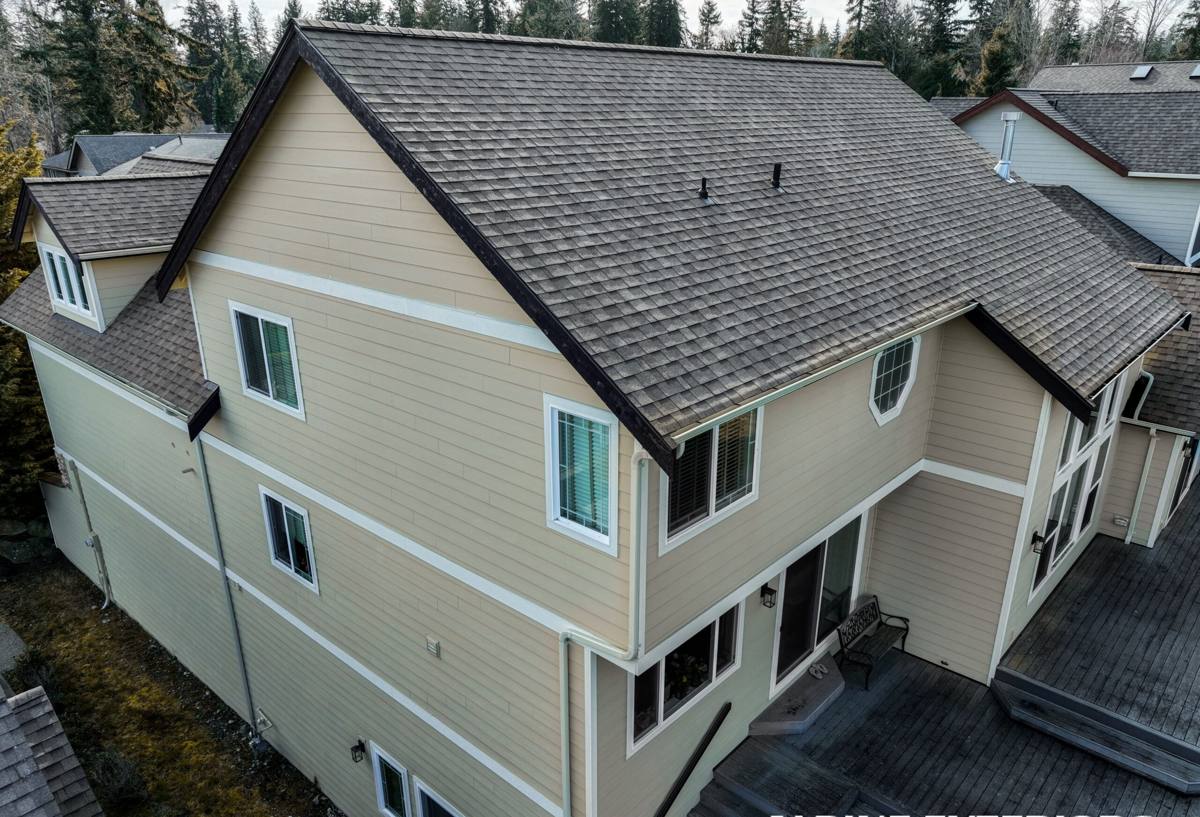
Signs a Deck Needs Replacement, Not Just Repair
Not every tired deck needs a full teardown. But in a climate like this, certain signs mean repair is just delaying the inevitable:
- Soft or spongy spots in the decking, especially near the house or at board ends
- Rust streaks running down framing or posts from fastener heads
- Any gap or movement where the ledger board meets the house
- Wobble in the railing posts, not just the balusters
- Visible rot or dark staining in the joists when viewed from underneath
- A support post that's soft, cracked, or sitting in standing water at its base
If it's just the decking boards that are worn but the framing underneath is sound, resurfacing can make sense. Once the framing, ledger, or posts are compromised, patching individual boards is money spent on a structure that's already failing.
What a Correct Deck Replacement Actually Involves
It starts below the decking, not above it
The part homeowners see — the decking boards and railing — is the last thing installed, not the first thing considered. A proper replacement starts with a full tear-off so the framing, ledger board, and footings can be inspected directly instead of guessed at. In a marine climate like Birch Bay's, we're specifically looking for moisture trapped behind the ledger, corrosion on any existing hardware, and footings that may have shifted or settled from repeated wet-dry cycles.
The ledger connection is the single most important detail
Most deck failures that turn into water damage inside a house start at the ledger board — the piece that attaches the deck to the structure. Done wrong, it lets rain migrate behind the siding and into the wall framing. Done right, it includes proper flashing that sheds water away from the house, not into it, plus a gap or drainage path so water can't sit trapped against the band joist.
Choosing Decking Material for Salt Air and Moss Season
There's no single "best" decking material — there's a best fit for how exposed the deck is and how much upkeep the homeowner wants to do. Here's how the common options actually perform in a Cottonwood Beach setting:
| Material | Moisture & moss resistance | Maintenance | Typical lifespan here |
|---|---|---|---|
| Pressure-treated fir/hem-fir | Fair — needs sealing to hold up to driving rain | Re-stain or reseal every 1–2 years | 10–15 years with upkeep |
| Cedar | Good natural resistance, but greys and can host moss if not maintained | Annual cleaning, periodic sealing | 15–20 years with upkeep |
| Capped composite | Very good — doesn't absorb moisture, won't rot | Occasional wash to clear moss/algae film | 25–30 years |
| PVC | Excellent — fully moisture-proof | Occasional wash | 25–30+ years |
Our standard for waterfront and near-waterfront lots in Cottonwood Beach is capped composite or PVC for the decking surface itself, mainly because it removes the moss-and-rot cycle entirely from the wear layer. That said, some homeowners want the look and feel of real wood and are willing to keep up with sealing — that's a legitimate choice as long as it's made with eyes open about the maintenance schedule this climate demands, not as a knock against wood as a material.
Fasteners, Flashing, and Hardware Near Salt Air
This is where a lot of decks quietly fail, because it's the part nobody looks at after the job is done. Standard electro-galvanized fasteners and hangers hold up fine inland but corrode noticeably faster this close to the bay. We build to a higher hardware standard for this exposure:
- Stainless steel or heavy hot-dip galvanized fasteners at all structural connections
- Corrosion-resistant joist hangers and post bases rated for ground contact and coastal exposure
- Self-adhering flashing membrane at the ledger board and any place decking meets the house
- Joist tape over the tops of framing members to keep water out of the wood at fastener penetrations
- Hidden fastener systems only when the clips and screws are rated for the same corrosion resistance as the visible hardware
Cutting corners here doesn't show up for a year or two, which is exactly why it's tempting to skip. It shows up later as rust bleed, loosened boards, and a deck that needs work again well before it should.
Railings, Stairs, and Building Code
Guardrails and stair railings aren't optional details — they're code-driven and they're also the part of a deck most likely to take direct wind and rain off the water. Washington's residential code sets minimum guardrail height and baluster spacing, and open, wind-exposed lots near Birch Bay benefit from railing posts that are attached to the framing with more than the code minimum, since sustained wind load on an open bay-front deck is real and ongoing. Whatcom County generally requires a permit for deck replacement work that involves new framing, footings, or structural changes — we handle that process as part of the job rather than leaving it for the homeowner to sort out separately.
Our Deck Replacement Process
- On-site assessment — we look at the existing deck from above and below, check the ledger connection, and identify what's driving the failure before quoting anything.
- Plan and permit — we scope the framing, footing, and material plan and handle the Whatcom County permit where structural work requires one.
- Tear-off — full removal of the old decking, railing, and any compromised framing, with the ledger and structure inspected directly.
- Framing and flashing — new or repaired joists and posts as needed, corrosion-resistant hardware throughout, and proper ledger flashing before anything else goes on.
- Decking and railing install — installed to the material spec agreed on, with attention to fastener pattern and drainage gaps between boards.
- Final walkthrough — we go over the finished deck together and cover what maintenance, if any, the chosen material needs going forward.
Why Local Experience in Cottonwood Beach Matters
A deck crew that mostly works inland jobs will build to a general standard. A crew that works Cottonwood Beach regularly already knows which lots take the worst of the wind and rain off the bay, which sides of a house tend to grow moss first, and which hardware actually holds up here versus what's rated for it on paper. We also know the practical side of working this neighborhood — narrow access on some lots, material staging near the water, and coordinating around the tides and weather windows that affect any exterior project this close to Birch Bay. That familiarity shows up in fewer surprises during the job and a deck that's built for the exposure it's actually going to face, not a generic one.
Keeping a New Deck Performing in This Climate
Whatever material you choose, a few habits go a long way toward getting the lifespan you're paying for:
- Sweep debris and standing leaves off the deck surface before the wet season sets in each fall
- Rinse off moss and algae film early rather than letting it establish and darken the surface
- Keep gutters and downspouts near the deck clear so runoff isn't dumping extra water onto or under it
- Check the ledger flashing and any visible fasteners once a year for early rust or gaps
- Reseal wood decking on the schedule the product calls for — don't wait until it visibly greys
- Keep shrubs and low branches trimmed back so airflow under and around the deck can help it dry out between storms
If you're weighing a deck replacement in Cottonwood Beach, we're happy to take a look at what you have and give you a straight read on whether it's a repair or a rebuild situation. The estimate is free, there's no pressure attached to it, and you can use the form below to get started.