 Birch Bay
 Sandy Point Sits in a Tougher Spot Than Most Backyards
Sandy Point is one of the more exposed pockets of Birch Bay. Homes here sit close to open water, which means decks take a steady diet of salt-laden air, wind-driven rain, and a moss season that runs longer than it does even a few miles inland in Whatcom County. A deck built to a generic spec sheet — the kind you'd see on a big-box plan or a contractor working mostly in drier, more sheltered neighborhoods — tends to show its age in Sandy Point years before it should. Fasteners bloom with rust, ledger boards trap moisture against the house, and north-facing boards stay damp long enough for moss and algae to take hold and never really let go.
None of that is inevitable. It's a function of material choices and detailing decisions made before the first board goes down. We've built and repaired decks throughout Birch Bay long enough to know which shortcuts show up as callbacks two winters later, and which upfront choices quietly save homeowners from redoing work they already paid for once.
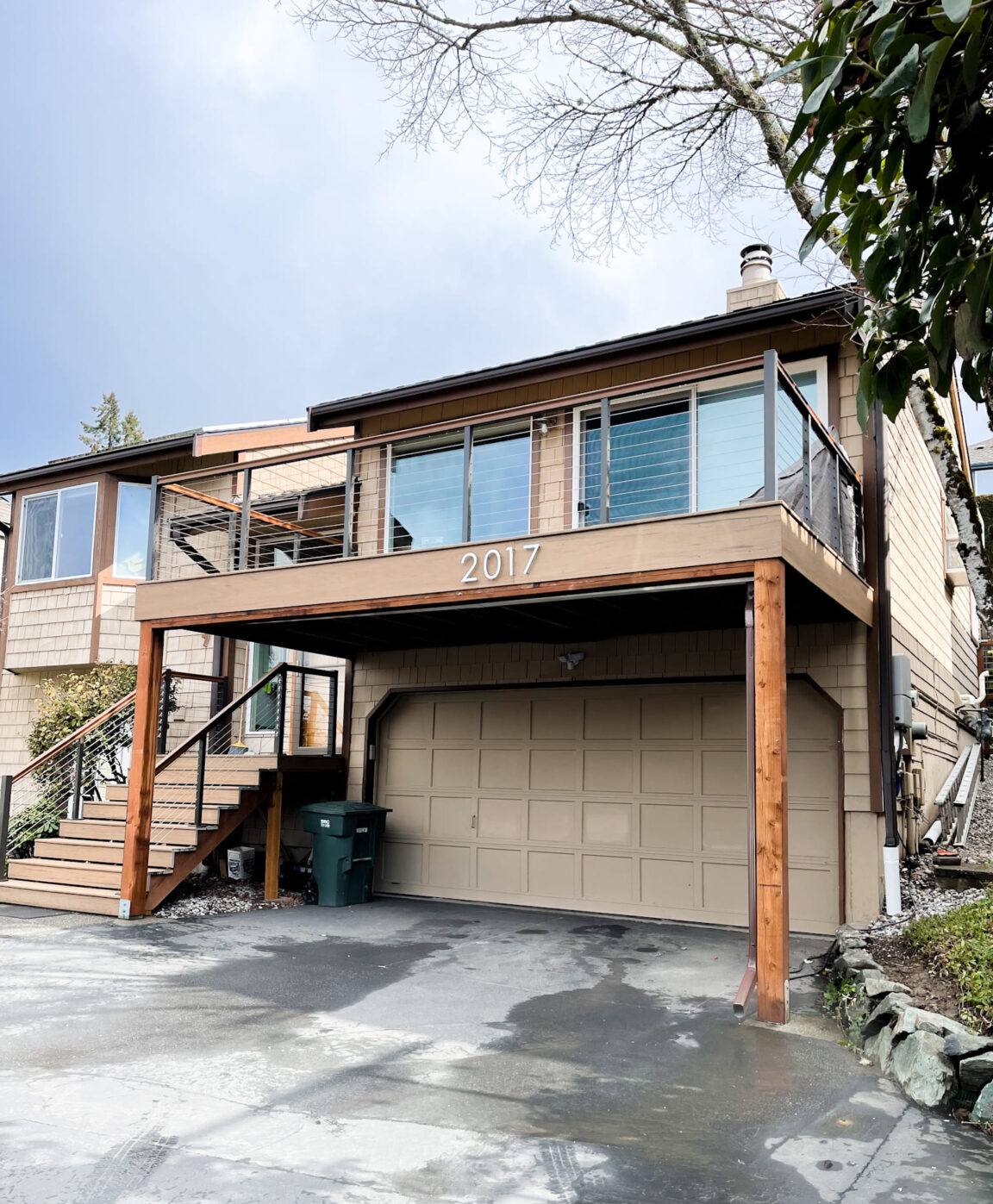
What Salt Air and Driving Rain Actually Do to a Deck
It helps to be specific about the failure modes, because they're different from what you'd worry about with a deck in a dry inland yard.
Salt Air and Corrosion
Airborne salt accelerates corrosion on anything metal — nails, screws, joist hangers, post bases, bolts. Standard electro-galvanized fasteners can start showing rust streaks within a season or two this close to the water. Once a fastener corrodes, it loses holding strength long before it looks obviously bad, which is part of why deck fastener choice matters more here than the decking material itself.
Driving Rain and Trapped Moisture
Wind off the water doesn't just bring rain straight down — it drives it sideways, up under railings, and into any gap where end grain or a ledger connection is exposed. Wood that would dry out fine in a calmer setting can stay damp for days at a time here, which is exactly the condition rot and moss both need.
The Long Moss Season
Shaded, north-facing, or low-airflow sections of a deck in this part of Whatcom County can stay damp for most of the fall through spring. Moss and algae don't just look bad — they hold moisture against the decking surface and turn boards slick and genuinely dangerous underfoot, especially on stairs.
Framing and Fasteners: Where a Coastal Deck Is Actually Built or Ruined
Homeowners usually focus on the decking surface — the boards they'll see and walk on. The bigger long-term risk is almost always underneath, in framing and hardware most people never look at again once the deck is finished.
- Structural fasteners and connectors rated for coastal/high-corrosion exposure, not standard-duty galvanized
- Stainless steel or coated fasteners for decking attachment, matched to the decking material's chemical treatment so they don't react with each other
- Joist hangers and post bases sized and installed to code, not just "close enough"
- Framing lumber rated for ground contact or exposed use where it's within splash range or close to grade
- Airflow gaps maintained between boards and around framing so wood actually gets a chance to dry between rain events
Cutting corners here is the single most common reason we get called out to a "young" deck — five to eight years old — with soft spots, streaking rust, or a railing post that's gone spongy at the base.
Ledger Attachment and Flashing: The Detail That Gets Skipped
Most deck structures attach to the house at a ledger board, and that connection is the single most common source of hidden rot on any deck near water. Wind-driven rain pushes moisture up and behind the ledger if it isn't flashed correctly, and because that area is hidden behind the decking and often behind the house's siding, problems can go unnoticed for years — until a deck starts to feel loose or a homeowner spots staining on an interior wall below.
A correct ledger installation uses proper flashing that sheds water away from the house structure, a waterproof membrane behind the flashing, and a gap or drainage path so any water that does get in has somewhere to go besides sitting against wood framing. This is inspection-visible work, and it's one of the first things we check when we're asked to evaluate an existing deck in Sandy Point.
Choosing a Decking Material for This Climate
There's no single "right" decking material for every home — it depends on budget, how much upkeep you want to take on, and how exposed the deck is. Here's how the common options actually perform in salt air and a long wet season, not just on a showroom sample.
| Material | Salt Air / Moisture Behavior | Moss & Algae Resistance | Upkeep |
|---|---|---|---|
| Pressure-treated wood | Good if properly sealed and re-sealed on a schedule; end grain is the weak point | Needs periodic cleaning; moss will colonize neglected boards | Annual inspection, re-sealing every 1-3 years |
| Cedar | Naturally rot-resistant but still needs sealing near open water; grays without maintenance | Better than treated pine but not immune | Regular sealing/staining to hold color and resist moisture |
| Composite decking | Doesn't absorb moisture or rot; performs well in salt air | Surface can still grow algae/moss film if shaded and damp; cleans off more easily than wood | Occasional washing; no sealing or staining |
| PVC / capped polymer | Fully moisture-resistant; best option for the wettest, most exposed spots | Same surface cleaning as composite, generally easiest to keep clean | Lowest upkeep; higher upfront cost |
We won't push a material that doesn't fit your budget or the way you actually use your deck. What we will do is walk through the honest maintenance trade-off for each option before you commit — a lower-cost wood deck isn't a bad choice, but only if you go in knowing it needs a real sealing schedule to hold up this close to the water.
Footings, Drainage, and Whatcom County Permitting
Soil and drainage conditions near the water can differ from what you'd find further inland in Birch Bay, and footing depth needs to account for local frost and soil conditions rather than a generic minimum. A deck that's structurally undersized or footed too shallow may look fine for a few years and then start to shift or heave.
Deck construction in Whatcom County typically requires a permit once you're past a certain size or height off grade, along with inspections at key stages — footings, framing, and final. We handle that permitting process as part of the job rather than leaving it on the homeowner to sort out, and we build to pass inspection the first time, not to squeak by.
Our Build Process
The process is straightforward, but each step is where the coastal-specific decisions actually get made:
- On-site assessment — we look at exposure (wind direction, sun/shade pattern, proximity to water), existing structure if there's a deck to replace, and how the space is actually used.
- Design and material selection — sizing, layout, railing style, and an honest conversation about decking material trade-offs for your budget and exposure.
- Permitting — we prepare and submit what Whatcom County requires and schedule inspections.
- Framing — corrosion-resistant hardware, correct ledger flashing, and framing sized for the actual structural load and exposure.
- Decking and railing install — proper board spacing for drainage and airflow, fastener choice matched to material.
- Final walkthrough — we review care and maintenance expectations specific to the material you chose, so there are no surprises in year two.
Living With a Coastal Deck: Realistic Maintenance
Even the best-built deck in Sandy Point needs some seasonal attention — the goal is to make that upkeep predictable instead of a surprise.
- Sweep debris and standing water off the surface regularly, especially in shaded areas that stay damp longest
- Wash down moss and algae buildup before it gets a foothold — early fall, before the wet season sets in, is the most effective time
- Check fasteners and hardware periodically for rust streaking, which signals it's time to address a connection before it fails
- Re-seal or re-stain wood decking on the schedule appropriate to the product, not just when it visibly looks dry
- Keep boards and railings clear of overhanging vegetation that blocks airflow and sunlight
Why Hiring a Crew That Already Works Sandy Point Matters
A deck contractor who mostly works inland or in more sheltered parts of Whatcom County can build a perfectly good deck — for a different climate. The details that matter in Sandy Point (fastener grade, flashing detail, board spacing for airflow, material trade-offs against salt air and a long moss season) aren't automatic. They come from having repaired enough deck failures in this specific stretch of coastline to know exactly where the shortcuts show up later.
We're not guessing at what "coastal exposure" means for a deck here — it's the environment we build in regularly. That familiarity also means fewer surprises on things like permitting timelines and typical soil conditions in the area, which keeps a project moving instead of stalling on avoidable issues.
Questions Worth Asking Before You Hire
- Are fasteners and structural hardware rated for coastal/high-corrosion exposure, or just standard galvanized?
- How is the ledger board flashed, and what's behind it?
- What's the plan for footing depth given local soil and frost conditions?
- Is the permit and inspection process included, and who's responsible for scheduling it?
- What does the honest maintenance schedule look like for the decking material you're recommending?
- Has this crew built or repaired decks specifically in Birch Bay or Sandy Point before?
If you're planning a new deck or replacing one that's showing its age, we're happy to come take a look and talk through what makes sense for your home's exposure and budget. The estimate is free, there's no pressure, and you'll leave the conversation knowing exactly what you're paying for and why.