 Birch Bay
 Siding Built for Lummi Island's Marine Exposure
Lummi Island sits out in the water, which means homes here take a harder hit from the weather than houses a few miles inland in Birch Bay or elsewhere in Whatcom County. Salt-laden air moves through siding seams and fastener holes, driving rain gets pushed sideways into wall assemblies during winter storms, and the long, damp Pacific Northwest shoulder seasons keep exterior surfaces wet enough, long enough, for moss and algae to take hold and stay. Any siding product installed on a Lummi Island home has to handle all three of those stresses at once, year after year, without babysitting from the homeowner.
We install James Hardie fiber cement exclusively, and this page is about what that looks like specifically for Lummi Island properties — not siding in general, but the material, the detailing, and the process that hold up out here.
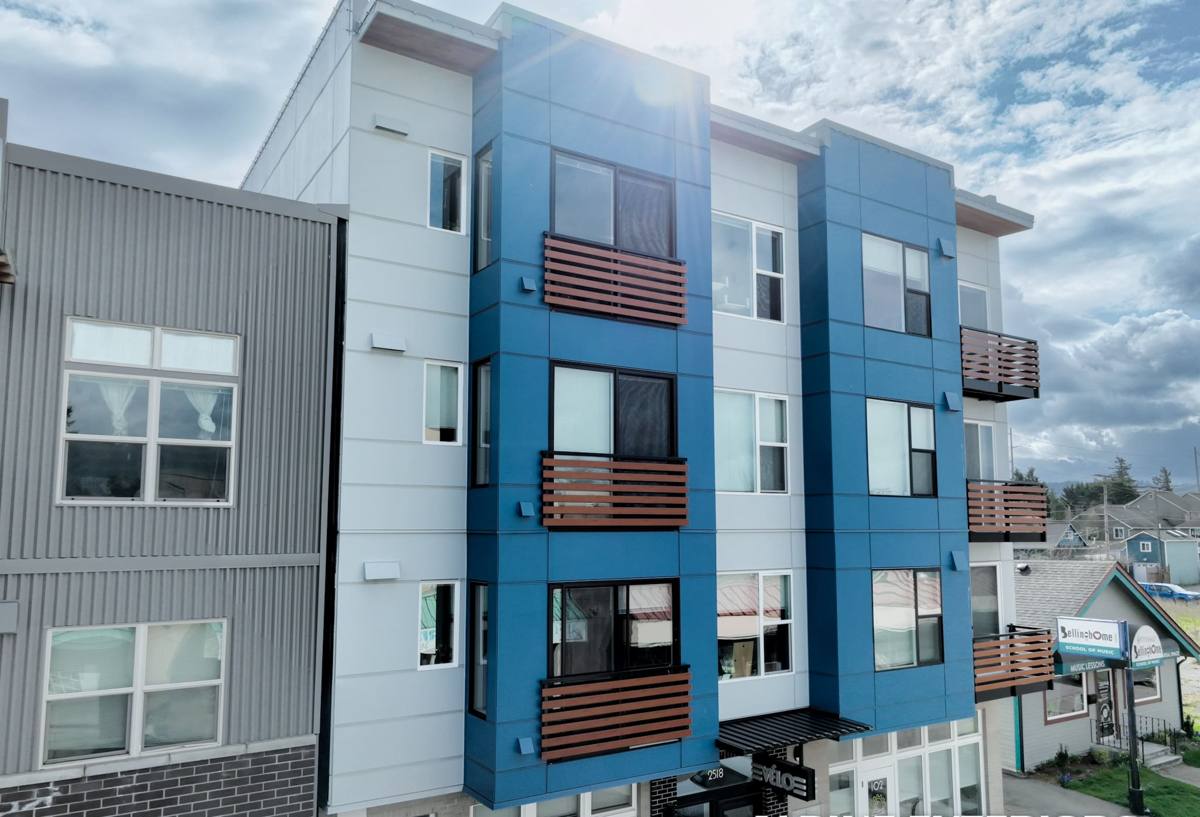
What Salt Air, Rain, and Moss Actually Do to Siding
Salt Air
Airborne salt is corrosive to metal and abrasive to finishes. Fasteners, flashing, and trim that aren't rated for coastal exposure corrode faster near open water, and any paint film that isn't factory-cured tends to chalk and fade sooner under that combination of salt and UV. Siding that relies on a field-applied finish is more exposed to this cycle than siding with a factory finish baked on before it ever reaches the job site.
Driving Rain
Wind off the water doesn't just wet a wall — it pushes water sideways and upward under laps, around windows, and into any gap in the water-resistive barrier. On an island lot with less tree cover or wind break than an inland property might have, that wind-driven component matters more, not less. The weak points are almost always at the details: butt joints, penetrations, and the bottom edge near grade or a deck.
Moss Season
Western Washington's moss season isn't a week or two — it's most of the fall, winter, and spring. Anywhere siding stays shaded and damp (north walls, areas under overhangs, spots close to trees) becomes a place where moss and algae can gain a foothold and hold moisture against the substrate. Some siding materials feed that growth or trap moisture behind it; others shed water and resist the buildup in the first place.
Why We Install Only James Hardie on Lummi Island Homes
James Hardie fiber cement is engineered from cement, sand, and cellulose fibers — it doesn't rot, it isn't food for insects, and it holds up to freeze-thaw and moisture cycling far better than wood-based or wood-look products. For a coastal, moss-heavy climate like Lummi Island's, three specific things matter:
- Non-combustible core — fiber cement doesn't burn, which matters for wildfire ember exposure and general fire safety on any home, island or not.
- ColorPlus factory finish — the color is baked onto the board at the factory under controlled conditions, not sprayed or brushed on-site. That finish resists fading and chalking from UV and salt exposure far longer than field-applied paint, and it comes with its own finish warranty.
- Climate-engineered HZ5 formulation — Hardie makes different versions of its product for different climate zones. Whatcom County, including the islands, falls in a zone where moisture and freeze-thaw resistance matter more than in a dry climate, and we install the product line engineered for that.
We don't install LP SmartSide, vinyl, Cemplank, Allura, primed spruce, or cedar. Each of those has legitimate uses somewhere, but none of them hold up to salt air, driving rain, and a five-to-seven-month moss season the way factory-finished fiber cement does, and we'd rather stand behind one product we trust completely than offer several we'd have reservations about recommending for this specific exposure.
What Correct Installation Looks Like Here
Fiber cement siding is only as good as its installation. On a coastal property, the details below are where a correctly installed Hardie system earns its keep — and where a rushed or generic install fails early.
Weather-Resistive Barrier and Flashing First
Before a single piece of siding goes up, the wall needs a continuous weather-resistive barrier, properly lapped and taped, with flashing at every window, door, and penetration. On a house exposed to wind-driven rain, this layer is what actually keeps water out of the wall assembly — the siding sheds the bulk of it, but the barrier behind it handles what gets past.
Fastener and Trim Selection
We use corrosion-resistant fasteners rated for the exposure, not standard interior-grade hardware. The same goes for trim and flashing metal — coastal air will find the weak link, so we don't leave one in.
Clearances and Drainage
Hardie's own installation instructions call for minimum clearances from grade, roof lines, and decks, plus a drainage plane behind the siding so any moisture that does get past the cladding can escape instead of sitting against the substrate. Skipping these clearances is one of the most common ways fiber cement siding fails prematurely, and it's avoidable with correct planning up front.
Joint and Seam Treatment
Butt joints and seams are the most vulnerable spots on any siding job. We treat them per Hardie's specification — sealed, flashed, or engineered to shed water rather than relying on caulk alone to do the job over the long run.
Comparing Siding Options for a Lummi Island Exposure
| Factor | James Hardie Fiber Cement | Vinyl | Wood / Cedar |
|---|---|---|---|
| Salt air resistance | High — non-corrosive core, factory finish | Moderate — can become brittle over time | Low — finish breaks down, grain absorbs salt-laden moisture |
| Moss / algae resistance | High when properly finished and maintained | Moderate — smooth surface but seams trap debris | Low — porous surface holds moisture |
| Wind-driven rain performance | High with correct flashing and laps | Moderate — panels can flex and gap | Moderate — dependent on finish upkeep |
| Finish longevity | Factory-cured ColorPlus, long warranty | Color molded in, can fade and chalk | Field-applied, needs repainting/restaining |
| Fire resistance | Non-combustible | Combustible, can melt/deform | Combustible |
Our Process for a Lummi Island Project
- On-site assessment. We look at exposure direction, existing moisture damage, roofline and grade clearances, and shaded areas prone to moss before recommending a product line or color.
- Detailed proposal. You get a written scope covering the specific Hardie products, trim details, and flashing plan for your home — not a generic siding quote.
- Tear-off and inspection. Once old siding comes off, we check the sheathing and framing underneath for hidden moisture damage before closing the wall back up.
- Weather barrier and flashing installation. This step happens before any visible siding goes up, and it's the part of the job that matters most for keeping water out long-term.
- Hardie siding installation. Installed to manufacturer specification for clearances, fastening, and joint treatment, using the HZ5 product line appropriate for this climate.
- Final walkthrough. We review the finished job with you, including care and maintenance basics specific to a coastal, moss-prone property.
Why a Crew That Already Works Lummi Island Matters
Getting materials, equipment, and a crew to an island job takes real logistics planning — ferry schedules, loading, and timing all factor into how a project runs. A contractor who already works Lummi Island regularly has that logistics figured out, which means fewer delays and fewer surprises for you. Just as important, a crew familiar with this specific stretch of Whatcom County coastline has already seen how salt air, wind direction, and moss patterns play out on real homes here — not in a manual, but on actual jobs. That local pattern recognition shows up in small decisions during installation: where to add extra flashing attention, which walls need closer joint sealing, and where moss is most likely to become a maintenance issue down the road.
Maintaining Hardie Siding on an Island Property
Fiber cement is low-maintenance compared to wood, but "low-maintenance" isn't "no-maintenance," especially with a long moss season working against you. A simple annual routine covers most of what a Lummi Island home needs:
- Rinse siding gently once or twice a year to clear salt residue and early moss growth before it establishes.
- Keep gutters and downspouts clear so water isn't dumping onto siding or pooling near the base of walls.
- Trim back vegetation and tree cover that keeps shaded wall sections damp longer than they need to be.
- Inspect caulking at trim, windows, and joints periodically, and have any gaps resealed before winter rains set in.
- Address any impact damage or chipped finish promptly rather than letting moisture find its way in through a small gap.
None of this is heavy labor — it's the kind of upkeep that, done consistently, is what lets a correctly installed Hardie system reach its full lifespan out here.
Get a Free Estimate
If you're planning a siding project on Lummi Island, we're happy to walk the property, look at your specific exposure and problem areas, and put together a straightforward estimate — no pressure, no generic quote. Fill out the form below to get started.