 Birch Bay
 Building New in Marietta Means Getting the Windows Right the First Time
If you're framing a new home in Marietta, the windows you choose and how they're installed will quietly decide how that house performs for the next 30 years. This isn't a coastal resort strip — it's a working Whatcom County community sitting close enough to Birch Bay and the Strait of Georgia that salt-laden air, wind-driven rain, and long stretches of damp, mossy weather are just part of the deal. New construction is the one chance to do window installation correctly from the studs out, before siding, trim, and finish work cover up any shortcuts. Get it right now and you avoid the callback in five years for a soft sill or a stained wall below a window that never should have leaked.
We frame this page around one job: installing new-construction windows in Marietta homes, from a builder's rough opening to a finished, weathertight window. Not a remodel swap, not a retrofit — the real thing, done the way it's supposed to be done on a new build.
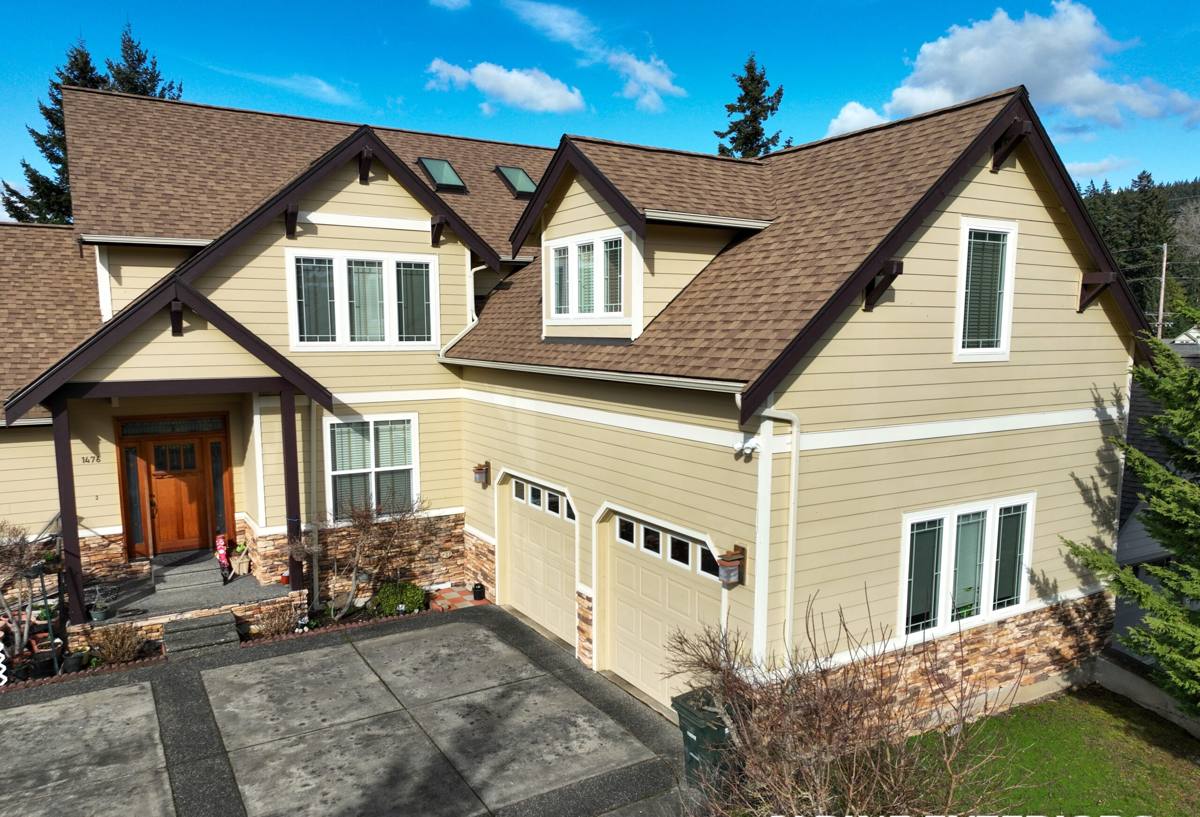
What Marietta's Coastal Climate Actually Does to a Window Opening
Whatcom County's northwest corner gets a specific combination of stressors that inland builders rarely have to plan for. It's worth understanding each one before you pick a window or a flashing plan.
Salt Air
Proximity to Birch Bay and the marine waters nearby means airborne salt is a constant, low-grade presence. It doesn't just sit on the glass — it works into hardware, fasteners, and any exposed metal over time. Cheap cladding fasteners, unprotected flashing tape edges, and low-grade weep hardware corrode faster here than they would forty miles inland. It's a slow process, which is exactly why it gets ignored until a window won't latch cleanly or a sill track starts pitting.
Driving, Wind-Driven Rain
Rain here rarely falls straight down. Storms off the water push rain sideways into wall assemblies, which means a window's water management can't rely on gravity alone. A window that would pass fine in a calm climate can still leak in Marietta if the flashing isn't lapped correctly to shed water that's being pushed uphill by wind for hours at a time.
Moss Season
Whatcom County's long wet season keeps moss and algae thriving on north-facing walls, roof lines, and anywhere moisture lingers. Moss holds water against a surface far longer than bare siding would, and if it creeps toward a window's edge, that sustained dampness finds any weakness in the seal. A new-construction install that's sealed and flashed properly won't care much about moss nearby; one that's cut corners will fail exactly where the moss sits longest.
New-Construction Windows vs. Replacement Windows: Not the Same Job
This distinction matters more than most homeowners realize, and it's worth understanding before you talk to any contractor.
Nail-Fin (New-Construction) Frames
New-construction windows have a nailing flange around the perimeter that gets fastened directly to the wall sheathing, then integrated into the water-resistive barrier (WRB) and flashing system before siding goes on. This is the standard approach for ground-up builds and additions, and it produces the most reliable long-term seal because the window becomes part of the wall's drainage plane rather than sitting inside it.
Block-Frame (Replacement) Windows
Replacement windows are built to fit inside an existing opening without disturbing the exterior finish — useful for remodels, wrong for new construction. Installing a replacement-style window on a new build, or installing a nail-fin window like a replacement window, is one of the more common shortcuts we see and correct. It's faster labor, but it skips the flashing sequencing that keeps water out of the wall cavity.
For a Marietta new build, there's no debate here: nail-fin, properly flashed into the WRB, is the only approach that makes sense given how much wind-driven rain the walls will see.
Choosing a Window Frame Material for a Marietta Build
Framing material affects how a window handles moisture, temperature swings, and salt exposure over decades, not just how it looks on delivery day.
| Frame Material | How It Handles Salt Air | Moisture Behavior | Maintenance |
|---|---|---|---|
| Vinyl | Won't corrode; hardware quality varies by manufacturer | Doesn't absorb moisture; relies on sealed corners | Low — occasional cleaning |
| Fiberglass | Excellent corrosion resistance; stable in salt exposure | Very stable, minimal expansion/contraction | Low |
| Wood-Clad | Cladding protects wood from direct salt contact if sealed correctly | Vulnerable if cladding seams or corners are compromised | Higher — requires attention to seams over time |
| Aluminum | Prone to pitting and corrosion in salt air without marine-grade coatings | Conducts cold, prone to condensation | Moderate to high |
We don't push one brand or material as the only right answer — the right pick depends on budget, the home's design, and how much upkeep you want long-term. What we do insist on is quality hardware and glazing seals rated for coastal exposure, regardless of frame material, because that's where salt air does its real damage.
Glass Packages Worth Considering
- Dual-pane, low-E coated glass as a baseline — standard for this climate, not an upgrade
- Argon gas fill for better thermal performance during cold snaps
- A U-factor suited to marine West Coast conditions rather than a generic national default
- Tempered glass in code-required locations near doors, low sills, and wet areas
Our New-Construction Window Installation Process
On a new build, window installation happens in a specific order relative to the WRB and siding — skipping or reversing steps is where most future leaks originate.
1. Rough Opening Check
Before any window goes in, we verify the rough opening is square, level, and sized correctly to the manufacturer's specifications. An opening that's slightly out of square strains the frame and can compromise the seal from day one.
2. Sill Pan Flashing
A sloped sill pan goes in first, directing any water that does get past the window down and out rather than into the wall cavity. This step alone prevents the majority of sill-level rot we see in older homes that skipped it.
3. Window Set and Fastening
The window is set into the opening, checked for level and plumb, and fastened through the nailing flange per the manufacturer's schedule — not just a few nails at the corners.
4. Flashing Integration with the WRB
Flashing tape is applied in a shingle-lap sequence — sides first, then the top — so water always sheds downward and outward, never into a seam. This is the step that matters most given how often rain here is driven sideways by wind.
5. Sealing and Insulation
The gap between the frame and rough opening is insulated (not packed tight, which can bow the frame) and interior air sealing is completed before trim goes on.
6. Final Inspection
Every window gets checked for operation, square, and a clean seal line before we consider the job done and before siding crews close it up.
Mistakes We Frequently Correct on New Builds
Some of these come from rushed schedules, some from crews unfamiliar with coastal conditions. Either way, they're avoidable.
- Flashing tape applied bottom-to-top instead of shingle-lapped, so water gets directed into the seam instead of away from it
- No sill pan flashing, leaving the sill as the only line of defense
- Nailing flange under-fastened to save time, leaving the window loose in high wind
- Standard-grade caulk used where a proper flashing tape or sealant rated for sustained moisture exposure was called for
- Window trim installed before the flashing integration was verified, hiding a bad seal until it fails
- Hardware and fasteners not rated for coastal/salt exposure, leading to early corrosion
Cost Factors for New-Construction Windows in Marietta
We won't quote a number here since every build is different, but these are the variables that actually move the price on a new-construction window package in this area.
| Factor | Why It Matters |
|---|---|
| Frame material | Vinyl is generally the most budget-friendly; fiberglass and wood-clad cost more upfront but differ in long-term maintenance |
| Glass package | Low-E coatings, gas fills, and higher-performance U-factors add cost but pay back in comfort and reduced condensation |
| Number and size of openings | Large picture windows and multi-unit combinations cost more per square foot than standard single units |
| Coastal-rated hardware | Upgrading fasteners and hardware for salt-air resistance is a small line item that prevents costly repairs later |
| Site access and timing | Coordinating install between framing and siding phases affects labor scheduling and efficiency |
The honest advice we give every homeowner: don't cut the flashing and sealing budget to afford a fancier window. A mid-grade window installed correctly will outperform a premium window installed carelessly, every time, in this climate.
Why It Matters to Hire a Crew That Already Works Marietta
A lot of general framing and siding crews can hang a window. Fewer have spent years watching exactly how salt air, driving rain, and moss-season dampness expose bad flashing work over time in this specific part of Whatcom County. That experience shows up in small decisions — which sealant holds up to sustained coastal moisture, how tight to lap flashing given the wind direction storms typically come from here, which hardware finishes hold up and which pit within a couple of winters. None of that is guesswork when you've done it on enough homes nearby.
We also understand the practical side of building in this area: coordinating with framers and siding crews on timing, working around the wetter stretches of the year, and making sure the window installation doesn't become the bottleneck that delays the rest of the exterior schedule.
Get a Straight Answer for Your Marietta Build
If you're planning windows for a new home in Marietta or elsewhere near Birch Bay, we're happy to walk your plans, talk through frame and glass options that make sense for this climate, and give you a clear, no-pressure estimate — no upsell, just a straight assessment of what your build needs. Use the form below to get started.