 Birch Bay
 Siding Replacement for Nooksack Homes, Done by a Crew That Works This Corner of Whatcom County
Homes in and around Nooksack sit inland from the water but still fall inside the same weather system that soaks Whatcom County for most of the year. Long stretches of steady rain, high humidity, and a moss and mildew season that can run eight months or more put a different kind of stress on exterior siding than a drier climate ever would. Add in salt-tinged air that carries in off the Strait of Georgia and Birch Bay on stronger weather days, and you have conditions that punish cheap materials and sloppy installation fast. We replace siding on Nooksack-area homes as part of our regular Birch Bay service territory, and this page covers what that job actually involves — not a generic overview of siding in general.
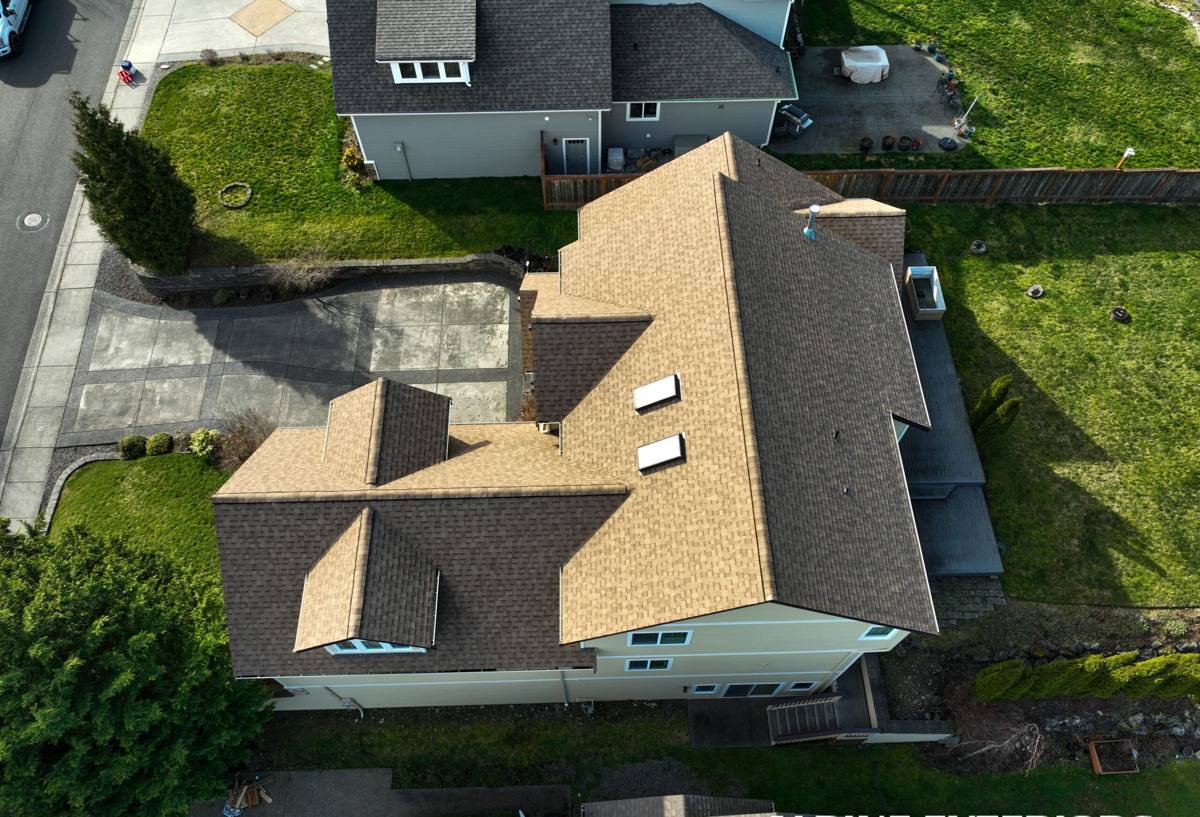
What Nooksack's Climate Actually Does to Siding
It helps to be specific about the failure modes we see, rather than talking in generalities about "harsh weather." Three things drive almost every siding problem we find on inspection calls in this area.
Driving Rain and Wind-Driven Moisture
Whatcom County rain rarely falls straight down. Wind pushes it sideways into wall assemblies, and it finds every gap in flashing, every under-caulked seam, and every place where siding wasn't lapped correctly. Over years, that moisture works its way behind the cladding rather than running off the surface, which is where the real damage starts.
Sustained Moss and Mildew Growth
Cool, damp, and shaded conditions for much of the year are exactly what moss and mildew need to establish themselves on exterior surfaces. Once organic growth takes hold on a porous or wood-based product, it holds moisture against the surface long after the rain has stopped, which accelerates rot and paint failure underneath it.
Salt-Influenced Air
Nooksack isn't beachfront, but this part of Whatcom County still sees salt-laden air move inland on stronger weather systems off the Salish Sea. Salt exposure accelerates corrosion on fasteners and metal trim and speeds up the breakdown of finishes that weren't engineered to resist it.
None of these factors are unique to one property — they apply to the whole area — but they add up differently depending on a home's exposure, tree cover, and the quality of the siding and installation already on the walls.
Why This Matters More at Replacement Time Than at New Construction
When siding is failing, the damage is rarely limited to the visible surface. Replacement work gives us a chance to inspect what's happening behind the old cladding — sheathing condition, house wrap integrity, flashing at windows and doors, and any framing that's taken on moisture. Installing new siding over a compromised wall assembly just hides the problem under a new layer. A proper replacement job addresses what's underneath first, then installs a system built to keep water out going forward.
What a Correct Siding Replacement Involves
A siding replacement isn't just removing old boards and nailing up new ones. On homes in this climate, the sequence and details matter as much as the product itself.
- Full removal of existing siding and trim to expose the wall assembly for inspection
- Assessment of sheathing and framing for rot, soft spots, or prior water intrusion, with repairs made before anything new goes up
- Installation or repair of a weather-resistive barrier (house wrap) that's lapped and taped correctly for this climate's wind-driven rain
- Correct flashing at every window, door, and roof-to-wall intersection — this is where most long-term leaks originate
- Proper fastening schedule and clearances so the new siding can expand, contract, and shed water as designed
- Factory-finished siding installed with manufacturer-specified gaps, caulking, and touch-up so the finish performs as warranted
- Final inspection of trim, corners, and penetrations before cleanup
Skipping steps in this list is how siding jobs fail early — not because the siding product was wrong, but because the assembly behind it wasn't done right.
Why We Only Install James Hardie Fiber Cement
We standardized on James Hardie siding for every replacement job we do, including work in the Nooksack area, and we don't install vinyl, LP SmartSide, Cemplank, Allura, or primed wood products like spruce or cedar. That's not a marketing position — it's based on how those materials actually hold up against the specific conditions this region produces.
Where the Alternatives Fall Short Here
Vinyl siding is inexpensive and low-maintenance in mild, dry climates, but it's a poor match for sustained wind-driven rain — it relies heavily on the water barrier behind it doing all the work, and its seams and panel movement can open paths for moisture over time. It's also combustible, which matters more in wildfire-adjacent conditions than it used to.
Wood-based products, including primed spruce, cedar, and OSB-based products like LP SmartSide, are engineered or treated to resist moisture, but they're still organic materials at their core. In a region with this much sustained dampness and moss pressure, any lapse in maintenance — caulking, painting, keeping vegetation trimmed back — shortens their working life meaningfully faster than it would in a drier climate.
Other fiber cement brands like Cemplank and Allura are legitimate products in the same material category as Hardie, but we've standardized on one manufacturer so our crews install to one spec, one warranty structure, and one finish system across every job. That consistency is part of how we keep quality control tight.
What Hardie Gets Right for This Climate
| Factor | Why It Matters in Nooksack's Climate |
|---|---|
| Non-combustible fiber cement core | Doesn't feed or spread fire the way vinyl or wood products can |
| Engineered for moisture resistance | Built to hold up under sustained rain exposure without swelling or warping like wood-based siding |
| ColorPlus factory finish | Baked-on finish resists fading and holds up against damp, low-sun conditions better than field-applied paint |
| HZ5 product engineering | Formulated for wet, freeze-thaw-capable climates rather than a one-size-fits-all product |
| Transferable warranty | Coverage that carries value at resale, backed by a large, established manufacturer |
We're straightforward about this with every homeowner: Hardie costs more up front than vinyl and often more than engineered wood siding. What you're paying for is a material system that's less likely to need major repair or premature replacement in a climate that doesn't forgive shortcuts.
Cost Factors for a Nooksack-Area Siding Replacement
Every home is different, and we don't quote pricing without seeing the property, but the variables that move the price on a siding replacement job are consistent.
| Factor | How It Affects the Job |
|---|---|
| Condition of existing sheathing/framing | Hidden rot or water damage found during tear-off adds repair scope before new siding goes on |
| Home size and wall complexity | More corners, dormers, and trim detail means more labor and material cutting |
| Siding profile chosen | Lap, shingle, and panel styles vary in material and installation time |
| Trim and accessory scope | Fascia, soffit, and trim replacement alongside siding affects total project cost |
| Access and site conditions | Tree cover, slope, and staging space can add time to setup and cleanup |
Our Process for a Nooksack Siding Replacement
We walk every job the same way, whether it's a straightforward single-story home or something with more complex rooflines and trim work.
- On-site walkthrough and honest assessment of current siding condition, with photos of anything concerning
- Written estimate that separates siding replacement from any sheathing or framing repair that inspection reveals
- Material selection — profile, color, and trim details — based on what suits the home and holds up in this climate
- Full tear-off, wall assembly repair as needed, and correct weather barrier and flashing installation
- James Hardie installation to manufacturer specification, including fastening, gapping, and sealant details
- Final walkthrough with the homeowner before we consider the job done
Why Hiring a Crew That Already Works This Area Matters
Siding installation quality depends heavily on whether the crew understands the conditions they're building for. A crew that mostly works drier regions may not flash a window the way this climate demands, or may not think twice about running a job through a wet stretch without protecting exposed sheathing. We work Birch Bay and the surrounding Whatcom County communities, including Nooksack, regularly enough that our approach to moisture management, flashing detail, and material selection is built around what actually happens to siding here — not a generic installation standard from somewhere with a different climate.
Signs Your Nooksack Home May Need Siding Replacement Soon
- Visible warping, buckling, or soft spots when you press on the siding
- Persistent moss or mildew staining that returns quickly after cleaning
- Paint that's peeling, bubbling, or failing faster than a normal repaint cycle
- Cracked or gapped caulking at seams, corners, and window trim
- Rising energy bills that suggest the wall assembly isn't sealing the way it should
- Visible rot at the bottom edges of siding or around penetrations
Catching these signs early usually means a smaller repair scope. Waiting tends to mean tear-off reveals more damage than expected — which is common enough in this climate that we build the inspection step into every estimate rather than treating it as an afterthought.
If your Nooksack-area home is showing any of these signs, or you're simply due for a siding update, we're happy to walk the property and give you a straightforward, no-pressure estimate. Fill out the form below and we'll get you scheduled.