 Birch Bay
 Board & Batten Siding Built for a Peninsula Climate
Point Roberts sits on its own peninsula, with water on three sides and weather that comes off the Strait of Georgia with nothing to slow it down. Homes here take a steady diet of salt-laden air, wind-driven rain, and a long stretch of gray, damp months where moss and mildew get every chance they need to take hold. Board and batten siding has a particular vertical-board-and-strip look that a lot of Point Roberts homeowners want, but it also has a construction detail — the seams where battens meet boards — that has to be handled correctly in this climate or it becomes the first place moisture gets in.
We install board and batten siding on Point Roberts homes as a James Hardie fiber cement system, and we build it to handle exactly the conditions this peninsula throws at a house: salt air, driving rain, and moss season that can run half the year.
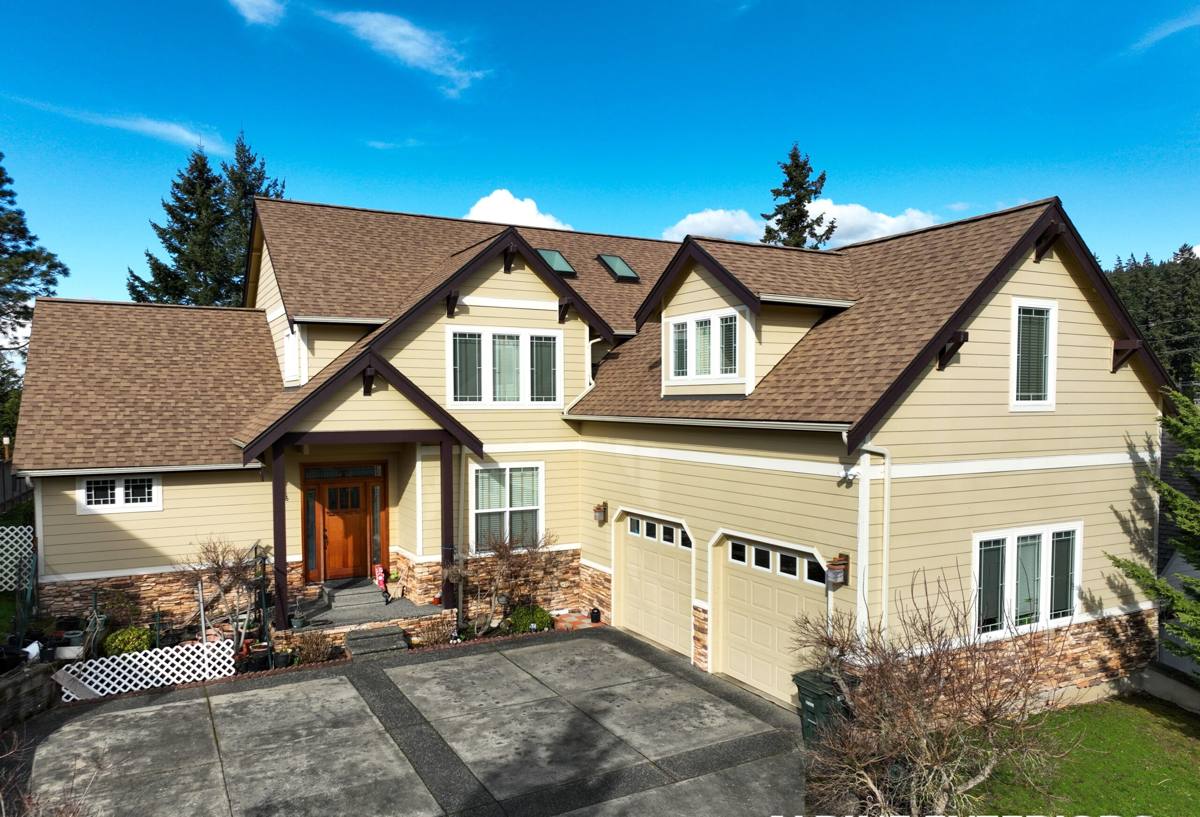
Why This Look Matters Here — and Why the Material Behind It Matters More
Board and batten has real visual appeal — clean vertical lines, strong shadow reveals, a look that reads as both traditional and modern depending on trim and color choices. It works well on Point Roberts homes, whether it's covering a full elevation or used as an accent alongside horizontal siding on a gable or entry feature.
But the look is only half the job. The other half is what's behind it: the board material, the batten material, the fasteners, and the water management underneath. In a coastal climate like Whatcom County's outer edge, those details decide whether the siding still looks good in fifteen years or whether it's warping, staining, and rotting at the seams in five.
What Salt Air and Coastal Rain Actually Do to Siding
- Salt-laden air accelerates corrosion of exposed or under-spec fasteners, which shows up as rust streaking down the face of the boards
- Wind-driven rain gets pushed sideways and upward into laps, seams, and batten joints that would stay dry in a calmer climate
- Constant damp air and limited summer drying time keep siding surfaces wet longer, which is exactly what moss, algae, and mildew need to establish
- Repeated wet-dry cycling stresses any material that swells and shrinks with moisture, opening gaps at seams and fastener points over time
Why We Only Install James Hardie for This Application
Board and batten siding lives or dies at its seams, and that's precisely where we've seen the biggest difference between fiber cement and other materials commonly used for this style — engineered wood, primed spruce battens, or vinyl board-and-batten panels. Wood-based battens absorb moisture at cut ends and fastener penetrations; in a marine climate that moisture doesn't fully dry out between rain events, and swelling, splitting, and paint failure follow. Vinyl board-and-batten systems can look the part from a distance, but they flex with temperature and don't hold paint or color the same way over decades, and their seams rely heavily on the integrity of plastic locking details rather than a rigid, dimensionally stable board.
James Hardie fiber cement is dimensionally stable — it doesn't swell, split, or rot from moisture the way wood-based products can, and it's non-combustible. Combined with a factory-applied ColorPlus finish, it holds up to UV and salt exposure far better than field-applied paint, which matters a lock on a peninsula where every board is getting near-constant airborne salt and moisture exposure. We install the HardiePanel vertical siding system with Hardie batten strips, engineered specifically for this look, backed by James Hardie's product warranty.
What We Won't Install, and Why
We don't install LP SmartSide, vinyl board-and-batten panels, Cemplank, Allura, or primed spruce boards for this application. Those products aren't junk — LP SmartSide is a legitimate engineered wood product, and vinyl board-and-batten has its place in less exposed climates. But for a Point Roberts elevation facing sustained salt air and driving rain, we've made a standard: fiber cement with a factory finish is the material that holds its seams, its color, and its shape over the long run without the maintenance burden wood-based products carry in this specific environment. We'd rather turn down a lower-cost option than install something we know will need premature attention on a home exposed to this much moisture and salt.
What Correct Board & Batten Installation Involves
Board and batten looks simple from the street — vertical boards, narrow strips covering the seams — but the installation sequence underneath is what determines whether it performs for decades or fails early. This is where a lot of the risk in this siding style actually lives, and it's not visible once the job is finished.
The Sequence We Follow
- Tear-off and substrate inspection — removing old siding and checking sheathing for rot or moisture damage before anything new goes on, since covering a wet wall guarantees problems later
- Weather-resistive barrier — a continuous, properly lapped house wrap or building paper installed to shed bulk water down and out, not trap it against the sheathing
- Rain screen / drainage gap — furring or a drainage mat that creates a gap behind the siding, letting any moisture that does get past the surface drain and dry instead of sitting against the wall assembly — critical in a climate with this little drying time between storms
- Flashing at every penetration and transition — windows, doors, roof lines, and any wall-to-wall transitions get proper flashing before siding goes over them
- Board installation — vertical Hardie panels or boards set plumb, with correct fastener spacing and penetration depth into framing, not just sheathing
- Batten placement — battens fastened directly into framing wherever possible, covering seams fully with consistent reveal and spacing
- Sealant and caulking at critical joints only — used deliberately at penetrations and terminations, not as a substitute for proper flashing and lap technique
- Factory-finish touch-up — cut edges and fastener heads treated per manufacturer spec so the ColorPlus finish's protection isn't compromised at the one place it's been interrupted
Skipping or rushing any one of these steps is exactly how board and batten siding fails early — usually starting at the battens, the fastener points, or the bottom courses closest to grade and splash-back.
Cost Factors for Board & Batten Siding in Point Roberts
Every home is different, but the same handful of factors drive cost on board and batten projects in this area. We give exact numbers only after walking the specific home.
| Factor | Why It Affects Cost |
|---|---|
| Tear-off and substrate condition | Rotted sheathing from long-term moisture exposure has to be repaired before new siding goes on |
| Wall height and complexity | Multiple gables, dormers, and cut-ins around windows and doors add labor and material waste |
| Full elevation vs. accent use | Board and batten as a full-house material costs differently than using it as a gable or entry accent alongside another Hardie profile |
| Batten spacing and reveal choice | Tighter batten spacing uses more linear material and more fastening labor per square foot |
| Rain screen / drainage detailing | A proper drainage gap adds a step but is what protects the investment long-term in this climate |
| Trim and corner detailing | Corner boards, window trim, and fascia work scale with how much of the home's exterior is being addressed |
Why Local Experience on This Peninsula Matters
Point Roberts isn't a typical Whatcom County job site — it's a peninsula community reached through a border crossing, and that geography shapes everything from wind exposure to how long a crew's logistics take on any given day. A crew that already works this area understands the wind direction and rain exposure specific to different sides of a home here, knows what moss and algae growth actually looks like on siding that's a few years old in this air, and doesn't need to relearn coastal detailing on your house.
That experience shows up in small decisions during installation — how tight to run a batten reveal on a wall that takes direct weather versus one that's more sheltered, where to add extra attention to flashing, which corners of a home need the most conservative approach to water management. Those are judgment calls, and they're better made by a crew that has already seen how homes in this exact environment hold up over time.
Signs Your Current Siding Is Already Losing the Battle
- Persistent moss or dark streaking that returns within weeks of cleaning
- Soft or spongy spots at the bottom courses or around window trim
- Visible gaps opening up at batten seams or board joints
- Peeling or bubbling paint, especially on wood-based siding or trim
- Rust staining running down from fastener heads
- Warping or cupping boards, particularly on walls facing prevailing wind and rain
Any of these on a Point Roberts home is worth a look sooner rather than later — coastal moisture problems compound quickly once they get behind the siding surface.
What to Expect When You Work With Us
We start with a walk-through of the home, looking at current siding condition, wall exposure to wind and rain, and where board and batten will be used — full elevation, accent, or mixed with another Hardie profile. We'll talk through batten spacing and reveal options, color, and trim details, and give you a clear, itemized estimate before any work begins. Every project follows the same installation sequence above, with drainage detailing and flashing treated as non-negotiable steps, not upsells.
If you're weighing board and batten siding for a Point Roberts home and want a straight answer about what it will take to do it right in this climate, we're happy to walk the property and put together a free, no-pressure estimate.