 Birch Bay
 Why Point Roberts Roofs Take More Punishment
Point Roberts sits out on its own point of land, with water on three sides and nothing between the roofline and the weather rolling in off the Strait of Georgia and Boundary Bay. That exposure means homes here deal with a combination most inland Whatcom County properties don't: constant salt-laden air, wind-driven rain that finds its way under poorly lapped materials, and a shade-and-moisture combination that keeps moss and algae growing for most of the year. A roof that would last two or three decades in a drier, more sheltered part of the state often shows its age faster out here.
Salt air is corrosive to exposed metal — fasteners, flashing, vent caps, and gutter hardware all take a slower but steady beating. Driving rain doesn't just fall straight down; it gets pushed sideways under shingle tabs, around chimney flashing, and into any gap in the underlayment that a calmer climate might never expose. And moss season here isn't a two-week nuisance — on north-facing slopes and shaded sections under tree cover, moss and moss-adjacent algae can hold moisture against the roofing material practically year-round, which is exactly the kind of slow, hidden damage that turns a repair job into a full replacement.
Signs Your Roof Has Moved From "Repair" to "Replace"
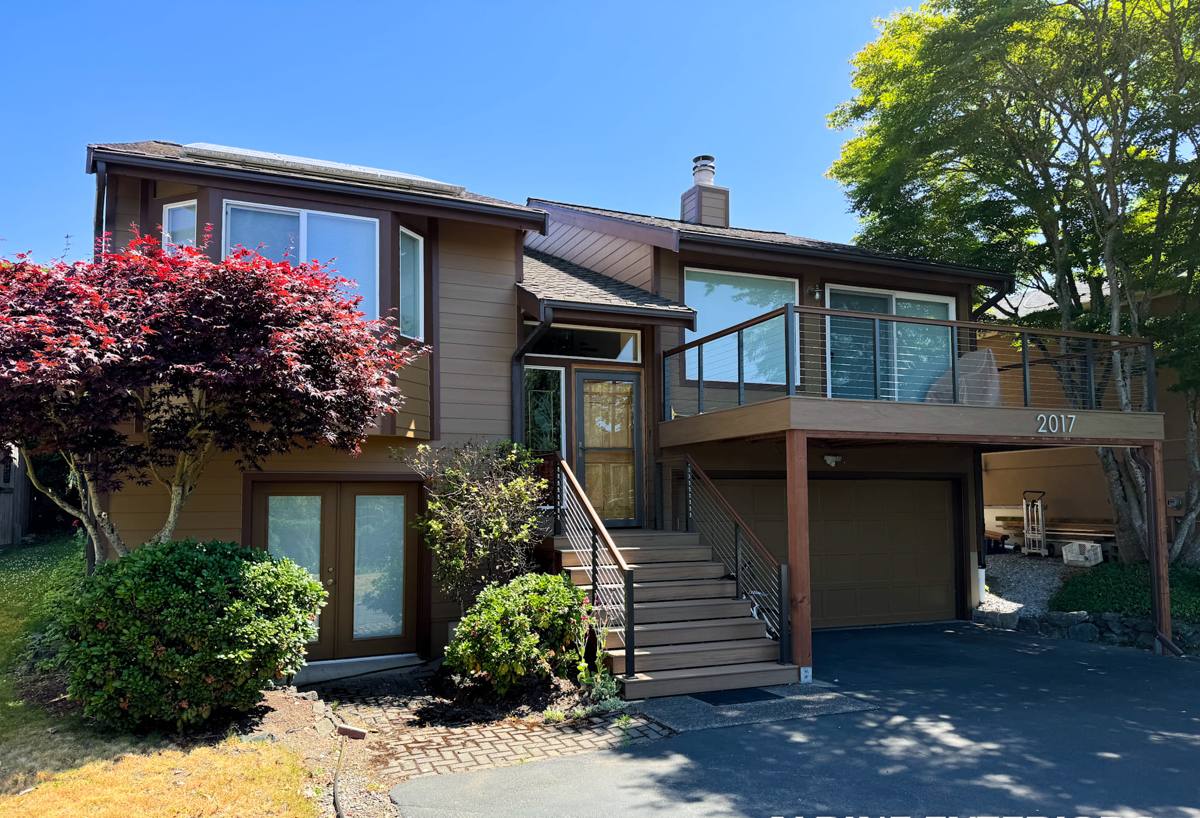
Not every roofing problem in this climate calls for a full tear-off. But there's a point where patching individual leaks stops making financial sense and a full replacement becomes the honest recommendation. We look for a combination of these before we ever suggest replacement over repair:
- Granule loss heavy enough that you can see bare asphalt mat in multiple areas, not just one storm-damaged spot
- Moss or algae growth that's lifted shingle edges rather than just staining the surface
- Soft or spongy decking felt underfoot in the attic, or daylight visible through the roof boards
- Flashing around chimneys, skylights, or wall intersections that's corroded, separated, or was never properly stepped and counter-flashed in the first place
- Interior staining that reappears after repairs, which usually means the water is entering somewhere other than where it's showing up
- A roof approaching or past the manufacturer's expected service life for this climate, even if it "looks fine" from the ground
If a roof is only a few years into its life and the damage is isolated, targeted repair is the right call and we'll say so. Replacement only makes sense once the underlying material or deck is compromised broadly enough that repeated repairs are just delaying the inevitable.
What a Correct Roof Replacement Actually Involves
A roof replacement done right in a salt-air, high-moisture environment involves more than swapping old shingles for new ones. Several layers under the visible roofing material matter as much as the surface product, especially here.
Tear-Off and Deck Inspection
We remove the existing roofing down to the deck rather than layering over it. That's the only way to actually see the condition of the sheathing — soft spots, rot around penetrations, and hidden moisture damage don't show up until the old material is off. Any compromised decking gets replaced before anything new goes down; roofing over bad decking just guarantees an early second failure.
Underlayment and Moisture Barrier
This layer matters more here than almost anywhere else in the state. With wind-driven rain a regular occurrence, we use synthetic underlayment and self-adhered ice-and-water barrier at eaves, valleys, and around every penetration — the areas where wind-blown moisture is most likely to work its way underneath the primary roofing material.
Ventilation
Proper intake and exhaust ventilation keeps the attic dry and temperature-balanced, which does two things: it protects the decking from the underside, and it slows the conditions that let moss and algae take hold on the surface. A roof can be installed perfectly and still fail early if the attic underneath it is trapping moisture.
Flashing and Penetrations
Chimneys, vents, skylights, and wall-to-roof transitions are where most leaks actually start, not in the open field of shingles. We install new step flashing, counter-flashing, and pipe boots at every penetration rather than reusing old flashing — corroded or improperly lapped flashing is one of the most common causes of the "mystery leak" homeowners call us about.
Choosing a Roofing Material for Salt Air and Moss
There's no single "best" roofing material for every home — it depends on your roof's slope, tree cover, budget, and how much long-term maintenance you're willing to take on. Here's how the common options stack up specifically against salt exposure and moss pressure:
| Material | Upfront Cost | Salt Air & Moss Behavior | Maintenance |
|---|---|---|---|
| Architectural asphalt shingle | Moderate | Good performance with algae-resistant granules; standard fasteners and flashing need corrosion-resistant hardware near the coast | Periodic moss removal on shaded slopes |
| Standing seam metal | Higher | Sheds moisture fast, doesn't hold moss the way textured surfaces do; needs marine-grade or coated fasteners to resist salt corrosion long-term | Low — occasional debris clearing |
| Cedar shake | Higher | Attractive but naturally moisture-absorbent, which makes it more moss-prone in shaded, damp conditions like ours | High — regular treatment and moss control needed |
| Composite/synthetic shake | Moderate-High | Mimics cedar's look without the moisture absorption; holds up well against algae and salt exposure | Low to moderate |
For most fully exposed Point Roberts homes, we lean toward architectural asphalt with algae-resistant granules or standing seam metal, depending on the roof's pitch and how much of it sits in shade. We'll walk your specific roof and tree line before recommending one over the other — a blanket recommendation without seeing the property isn't a real recommendation.
Our Roof Replacement Process, Start to Finish
- On-site inspection. We walk the roof and attic, check flashing, decking, and ventilation, and document what we find before recommending replacement over repair.
- Written scope and estimate. You get a clear breakdown of materials, underlayment, flashing work, and labor — no vague line items.
- Material and scheduling coordination. Because Point Roberts is a bit of a logistical puzzle (more on that below), we plan delivery and crew timing around a stretch of dry weather before we start.
- Tear-off and deck repair. Old roofing comes off, decking is inspected, and any compromised sections are replaced.
- Underlayment, flashing, and roofing installation. Installed in the sequence that actually sheds water correctly, not just the fastest sequence.
- Final walkthrough. We review the finished roof with you, including gutter and ventilation checks, before we consider the job done.
Why Hiring a Crew That Already Works Point Roberts Matters
Point Roberts is geographically separated from the rest of Whatcom County — the only road route in and out crosses the Canadian border, which means material deliveries, crew scheduling, and even weather-window planning take more coordination than a typical job on the mainland. A crew unfamiliar with that reality can end up with materials stuck at the wrong place at the wrong time, or a job stretched out longer than it needs to be simply because nobody planned around the drive and the crossing.
There's also a local-knowledge factor that matters for the actual roofing decisions: knowing which slopes on this peninsula catch the worst of the wind-driven rain, which properties fight moss year-round because of tree cover and shade, and which flashing details tend to fail first in this specific salt-air environment. That's the kind of thing you only learn by actually working roofs here repeatedly, not by showing up once.
We're licensed to work throughout Whatcom County, including Birch Bay and Point Roberts, and we build our scheduling around the realities of getting a crew and materials out to the peninsula and back — so a quoted timeline is one we can actually hold to.
Roof Replacement Checklist Before You Sign a Contract
- Confirm the contractor is licensed and insured to work in Washington State
- Get the scope in writing, including underlayment type, flashing work, and whether full tear-off is included
- Ask how they handle decking repair if rot or soft spots are found once the old roof is off
- Confirm the ventilation plan — intake and exhaust, not just "new vents"
- Ask specifically how they address moss- and salt-prone areas of your roof, not just a generic install
- Clarify who handles debris removal and cleanup, including magnetic nail sweeps
- Understand the manufacturer's warranty terms and what voids them
- Ask how weather delays and Point Roberts logistics are factored into the schedule
Keeping a New Roof Ahead of Moss Season
A correctly installed roof still benefits from a little upkeep in this climate. Keeping gutters and downspouts clear prevents water from backing up under the lowest course of shingles during heavy rain. Trimming back overhanging branches reduces the shade and debris buildup that feed moss growth. And a simple visual check after major storms — looking for lifted shingles, displaced flashing, or new moss patches — catches small issues before they become interior leaks. None of this replaces a properly installed roof, but it extends the life of one considerably out here.
If your roof is showing its age, or you just want an honest opinion on repair versus replacement, we're happy to take a look. Reach out for a free, no-pressure estimate using the form below.