 Birch Bay
 Windows Built for Sandy Point's Coastline, Not a Showroom
Sandy Point sits close enough to the water that its homes take a different kind of beating than houses a few miles inland in Whatcom County. Salt-laden air works into window frames and hardware year-round, driving rain finds its way into any gap in the flashing, and the long, damp moss season keeps trim and sills wet for months at a time. A window that would hold up fine in a drier part of the state can start failing here within a few years if it wasn't chosen and installed with these conditions in mind.
Custom windows aren't about fancy shapes or oversized glass, though we do plenty of that. For most Sandy Point homes, "custom" simply means the window is built to the exact opening, in a material and configuration that matches how that side of the house takes weather. A window on the water-facing side of a home needs different attention than one tucked under an eave on the leeward side, and a good installer treats them differently.
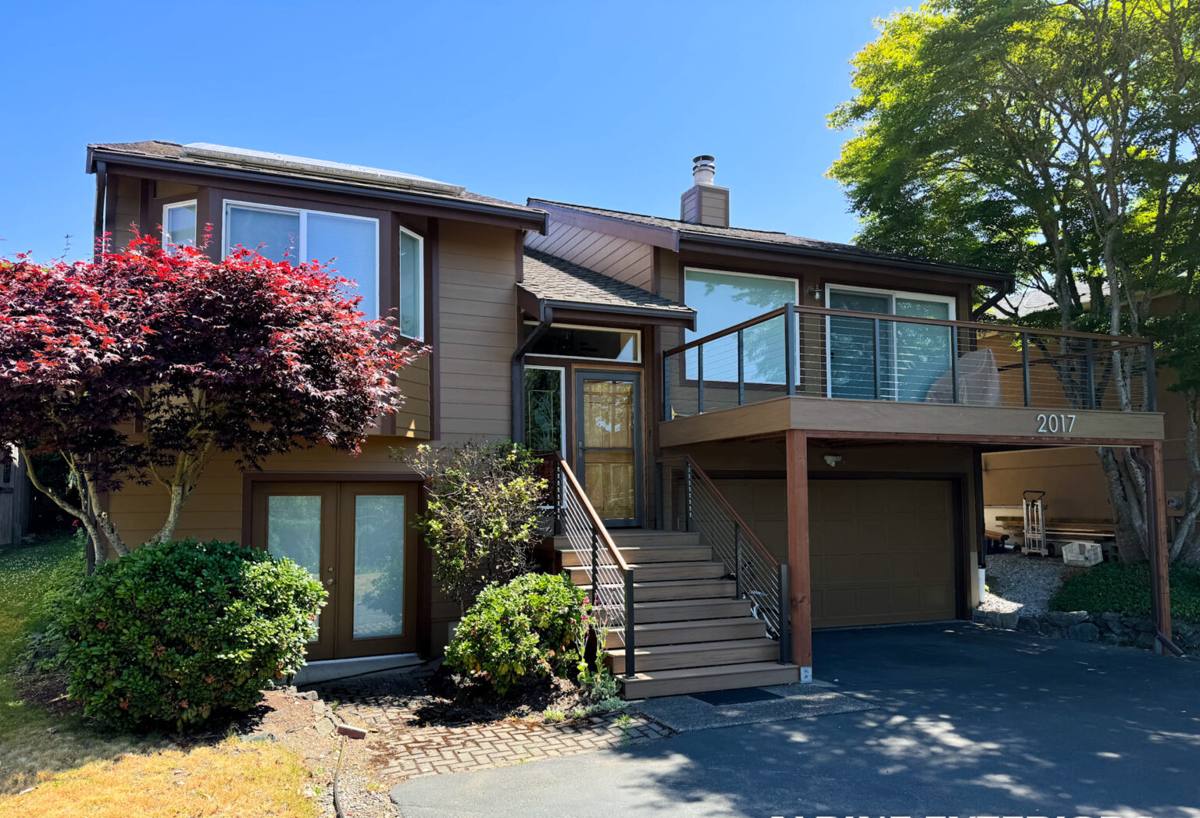
What the Local Climate Actually Does to Windows
Before talking about products, it helps to understand the specific failure patterns we see in this part of Birch Bay:
- Salt air corrosion — hardware, hinges, and unprotected metal components pit and seize faster near the water than they would even a mile or two inland.
- Wind-driven rain — storms off the water don't just fall straight down; rain gets pushed sideways into any weak seam, sill, or flashing detail.
- Extended damp season — moss and algae thrive on shaded, north-facing walls for much of the year, and that moisture sits against wood trim and sills far longer than in sunnier climates.
- Temperature swings — cool marine mornings followed by afternoon sun cause frames and glass to expand and contract, which stresses seals over time.
None of these are dramatic on their own. The damage is cumulative — a window that isn't sealed and flashed correctly on day one will show it in year three or four, usually as soft trim, fogged glass, or a draft that wasn't there before.
Signs a Sandy Point Home Needs Window Attention
Homeowners usually call us for one of a handful of reasons. If any of these sound familiar, it's worth having someone look:
- Fogging or a hazy film between panes of double-glazed glass — a sign the seal has failed
- Sills or bottom frame corners that feel soft or spongy to the touch
- Windows that are noticeably harder to open and close than they used to be
- Visible gaps, cracked caulking, or daylight showing around the frame
- A draft near the window on windy days even with it fully closed
- Green or black staining on the frame or sill that keeps coming back after cleaning
Some of these are simple maintenance fixes. Others mean the window and its flashing need to be replaced before the moisture problem spreads into the wall framing behind it.
What a Correct Window Job Actually Involves
Ordering the right window is maybe a third of the job. The other two-thirds is how it's installed, which is where most problems we get called to fix actually started.
Getting the Opening Right
Every opening on an older Sandy Point home has settled and shifted a bit over the years. We measure each window individually rather than assuming openings match the original plans, and we check the condition of the framing and sheathing around each opening before anything goes in. If there's already hidden water damage from a prior install, that gets addressed first — a new window over a rotten opening just delays the same problem.
Flashing and Water Management
This is the single biggest factor in how long a window lasts here. Correct installation means a sloped sill pan that directs any water that gets past the window back out, not into the wall; flashing tape integrated with the house wrap in the right shingle-lap order; and a drainage path so water can't pool against the bottom of the frame. Skipping or rushing this step is the most common reason we see "good" windows fail early on the water side of a house.
Sealing and Insulation
Low-expansion foam and backer rod around the frame perimeter, plus proper exterior caulking rated for marine/coastal exposure, keep both water and wind-driven drafts out. Cheap caulk breaks down fast in this climate and needs replacing within a couple of years — we use products rated for the movement and moisture cycling this area sees.
Hardware and Finish
In salt air, hardware finish matters more than it does inland. Stainless steel or coated corrosion-resistant hardware costs a bit more up front and saves you from seized locks and hinges down the road.
Frame Material: What Holds Up in Sandy Point
We install several frame materials, and the right choice depends on the home's style, budget, and exposure to weather.
| Material | Coastal Performance | Maintenance | Best Fit |
|---|---|---|---|
| Vinyl | Good — won't rot or corrode, handles moisture well | Low — occasional cleaning | Most homes, budget-conscious replacements |
| Fiberglass | Excellent — very stable in temperature swings, resists moisture | Low | Water-facing walls, high-exposure sides of the home |
| Aluminum-clad wood | Good on the exterior face, but interior wood still needs protection from any leak | Moderate | Homes wanting a wood interior look |
| Solid wood (uncladded) | Poor in direct salt/moisture exposure without diligent upkeep | High | Sheltered openings only, or homeowners committed to regular refinishing |
We don't push any one material as the only right answer. For a home tucked back from the water with good roof overhangs, a well-installed vinyl window will do fine for decades. For a wall that takes direct wind-driven rain, we'll usually steer toward vinyl or fiberglass over uncladded wood, simply because the maintenance burden of keeping exposed wood sealed in this climate is more than most homeowners want to sign up for. That's a practical trade-off, not a knock on wood as a material.
Glass and Configuration Choices
Beyond the frame, a few glass and configuration details matter for this specific location:
- Double or triple pane, argon-filled — helps with the temperature swings between cool marine mornings and warmer afternoons, and cuts down on condensation on colder days.
- Low-E coatings — reduce heat loss without darkening the view, useful given how many Sandy Point homes are oriented to take in water views.
- Casement vs. double-hung — casement windows tend to seal tighter against wind-driven rain because the sash compresses against the frame when closed, which is worth considering on the most exposed side of a house.
- Impact-rated or laminated glass options — some homeowners near the water choose these for added durability against wind-blown debris during storms.
Our Process for a Sandy Point Window Project
- On-site assessment — we look at each opening, check for existing moisture or rot, and note which walls take the most direct weather.
- Product recommendation — we walk through frame and glass options honestly, including what each one will actually need in terms of upkeep at this location.
- Precise measurement and ordering — custom sizing so the new window fits the actual opening, not a standard size that needs shimming.
- Removal and opening prep — old flashing and any damaged sheathing are addressed before the new unit goes in.
- Installation with full flashing detail — sill pan, integrated tape, proper caulking, and insulation around the frame.
- Final check and walkthrough — we test operation, seal quality, and go over any care specific to the product installed.
What Affects the Cost
| Factor | Why It Matters |
|---|---|
| Frame material | Fiberglass and clad-wood typically cost more than vinyl but bring different maintenance trade-offs |
| Window size and shape | Custom shapes and larger openings require more engineering and glass |
| Condition of the existing opening | Hidden rot or old flashing failures add repair work before the new window goes in |
| Glass package | Triple-pane, low-E, or impact-rated glass all add cost over standard double-pane |
| Exposure of the wall | Water-facing openings may warrant upgraded flashing details or hardware |
Exact pricing depends on all of the above, which is why we walk each project on-site rather than quoting blind. Broadly, a straightforward vinyl replacement in an existing opening costs less than a custom fiberglass unit with upgraded glass on a difficult, high-exposure wall — but the right choice for your home depends on which wall we're talking about and how long you plan to own the house.
Choosing a Contractor for Sandy Point Work
Not every window installer is equally comfortable with this location's conditions. A few things worth checking before you hire anyone:
- Do they ask about the specific wall's sun and wind exposure, or just measure and quote?
- Do they explain their flashing and sill-pan detail, or just say "we'll seal it up good"?
- Can they speak to hardware finish and corrosion resistance for salt air specifically?
- Are they licensed and insured to work in Washington, and willing to put that in writing?
- Do they have experience with older homes in this area, where openings have often settled or shifted?
- Will they check for existing moisture damage before installing, rather than installing over a problem?
A crew that already works regularly in Birch Bay and the surrounding Whatcom County coastline has usually already seen the failure patterns specific to this stretch of water — which openings tend to take the worst of the wind-driven rain, which hardware holds up and which doesn't, and how long a given material actually lasts here versus in a catalog spec sheet.
Living With Your Windows Afterward
Even a correctly installed window benefits from a bit of seasonal attention in this climate:
- Rinse salt residue off frames and glass periodically, especially after storms
- Check caulking annually for cracking or gaps, particularly on water-facing walls
- Clear moss or algae buildup from sills and trim before it holds moisture against the frame
- Operate hardware a few times through the winter so hinges and locks don't seize from disuse
- Watch for early signs of seal failure — fogging between panes usually means it's time to plan a replacement, not wait it out
If you're noticing drafts, fogged glass, or soft trim around your windows, or you're planning ahead for a remodel, we're happy to come take a look. We'll give you a straightforward, no-pressure assessment of what your home actually needs and what it will cost — just fill out the form below to get started.