 Birch Bay
 Roof Repair on the Semiahmoo Spit
Semiahmoo sits out on a narrow spit near Blaine, with water on more than one side and almost nothing to break the wind before it reaches a roofline. That setting puts more stress on a roof than most homes even a few miles inland ever see. Salt-laden air works on exposed metal and fasteners. Wind-driven rain doesn't fall straight down — it gets pushed sideways and up under shingle edges, flashing laps, and roof-to-wall transitions. And a long, damp moss season settles into shaded and north-facing roof planes and doesn't let go for months at a stretch.
Most roofs on the spit don't fail all at once. They develop a specific, findable problem — a lifted shingle, a cracked flashing seal, a clogged valley holding water — and that problem gets worse every wet season it goes unaddressed. This page is about roof repair specifically: what causes it in Semiahmoo's conditions, what a repair done correctly actually involves, and how to tell when a repair is still the right call versus when it isn't.
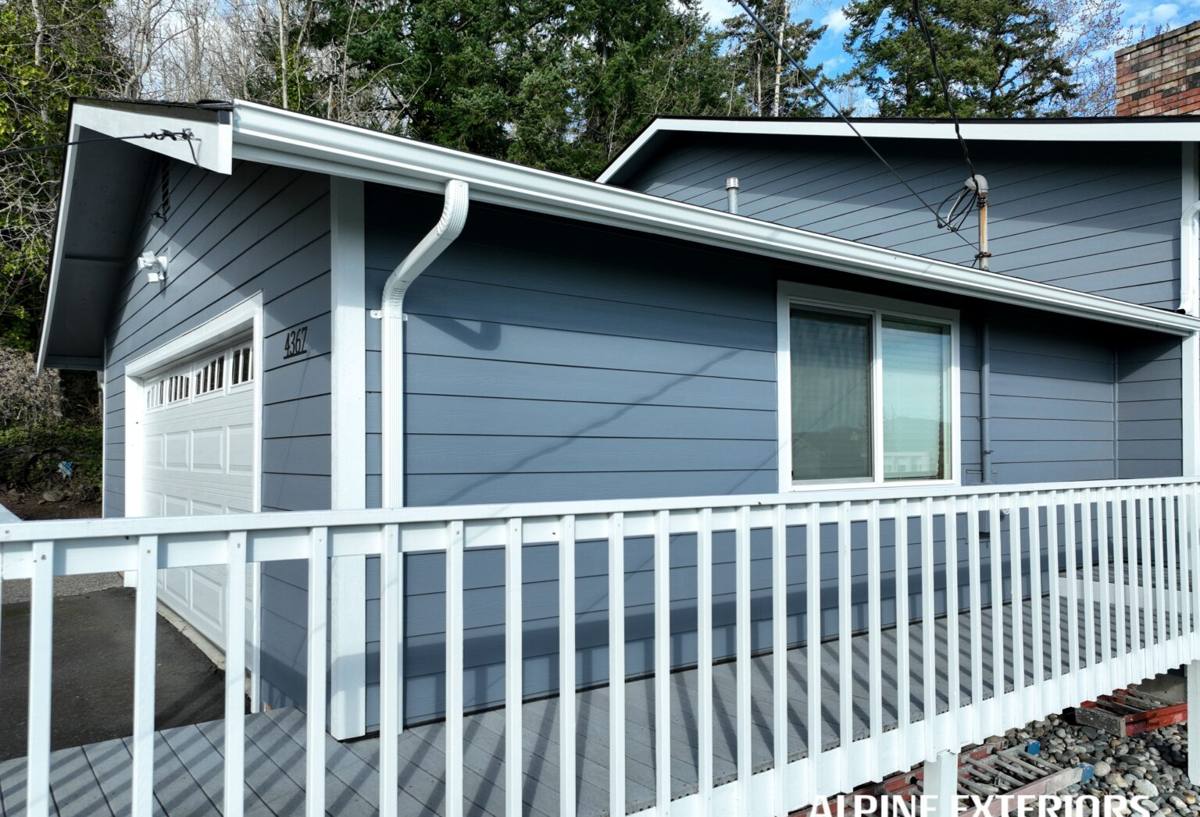
What Actually Causes Repairable Roof Damage Here
Flashing Failures at Valleys and Penetrations
Most leaks in this region start at flashing, not out in the open field of the roof. Valleys where two roof planes meet, and penetrations for chimneys, vents, and skylights, are where water pressure concentrates during a wind-driven storm. A flashing seal that's lifted, cracked, or under-lapped will let water in well before the surrounding shingles show any obvious wear, which is why a leak often shows up on an interior ceiling before there's anything visibly wrong on the roof itself.
Wind-Lifted or Cracked Shingle Edges
With almost no windbreak on the spit, shingle tabs and edges take a harder, more constant load than they would on a sheltered inland lot. Repeated flexing from wind eventually cracks the shingle mat or breaks the fastener seal underneath, and once a tab is loose, wind-driven rain has a direct path underneath it on the next storm.
Moss and Trapped Moisture
Moss doesn't just sit on top of a roof — its root structure holds moisture against the shingle surface and can work its way under tabs and into laps over time. Shaded, north-facing slopes and valleys that don't dry out between rains are where this shows up worst, and by the time moss is visible from the ground, it's usually been holding moisture against that section of roof for a while already.
Corroded Fasteners and Flashing Metal
Salt air accelerates corrosion on lower-grade metal and fasteners faster than a drier, more sheltered site would ever see. A nail head that rusts through, or flashing metal that corrodes and thins out, stops doing its job long before it looks obviously bad — it just quietly opens a path for water.
What a Correct Repair Actually Involves
A roof repair that only addresses the visible symptom tends to come back. A repair worth doing finds the actual source of the problem first, then fixes it properly at that location instead of layering a patch on top.
Finding the Source, Not Just the Symptom
Water can travel along the underside of a roof deck or down a rafter before it shows up as a stain inside the house, so the visible sign of a leak isn't always directly above the actual entry point. A proper repair traces the path back to where water is actually getting in, which sometimes means opening up more of the roof than the homeowner expected — but patching the wrong spot doesn't fix anything, it just delays the next call.
Matching Materials and Tying In Cleanly
A repair section needs to tie into the surrounding roofing correctly, with proper shingle lap and fastening pattern, not just caulked or overlaid on top of the existing material. Mismatched or improperly integrated repair work is often where the next leak starts, sometimes in a different spot than the original problem.
Flashing Detail Work
Because flashing is where most leaks originate here, a repair around a valley, chimney, or wall transition should reset that flashing properly — correct lap order, sealed and integrated with the underlayment, not just re-caulked over the same underlying gap. Caulk alone is a temporary fix, not a repair.
Checking Ventilation While the Roof Is Open
Any time a section of roof is opened up for repair, it's worth checking attic ventilation in that area. Poor airflow traps moisture against the underside of the deck, which contributes to rot and moss growth from below — and it's a much cheaper problem to address while the roof is already open than to discover later as a separate issue.
Signs a Semiahmoo Roof Needs Repair
- Water staining on an interior ceiling or wall, especially after a windy storm off the water
- Granules collecting in gutters or at downspout outlets
- Shingle tabs that are curled, cracked, or visibly lifted
- Moss buildup in valleys or on shaded, north-facing slopes that keeps returning after cleaning
- Flashing that looks rusted, lifted, or has visibly failed sealant around chimneys, vents, or skylights
- Soft or spongy spots underfoot when walking the roof, or sagging visible from the ground
Repair or Replace: How That Decision Actually Gets Made
Not every roof problem calls for a full replacement, and not every roof problem should be patched indefinitely either. The right call depends on how localized the damage is, the roof's age and remaining material life, and whether the underlying deck has been compromised.
| Factor | Leans Toward Repair | Leans Toward Replacement |
|---|---|---|
| Extent of damage | Isolated to one section, valley, or penetration | Spread across multiple slopes or the majority of the roof |
| Roof age | Well within expected shingle lifespan | At or past the material's typical service life |
| Deck condition | Sound decking under the affected area | Soft, rotted, or moisture-damaged decking found underneath |
| Repair history | First or infrequent issue in that area | Same section has needed repeat repairs already |
| Material availability | Matching shingles or components are still obtainable | Discontinued product with no reasonable match available |
An honest contractor will tell you when a repair is the right, cost-effective answer and won't push a full replacement a roof doesn't need yet. The reverse is just as important — if a roof is genuinely past the point where another repair makes sense, we'll say so plainly rather than stringing along a series of patches on a roof that's already failing.
How Our Repair Process Works
- On-site inspection: We walk the roof and, where needed, the attic, to find the actual source of the problem rather than guessing from the ground or a photo.
- Written assessment: You get a clear explanation of what we found, what caused it, and what the repair involves — before any work starts.
- Repair, done to tie in correctly: Damaged materials come out, the deck underneath gets checked, and the repair is installed and flashed to properly integrate with the surrounding roof.
- Ventilation check: If the repair opens up part of the roof, we take the opportunity to check attic airflow in that section.
- Final walkthrough: We review the completed repair with you and do a cleanup and debris sweep before calling the job done.
Why Hiring a Crew That Already Works Semiahmoo Matters
A crew that regularly works roofs on the spit already knows how salt air corrodes underspecified fasteners, how wind-driven rain finds its way under a shingle edge that would hold up fine in a calmer setting, and which slopes hold moss longest through the wet season. That familiarity shows up in the small decisions during a repair — how much of the surrounding area to open up, which flashing detail actually needs resetting versus which one just needs inspection, where the water is really coming from versus where it first became visible.
It also matters after the job is done. A workmanship warranty on a repair is only as good as the company standing behind it, and a contractor with an ongoing, established presence in the area is the one you can actually reach if a question comes up two or three wet seasons later.
A Checklist Before Hiring for Roof Repair on Semiahmoo
- Ask what they believe is causing the leak or damage, not just what they plan to patch
- Confirm they'll check the deck underneath, not just replace visible shingles or flashing
- Ask directly whether repair is the right call here, or whether the roof is closer to needing replacement
- Confirm current Washington contractor licensing and active liability insurance
- Get a written scope of the repair, including flashing and any ventilation work, before work begins
- Ask about warranty coverage on the repair itself, separate from any material warranty
Maintenance Between Repairs
A roof repair holds up longer when it's not fighting the same conditions that caused the original problem. Keeping valleys and gutters clear of debris and moss reduces standing water against shingle edges. Trimming back branches that shade a roof plane helps it dry out between storms instead of staying damp for days. And a periodic look at flashing around chimneys and vents catches early sealant failure before it becomes an interior leak. None of that replaces a proper repair when something is actually broken, but it does reduce how often that repair is needed in the first place.
If you're dealing with a leak, storm damage, or a roof that just doesn't look right anymore, we're happy to come take a straightforward look and tell you honestly what it needs. Use the form below to request a free, no-pressure estimate.