 Birch Bay
 Semiahmoo's Roofs Work Harder Than Most
Semiahmoo sits right up against the water in Whatcom County, close enough to Semiahmoo Bay that salt-laden air is a daily fact of life, not an occasional nuisance. Add in wind-driven rain off the water and long stretches of shade and dampness that keep moss growing most of the year, and you have a roofing environment that's genuinely tougher on materials and fasteners than what you'd find twenty minutes inland. A roof that would last two or three decades in a drier part of the state can show serious wear well before that here if it wasn't built with this exposure in mind.
We work on homes throughout the Birch Bay and Semiahmoo area regularly, and the pattern is consistent: the roofs that fail early almost always failed at the details — flashing, fasteners, ventilation, or underlayment — not because the shingles themselves were bad. A roof replacement done right for this location accounts for all of that up front.
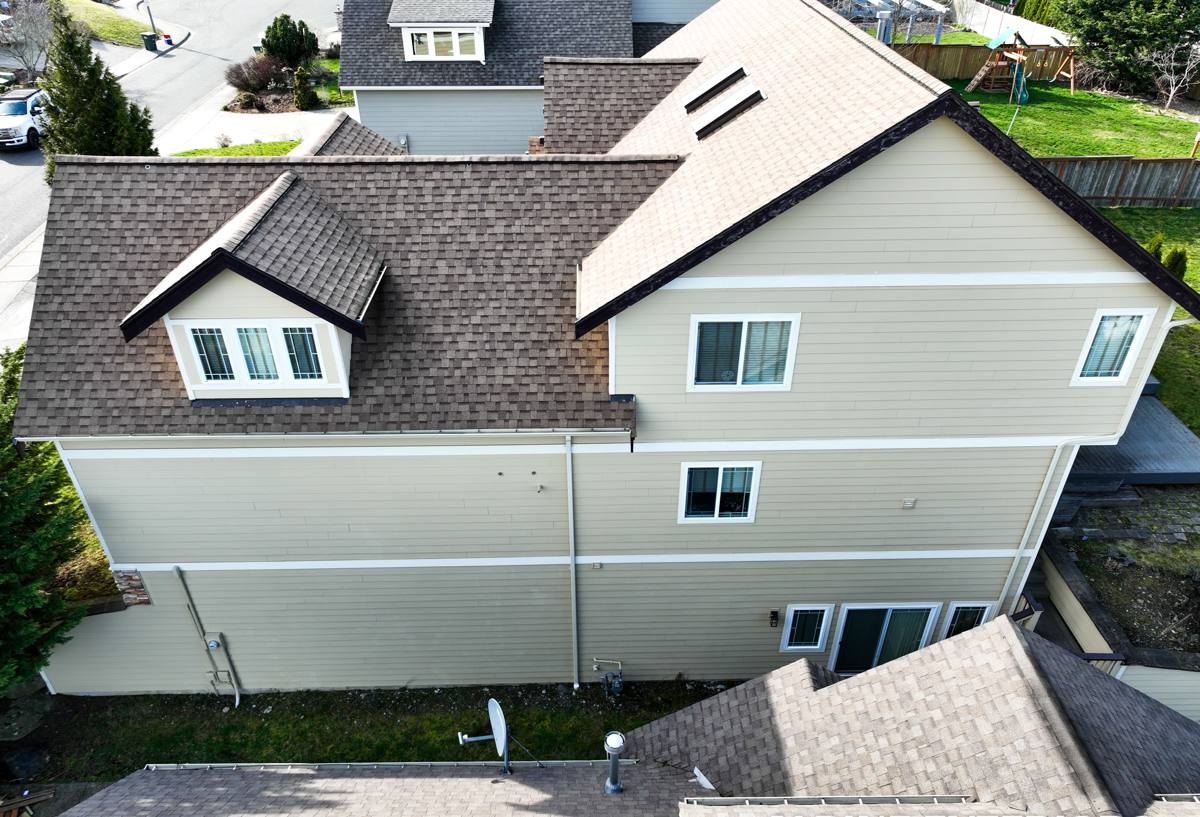
What Salt Air, Rain, and Moss Actually Do to a Roof
Salt Air and Metal Components
Salt in the air accelerates corrosion on anything metal — nails, flashing, vent caps, gutters. Standard galvanized fasteners can start showing rust streaks and weakening well before a roof's expected service life is up. Once fasteners corrode, shingles lift, seals break, and water finds its way in. This is one of the most common causes of early roof failure we see on homes close to the water in this area.
Driving Rain and Wind
Storms off the water tend to push rain sideways rather than straight down, which means water gets forced up under shingle tabs, into valleys, and around flashing in ways a calmer inland rain never would. A roof system built for average conditions — with minimal underlayment coverage or loosely detailed flashing — is exactly the kind of roof that leaks first in a Semiahmoo storm.
Moss and Persistent Dampness
Shaded roof planes, mild temperatures, and near-constant moisture make this whole region prime moss territory, and Semiahmoo's proximity to the water only adds to the humidity. Moss holds water against the roof surface, works its way under shingle edges as it grows, and can lift and separate shingle layers over time. Left unaddressed for a few seasons, moss growth alone can shorten a roof's life by years.
Signs a Semiahmoo Roof Needs Replacing, Not Just Repairing
Not every roofing issue calls for a full replacement — but in this climate, certain signs mean patching is just delaying an inevitable bigger job. Look for:
- Granule loss heavy enough that you're finding grit in gutters or downspouts regularly
- Shingles that are cupping, curling, or cracking, especially on south- and west-facing slopes
- Moss or algae covering more than a small patch, particularly on north-facing or shaded sections
- Rust staining or visible corrosion around flashing, vent boots, or exposed fasteners
- Soft spots, sagging, or discoloration on the roof deck visible from the attic
- Repeated leaks in the same area even after past repairs
- A roof that's 20+ years old and has never had underlayment or ventilation upgraded
If you're seeing two or more of these, it's worth having someone look at the whole system rather than chasing individual leaks one at a time.
Choosing Materials for a Salt Air, High-Moisture Climate
There's no single "best" roofing material for every home, but some options handle this specific climate better than others. The table below reflects how common choices perform under Semiahmoo's conditions specifically — salt exposure, wind-driven rain, and moss pressure — rather than generic national ratings.
| Material | Salt Air Resistance | Moss Resistance | Typical Lifespan Here | Maintenance Burden |
|---|---|---|---|---|
| Standard asphalt composition shingle | Moderate (fastener corrosion is the weak point) | Moderate — needs periodic treatment or cleaning | 18-25 years | Moderate |
| Algae/moss-resistant composition shingle | Moderate to good | Good, with copper or zinc strips | 22-28 years | Low to moderate |
| Standing seam metal | Good, with marine-grade coatings and stainless fasteners | Very good — sheds moisture, little surface for growth to grip | 40-50+ years | Low |
| Synthetic/composite shingle | Good | Good | 30-40 years | Low |
We don't push one product on every home. The right choice depends on your roof's pitch, shading, budget, and how long you plan to stay in the house. What we will steer you away from is any material or fastener package not rated for coastal, high-moisture use — the upfront savings almost never survive the maintenance cost once salt corrosion or moss damage sets in.
What a Correct Roof Replacement Involves in Semiahmoo
Full Tear-Off and Deck Inspection
We don't recommend roofing over an existing layer here. A full tear-off lets us actually see the deck, which matters a lot in a climate where hidden moisture damage is common. Soft, delaminated, or water-stained decking gets replaced before anything new goes down — skipping this step is one of the most common shortcuts that leads to early failure.
Underlayment Built for Wind-Driven Rain
Given how often rain here comes in sideways, we use synthetic underlayment with full coverage, and self-adhered membrane (ice-and-water-shield type product) at eaves, valleys, and any low-slope transitions — the areas most likely to see wind-forced water intrusion. This is a place where minimum code coverage isn't the same as correct coverage for this exposure.
Flashing at Every Vulnerable Point
Chimneys, skylights, dormers, valleys, and sidewall transitions are where the vast majority of roof leaks actually start — not in the open field of shingles. We detail these with corrosion-resistant flashing and proper step and counter-flashing rather than relying on caulk or sealant as a primary water barrier, since sealant alone breaks down faster in salt air.
Ventilation That Matches the Home
Balanced intake and exhaust ventilation keeps moisture from building up in the attic, which matters twice over here: it protects the new roof deck, and it reduces the damp, dark conditions moss and algae need to establish themselves in the first place.
Fasteners and Metal Rated for Coastal Exposure
We use corrosion-resistant fasteners and flashing appropriate for a marine-influenced environment rather than standard-grade hardware. It costs a bit more upfront and is one of the cheapest insurance policies against early failure on a Semiahmoo roof.
Our Process for a Semiahmoo Roof Replacement
- On-site assessment — we inspect the existing roof, deck condition, ventilation, and any problem areas specific to your home's exposure and shading.
- Written estimate — a clear scope of work and materials, with options if more than one approach makes sense for your budget and goals.
- Scheduling around weather — we plan tear-off and dry-in around forecasted conditions to minimize the time your home is exposed.
- Tear-off and deck repair — old roofing removed, deck inspected and repaired as needed before anything new goes on.
- Underlayment, flashing, and ventilation installed — the details that determine how the roof performs in local weather, done first and done right.
- Final roofing material installed to manufacturer specification, with attention to fastener pattern and exposure.
- Cleanup and walkthrough — site cleared of debris, and we walk the finished roof with you.
Why Local Experience in This Area Matters
A roofing crew that hasn't worked much near the water can underestimate how fast salt air and moss change the math on a roof. We've replaced and repaired roofs throughout Birch Bay and the surrounding Whatcom County coastline, and that experience shows up in small decisions — which fastener spec to use, where to add extra underlayment coverage, when a shaded north slope needs a different material than the rest of the roof. Those aren't things you learn from a spec sheet; they come from seeing which roofs in this exact environment hold up and which ones don't.
It also matters for something more practical: knowing this area means understanding typical wind exposure by property orientation, seasonal weather windows for scheduling tear-off work, and how to sequence a job so your home isn't sitting open during an incoming storm off the water.
Keeping a New Roof Healthy After Installation
A correctly installed roof still benefits from basic seasonal upkeep in this climate:
- Clear gutters and downspouts at least twice a year so water isn't backing up under the eaves
- Have moss or algae growth treated early, before it spreads or lifts shingle edges
- Trim back overhanging branches that keep roof sections shaded and damp
- Have flashing and fasteners checked periodically, especially after major windstorms
- Address small leaks immediately — in this climate, small issues don't stay small for long
What Affects the Cost of a Semiahmoo Roof Replacement
| Factor | Why It Matters Here |
|---|---|
| Roof size and pitch | Steeper or larger roofs require more material and labor time |
| Current deck condition | Water-damaged decking found during tear-off adds repair cost but prevents bigger problems later |
| Material choice | Metal and synthetic options cost more upfront but resist salt and moss damage longer |
| Flashing and ventilation upgrades | Bringing older detailing up to a coastal-appropriate standard adds cost but reduces leak risk significantly |
| Accessibility and site conditions | Tree cover, roof height, and site access affect labor time |
We give straightforward, itemized estimates so you can see exactly what you're paying for and where — no vague lump-sum numbers.
If your roof is showing wear, has never been upgraded for this coastal exposure, or you're just not sure whether repair or replacement makes sense, we're happy to take a look. Reach out for a free, no-pressure estimate using the form below.