 Birch Bay
 Siding Built for the Sumas Side of Birch Bay
The Sumas area of Birch Bay sits close enough to the water that salt air is a daily fact of life, but far enough from full wind exposure that homes here deal with something trickier: sustained dampness. Driving rain comes in sideways off the Strait during winter storms, then the same siding sits under tree cover and cloud shadow for weeks at a time, growing moss in every north-facing corner. That combination — salt, saturation, and shade — is harder on a home's exterior than wind alone, and it's why we treat Sumas as its own siding problem rather than a copy-paste of a coastal Birch Bay job or a Whatcom County inland job.
This page is about one product, in one place: James Hardie fiber cement siding, installed correctly for homes in and around Sumas. We're not going to rehash a generic fiber cement overview here. We're going to walk through what this specific stretch of Whatcom County does to siding, what a correct installation has to account for because of it, and how our crew — which already works this neighborhood — approaches the job differently than a contractor showing up for the first time.
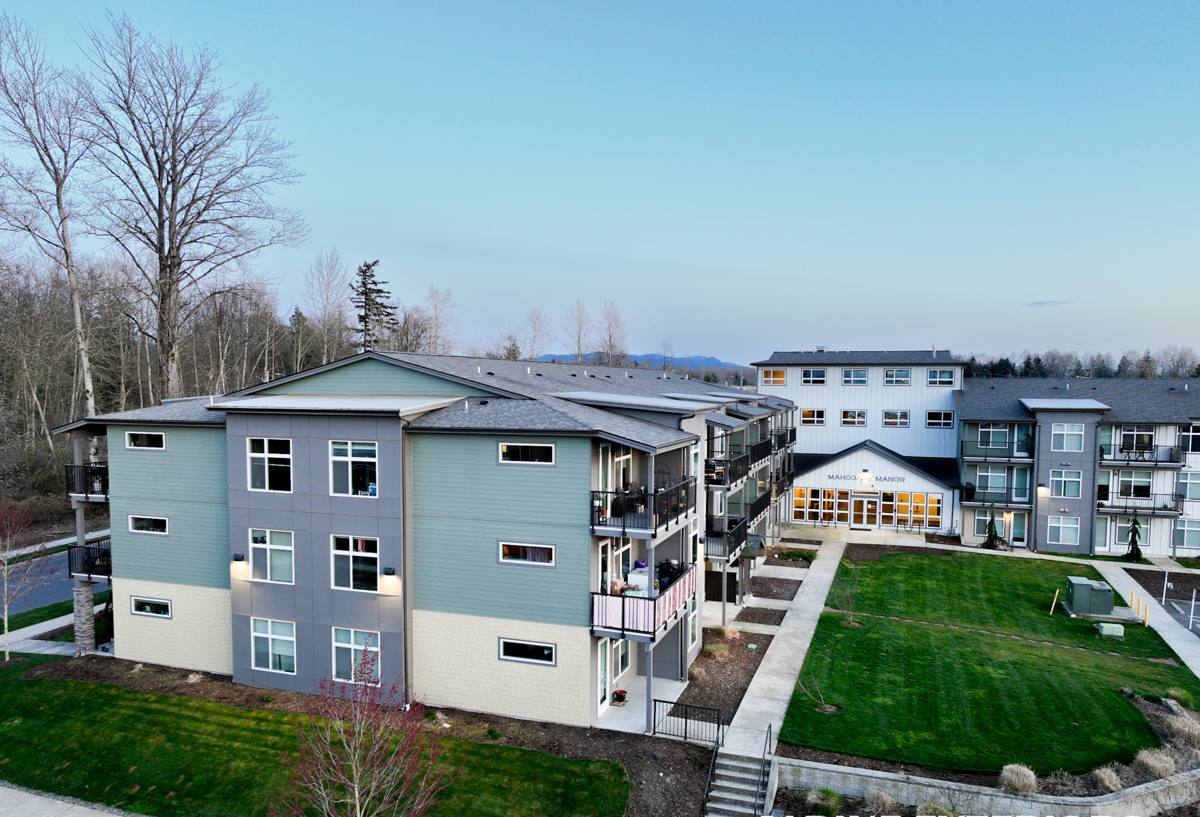
What Salt Air, Rain, and Moss Actually Do to a House
Each of these three stressors attacks siding in a different way, and Sumas homes get all three at once.
Salt Air
Airborne salt doesn't just sit on the surface — it works into any exposed edge, fastener head, or hairline crack in a finish and accelerates corrosion and finish breakdown from the inside out. Untreated or poorly coated fasteners are usually the first thing to show it, followed by chalking or fading on the sunward side of the house.
Driving Rain
Wind-driven rain doesn't fall straight down — it gets pushed sideways into laps, seams, and butt joints that were designed for vertical water shedding, not horizontal pressure. Any gap in flashing, caulking, or lap coverage becomes an entry point, and once water gets behind the siding plane, it doesn't leave quickly in a climate this damp.
Moss Season
Whatcom County's moss season runs long — realistically most of the fall through spring. Moss holds moisture directly against a surface for extended periods, which is a bigger problem for materials that swell, delaminate, or feed rot than it is for a genuinely inert material. On a lot of Sumas properties, tree cover and lot orientation mean some exterior walls almost never fully dry out between rain events.
None of these three things is dramatic on its own. The damage shows up slowly, over years, in the form of soft trim, peeling paint, swollen board edges, and fastener rust stains — and by the time it's visible, the siding underneath has usually been compromised for a while.
Why Fiber Cement Is the Right Call for This Microclimate
Fiber cement is cement, sand, and cellulose fiber, cured into a rigid board. It doesn't absorb water the way wood-based products do, it doesn't corrode, and it isn't a food source for moss or mildew the way organic materials are. That matters specifically in Sumas because the failure modes we see most often here — rot at butt joints, swelling under trim, moss holding water against a wall for weeks — are exactly the failure modes fiber cement is least prone to when it's installed with correct clearances and flashing.
We install only James Hardie fiber cement, factory-finished with ColorPlus, for a specific reason relevant to this climate: the finish is baked on and cured in a controlled environment, not brushed on in the field. That gives it more consistent adhesion and UV resistance against salt-air fading than a field-applied paint job, and it means touch-up work is limited to actual damage rather than routine repainting. We don't install vinyl, LP SmartSide, cedar, or primed spruce on these homes, because each of those products has a specific vulnerability — moisture intrusion, edge swelling, painted-finish maintenance, or heat distortion — that this climate finds and exploits over time. Hardie's HZ5 product line is engineered specifically for the kind of cold, wet, high-moisture exposure Whatcom County sees, which is the version we spec for Sumas jobs.
What a Correct Installation Actually Involves
Fiber cement siding fails prematurely almost never because of the material itself — it fails because of installation shortcuts. In a wet, salt-exposed area like Sumas, the margin for error is smaller than it would be in a drier inland climate. A correct job includes:
- A weather-resistive barrier installed as a complete drainage plane, lapped correctly at every seam, with no gaps at penetrations
- A rainscreen gap or drainage mat behind the siding on exposure-prone walls, so any water that does get past the cladding has somewhere to go besides sitting against the wall sheathing
- Correct minimum clearances between the bottom of the siding and grade, roofing, decks, and paved surfaces, so splashback and standing water don't sit against the board edge
- Z-flashing over every horizontal trim board and window head, not caulk used as a substitute for flashing
- Corrosion-resistant fasteners driven at the manufacturer-specified location and depth — not overdriven, which cracks the board's outer face and creates a water entry point
- Factory-cut edges sealed or primed at every field cut, since a raw cut edge is the most water-absorbent part of an otherwise sealed board
- Butt joints backed properly and sealed with a compatible sealant, not just butted tight and caulked over
Skip any one of these steps and the siding can still look fine for a year or two — the damage from wind-driven rain and prolonged moss moisture is cumulative, not immediate, which is exactly what makes bad installations easy to sell and hard to spot until the damage is already inside the wall.
How We Approach a Sumas Job
- Exterior assessment. We walk the full envelope, checking existing siding, trim, flashing, and any soft or discolored areas that suggest moisture is already getting in, with particular attention to north-facing and tree-shaded walls where moss holds moisture longest.
- Moisture and substrate check. Before any new siding goes up, we check what's underneath — sheathing condition, existing house wrap, and any signs of past water intrusion around windows, doors, and penetrations.
- Tear-off and prep. Old siding and compromised trim come off, damaged sheathing gets addressed, and the wall is prepped for a new, continuous drainage plane rather than patched around old material.
- Drainage plane and rainscreen installation. A new weather-resistive barrier goes on as a complete system, with a rainscreen gap on exposure-prone walls to actively manage bulk water instead of just trying to keep it out entirely.
- Flashing before siding. Every window, door, and horizontal trim transition gets flashed before a single piece of Hardie board goes up — this is the step that gets shortcut most often on rushed jobs, and it's the one that matters most in driving rain.
- Installation to spec. Fastener placement, board clearances, and cut-edge sealing follow Hardie's published specifications, not shop habit, because those specs are what the warranty is actually based on.
- Final trim, caulking, and cleanup. Trim details get finished, sealant is applied only where it belongs — as a secondary defense, not a substitute for flashing — and the site is cleaned up before we walk it with the homeowner.
Fiber Cement vs. Other Common Siding Materials in a Damp, Salt-Air Climate
| Material | Moisture Behavior | Salt Air / Coastal Exposure | Long-Term Maintenance |
|---|---|---|---|
| James Hardie Fiber Cement | Does not swell, rot, or absorb water like wood-based products | Non-corrosive core; factory finish holds up well to salt exposure | Occasional wash-down; factory finish reduces repainting needs |
| Vinyl Siding | Sheds water on the surface but can trap moisture behind panels if installed loosely | Can become brittle and fade faster under salt and UV combined | Low upkeep but panels can warp, crack, or blow off in storms |
| Wood / Cedar | Absorbs moisture readily; prone to swelling and rot at joints and edges | Salt accelerates finish breakdown and grain checking | Regular repainting or restaining required to keep water out |
| Engineered Wood (e.g. LP SmartSide) | Resin-treated but still wood-based; edge swelling is the primary failure point | Cut edges and moisture-exposed corners are the most vulnerable spots | Requires diligent caulk and paint maintenance at seams and edges |
What Drives Cost on a Sumas Project
Every siding estimate is specific to the house, but the same handful of factors move the price on almost every Sumas job we look at:
| Cost Factor | Why It Matters Here |
|---|---|
| Existing sheathing condition | Homes with past moisture intrusion may need sheathing repair before new siding goes on |
| Rainscreen / drainage mat inclusion | Adds labor and material but is worth it on exposure-prone or shaded walls |
| Trim and flashing detail complexity | Homes with more window, door, and roofline transitions need more flashing work |
| Board profile and ColorPlus color selection | Lap width, texture, and factory color options affect material pricing |
| Access and site conditions | Tree cover, tight lot lines, and grade near the foundation affect setup and disposal logistics |
We walk through these factors on-site so an estimate reflects the actual condition of the house, not a generic per-square-foot guess.
Simple Maintenance That Actually Matters in This Climate
Fiber cement is low-maintenance, not no-maintenance. In a moss-heavy, salt-air area like Sumas, a short annual routine goes a long way:
- Rinse the exterior yearly, focusing on north-facing and shaded walls where moss and grime build up fastest
- Keep gutters clear so overflow doesn't run down the siding face repeatedly in the same spot
- Trim back vegetation and tree cover that keeps a wall shaded and damp for extended periods
- Check caulking at trim joints and penetrations annually, since sealant is a maintenance item even when the siding itself isn't
- Address any soft trim, staining, or fastener rust promptly rather than waiting for it to spread
Why a Crew That Already Works Sumas Matters
A contractor who's already done siding work in this specific area knows which walls in a given lot orientation stay damp longest, which older homes in the neighborhood are more likely to have outdated or missing flashing, and how the local moss season actually behaves compared to a drier inland job. That's not something you can fully substitute with a generic installation checklist — it changes where we pay extra attention on a given house before a problem ever shows up. It also means we're familiar with the permitting and inspection expectations in Whatcom County, so there are no surprises mid-project.
Choosing a crew based only on price, without checking how they handle flashing, rainscreen detailing, and fastening in a wet coastal climate, is how homeowners end up with siding that looks right for a couple of years and then fails from the inside out. We'd rather walk a homeowner through exactly how we do it and let that stand on its own.
Get a Straight Answer for Your Home
If you're weighing a siding replacement for a home in the Sumas area of Birch Bay, we're glad to come take a look, tell you honestly what condition your current siding and sheathing are in, and walk you through what a correct James Hardie installation would involve for your specific house. There's no pressure and no cost to get that assessment — the form below will get you started.